

- This event is over. However, time travel possible through our Audio & Video! See upcoming events
When Reel Turns Real
Gender Norms & Representation in Media
Speakers



One of the key pillars of socialisation among family, schools, communities, etc., is the media. Media plays a significant role in promoting and perpetuating patriarchal gender norms. With the advent of the internet, social media platforms, streaming platforms and OTT networks, media has become a pervasive influence in the lives of adolescents. Through this panel discussion we will understand some of the research and analytical tools available that enable us to gauge the impact of media on boys and notions of masculinity. We will understand the importance of having more diversity in the role models presented in mainstream media. We will explore the need to move away from heteronormative and hyper-masculine representations.
We aim to move beyond discussions of holding media accountable to try and provide the audience with the tools and language to critically evaluate gender norms portrayed in the media, to have meaningful conversations with our children about what they are seeing and also to exercise the agency that each of us has in the digital age by way of choosing what we consume more judiciously or choosing what we promote and circulate through our own social media channels.
About the Two-Part Webinar with Equal Community Foundation
Research shows that how parents treat each other plays an important role in the transfer of inter-generational norms. Children in equitable and non-violent homes are more likely to propagate those positive behaviours as adults and vice-versa. How do we create gender-equitable, non-violent environments in our homes?
Patriarchal gender norms are limiting outcomes in programming for women and girls. A recent report by Dasra (2019) has demonstrated how “the pace of social change, … maybe thwarted by the unintended adverse consequences of, or backlash against attempts to challenge existing power structures and relations.”
Millions of men and boys in India continue to be socialised into a culture that normalises gender-based violence and discrimination. Men and boys will continue to grow with the same attitudes and learn discriminatory behaviors if civil society does not actively create opportunities for them to understand and learn gender equitable behaviour. Hence, if we are to make progress towards achieving gender equality, we need to start including boys in the solutions alongside women and girls, and move closer to a gender-synchronized approach . Currently, very few organisations working to end violence against women engage men and boys in their work.
A study conducted by the Equal Community Foundation to understand the enablers and barriers to engaging boys and men towards gender equality, found that 90% of the 101 respondent organisations agreed that working with boys and men is important to reach their organisation’s goals. However, the organisations identified that a lack of structured tools and resources, a skilled team, evidence and funding were barriers for them to start integrating the approach of raising Gender Equitable Boys into their existing programmes with women and girls.
As part of Project Raise’s efforts to promote the approach of engaging boys in gender-transformative programmes focus has been on raising awareness, unlocking the felt need, providing capacity building support to CSOs and educating funders. These efforts have done well to create momentum and to prepare organisations to launch programmes to engage boys and men. This two-part webinar series has been envisioned in order to ensure that this momentum continues.
About Project Raise
Project Raise is a Collaborative of civil society organisations, funding organisations, government institutions and intermediaries committed to the common social outcome of raising Gender Equitable Boys. The platform is currently facilitated via but not limited to an online portal: www.projectraise.org.
Project Raise is currently facilitated by Equal Community Foundation.


Resources:
– Gender-Equity and Male Engagement: It only works when everyone plays (2018)
Speakers
Rashmi Lamba
In a career spanning forty years, Rashmi has gained recognition in film and television production, film festivals, advertising, social and corporate communications.
Committed to gender parity, she is the India Council Lead for Geena Davis Institute on Gender in Media and organised the first Global Symposium in Mumbai to present the path breaking Inclusion Quotient Tool. Rashmi has held pivotal roles as Industry Director, Festival Producer and Jury Manager at leading international Film Festivals in Dubai, Abu Dhabi and Toronto.
In India, as Festival Director, she launched the FICCI FLO Film Festival and Forum, spearheaded MAMI – Mumbai Film Mart and Films Division – MIFF HUB and curates for the Samabhav Travelling Film Festival by MAVA (Men Against Violence and Abuse) to sensitise youth through the gender lens.
Rashmi set up her own production companies in Mumbai, Dubai and Toronto. Her documentary, Begumpura (The Wives Colony) traces the empowerment of immigrant South Asian married women perforce living alone with their children in Toronto.
A Mentor at Aspire For Her and a Fellow at Aspire Circle for Social Leadership, as an Impact Producer Rashmi has promoted films on child labour and the homeless.
Sridhar Rangayan
Sridhar Rangayan wears many caps – of a filmmaker, writer, activist and festival director. He has consistently strived to give a voice to social issues in India through his films, writings and public speaking for over two decades. His award winning films The Pink Mirror, Yours Emotionally, 68 Pages, Project Bolo, Purple Skies, Breaking Free and Evening Shadows present hard-hitting social issues with warmth, compassion and humor; and are at the forefront of India’s emergent queer cinema movement. He is the Founder Festival Director of KASHISH Mumbai International Queer Film Festival, South Asia’s biggest LGBTQIA+ film festival and the most well known in India for the past 11 years. He has served on the jury of several leading film festivals such as Berlinale, Outfest, Iris Prize, Mardi Gras, Image+Nation and Movies That Matter. He is a founder trustee of The Humsafar Trust, India’s largest LGBTQ CBO, and also a founding facilitator for Sweekar – The Rainbow Parents, a support group for parents of LGBTQ children.
Facebook, Instagram, Twitter: @sridharrangayan
Rajat Mittal
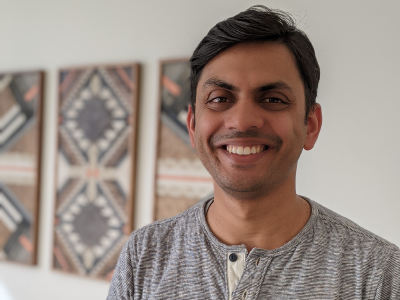
Rajat Mittal is an engineer turned writer. He has co-authored three books for young women, namely Menstrupedia: Friendly guide to healthy periods, and two editions of She Can You Can: The A-Z Book of Iconic Indian Women. In early 2021, he started a monthly newsletter called Boyish. It discusses how gender stereotypes affect boys in India and telling inspirational stories of Indian men who defied these stereotypes. He is a loving dad to his two-year-old son.
Sohini Bhattacharya
Sohini became Breakthrough’s second President and CEO in July 2017. She brings to her new role not only deep knowledge of Breakthrough’s issue areas and fundraising landscape, but also sincere dedication to the organization, its unique impact, and its boundless potential. She has worked with Breakthrough since 2010, most recently as Vice President of Resource Mobilization. She has developed an impressive portfolio of support for Breakthrough’s programs and has managed our wide range of partnerships across South Asia.
Sohini has worked in the development sector for more than twenty-five years. She worked with Ashoka Innovators for the Public to raise awareness on social entrepreneurship across India and ramp up its operations in the country, co-founded the Sanhita Gender Resource Centre—the first of its kind in Calcutta—and engaged with traditional craftspeople across India as program officer of Dastkar. Sohini also worked as the India strategy advisory for the Asian Venture Philanthropy Network in 2010.
Sohini is a board member of Dastkar, Jeevika Development Society, which supports women’s empowerment through financial access and control, and of Kolkata Sanved, which uses dance movement for recovery from trauma and violence. She is also a trustee of Read India, an organisation that sets up self-sustaining community libraries across the country and a director on the board of Aakar Social Ventures, an organisation focusing on awareness on menstrual hygiene and last mile delivery.
Sohini has a master’s in English literature and a passion for crime fiction, cooking, handicrafts, and travel.
