
- This event is over. However, time travel possible through our Audio & Video! See upcoming events
To the Moon and Beyond
Space Exploration and the Human Spirit
Speakers


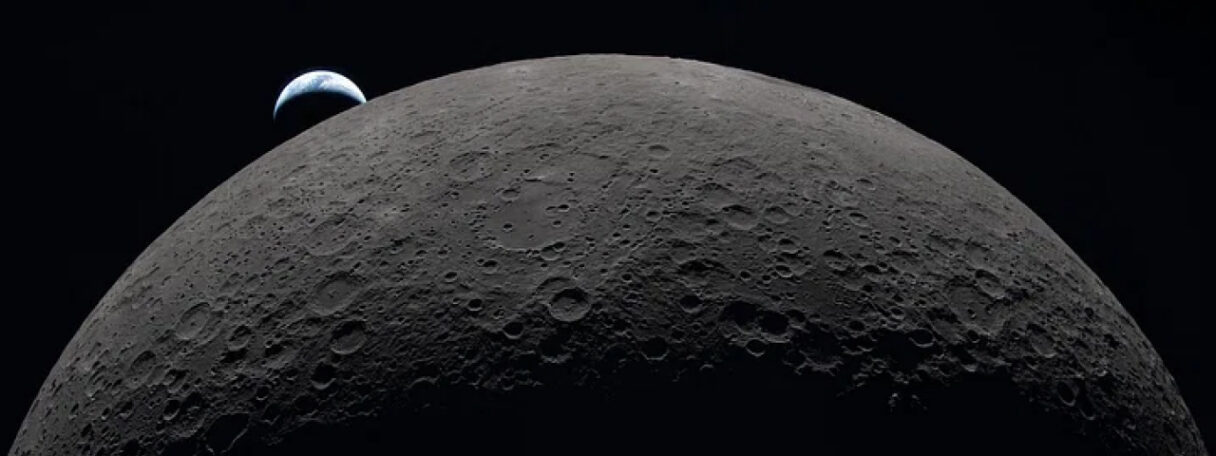
The new space race is underway.
NASA’s Artemis II swung four astronauts around the Moon this April. India’s Chandrayaan-3 landed near the lunar south pole a few years ago. And China has been quietly building the most ambitious lunar programme of any nation thus far. The moon has turned from symbol to destination through missions, timelines, and competing national interests.
In this conversation, Srinivasan Chandrasekhar, Jatan Mehta, and Jahnavi Phalkey examine what this moment means: the technological achievement, the geopolitical contest, and the question of who sets the rules when the moon’s resources are finally within reach.
The session will conclude with an audience Q&A.
Speakers
Srinivasan Chandrasekhar
S Chandrashekar is an Honorary Visiting Professor at the National Institute of Advanced Studies (NIAS), whose work spans missile, nuclear, and space domains, with a special focus on China. He has published extensively on space strategy, space weapons, and China’s lunar and military programmes, including a book on China’s Space Programme with Springer. His research also covers rare earths, solar energy, and China’s Anti-Access Area Denial strategy. His monograph on a space strategy for India has been translated into Chinese.
He was a Professor in the Corporate Strategy and Policy Area at the Indian Institute of Management Bangalore (IIMB). Apart from teaching courses on corporate and technology strategy, his research interests at IIMB included technology and competitive advantage, national technology priorities for India, national technology policy, studies on innovation, telecommunications, national innovation systems, modelling complex systems and national security issues.
He has also spent more than twenty years working at the Indian Space Research Organization (ISRO), where his work covered satellites, rockets, and the applications of space technology including remote sensing and telecommunications. He contributed significantly to projects such as the Indian Remote Sensing (IRS) satellite, as well as international co-operation that included the US, France, European Space Agency (ESA), Germany and the Soviet Union. He has represented and led Indian delegations to the United Nations Committee on the Peaceful Uses of Outer Space (UNCOPUOS). He was also involved with the space related activities of the Conference on Disarmament (CD) in Geneva.
Jatan Mehta
Jatan Mehta is a globally published space writer and journalist whose work bridges science communication, policy insight, and the expanding frontier of space exploration. He is the creator of Moon Monday, the world’s only publication dedicated exclusively to tracking lunar missions and technologies across nations, and Indian Space Progress, a monthly analysis of India’s fast-growing presence in the global space ecosystem. His reporting is widely read and cited by researchers, mission teams, and industry leaders alike, reflecting his ability to distil complex scientific and technical developments into clear, compelling narratives. His work continues to inform public understanding of humanity’s return to the Moon and India’s role in shaping that future.
He blogs at: https://jatan.space/
Jahnavi Phalkey
Jahnavi Phalkey is the founding director of Science Gallery Bengaluru and holds a PhD in the history of science and technology. Formerly on faculty at King’s College London, she is the author of Atomic State: Big Science in Twentieth Century India and co-editor of Science of Giants. She is also the editor-in-chief of South Asian Studies and the British Journal for the History of Science Themes, as well as director of the documentary Cyclotron. In 2023, she was awarded the Infosys Prize in Humanities.
