
- This event is over. However, time travel possible through our Audio & Video! See upcoming events
Socialist Futures
Thinking with UR Ananthamurthy
Speakers

UR Ananthamurthy (1932–2014), writer, teacher, literary critic, and public intellectual, was born in Shivamogga district in Karnataka. In 1965, his debut novel, Samskara, took the literary world by storm with its unflinching portrayal of the rigid orthodoxy in Brahmin society. Since then, it has become a landmark novel of the modernist, or Navya, movement of the 1950s and 1960s in Kannada literature. He received the Jnanpith Award, India’s highest literary honour, in 1994, and was nominated for the Man Booker International Prize in 2013.
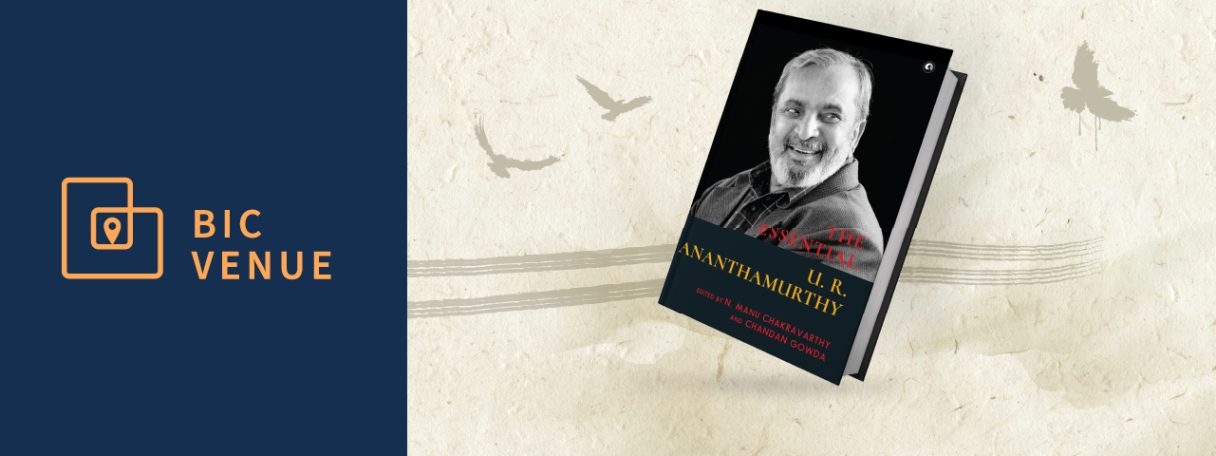
The Essential UR Ananthamurthy is a five-part compendium of select fictional and non-fictional works, poetry, and autobiographical writings from one of India’s most illustrious and outspoken writers. The section ‘Novels’ portrays characters in conflict with tradition, idealism, and modernity in a rapidly changing independent India through excerpts from powerful novels such as Samskara, Bharathipura, Avasthe, and Bhava. ‘Poetry’ presents five evocative poems on the themes of power and politics. ‘Short Stories’ highlights the chief themes that preoccupied Ananthamurthy—the constraints of the traditional order, the cultural dominance of the West, the sinister workings of power, and the creativity of political dissent. ‘Essays and Speeches’ captures the range and depth of Ananthamurthy’s democratic imagination through his writings on cultural identity and literature, community and creativity, linguistic and nationalist politics, and on figures such as Mahatma Gandhi and Ram Manohar Lohia. And, the final section, ‘Memoirs’, gathers Ananthamurthy’s memories of family, friendships, work, and travel from the different phases of his life.
The Essential UR Ananthamurthy offers a rich glimpse into the mind of one of modern India’s most profound writers and thinkers and demonstrates why Ananthamurthy’s works will endure for generations to come. The book has been edited by Manu Chakravarthy and Chandan Gowda.
The panel discussion will feature NS Gundur, Anjum Hasan, HS Raghavendra Rao, Nithyananda Shetty and the editors of the book. A Q&A with the audience will follow.
Speakers
NS Gundur
NS Gundur is a literary historian specializing in modern Kannada literary cultures and their institutional roots. Raised in an agricultural family in north Karnataka, he completed his post-graduate studies as well as doctoral research at Karnatak University, Dharwar. Gundur began his teaching career at the National Defence Academy, Khadakwasla, Pune, and is now a professor of English at Tumkur University. He writes in both English and Kannada for scholarly journals and popular media. His articles have been published in The Economic and Political Weekly, Atlantis: The Journal of Anglo-American Studies, The Indian Express, The Wire, The Hindu and Prajavani, the foremost Kannada newspaper. He has translated Michel Foucault into Kannada and published Vartamanada Itihasakara: A Critical Introduction to Michel Foucault in Kannada (2017). He is a recipient of NIF’s translation fellowship (2022) to translate D R Nagaraj’s Allama Prabhu mattu Shaiva Pratibhe.
Anjum Hasan
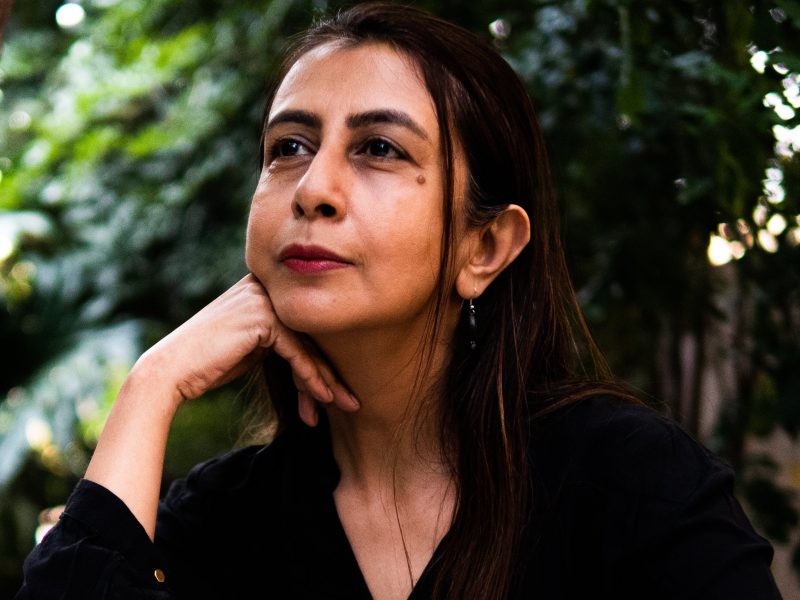
Anjum Hasan’s new novel, History’s Angel, will appear from Bloomsbury this month. She is the author of five previous works of fiction and a collection of poems. She was formerly Books Editor at Caravan and is currently a New India Foundation Fellow.
HS Raghavendra Rao
A distinguished Kannada literary critic and writer, HS Raghavendra Rao was Professor of Kannada literature at National College, Jayanagar and Kannada University, Hampi. His extensive publications include works of literary criticism, travel writing and Kannada translations of the writings of Gabriel Garcia Marquez, Jiddu Krishnamurthy, African poets and German short story writers, among others. Neerige Moodida Aakara (2020) and Nijavu Toradalla (2019) are among his most recent books.
Nithyananda B Shetty
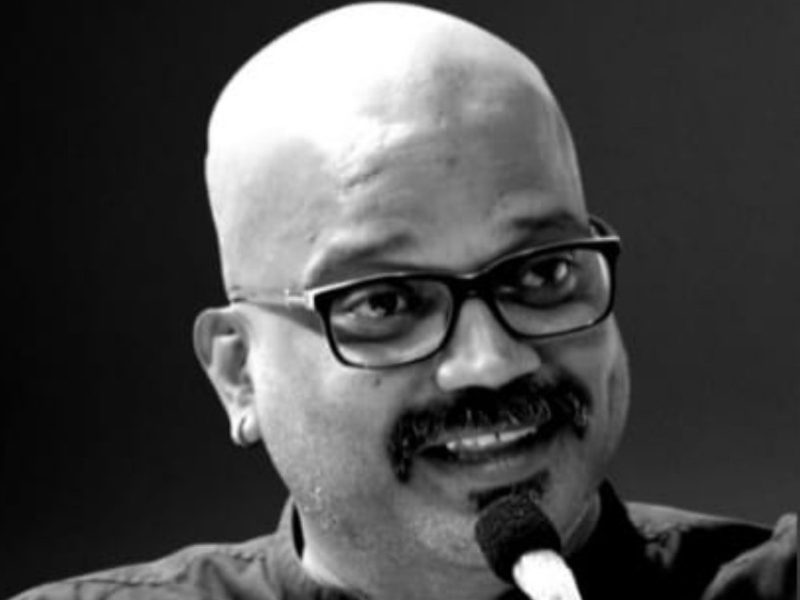
Nithyananda B Shetty is currently Professor of Kannada Studies at Tumkur University. His areas of research interest include modern and classical Kannada literature, culture and film studies. He has published two books on Kannada literary research, Maarganveshane (Introduction to Kannada Literary Research, 2022) and Sahitya Samoshadhane (Research in Literature, 2022). He has also written Rashtreeyateyu Srishtisida Karnataka (Nationality and the Formation of Karnataka, 2018), among other books. He has edited the Kannada translation of Kalatatvakosha, a four volume lexicon of fundamental concepts in Indian Arts edited by Kapila Vatsyayana. He also edited Loka Jnana, a peer reviewed inter disciplinary journal of cultural studies in Kannada. He is currently working on the interface of Kannada and Tulu Literature.
N Manu Chakravarthy
N Manu Chakravarthy is a visiting professor of film and culture theory at several universities and film institutes. He won Swarna Kamal, the best film critic award, at the 58th National Film Awards in 2010 and the Karnataka Sahitya Akademi award for his book Madhyama Marga in 2014. In 2022, he presided as the chairman of the jury for the K. R. Mohanan Endowment Award at the International Film Festival, Kerala. He has recently completed a study of UR Ananthamurthy for the Sahitya Akademi.
Chandan Gowda
Chandan Gowda is Ramakrishna Hegde Chair Professor of Decentralization and Development at the Institute for Social and Economic Change, Bengaluru. A book of his essays titled, Another India: Events, Memories, People, will appear in mid-August. At present, he is completing a book on the cultural politics of development in the old Mysore and co-translating and editing Daredevil Mustafa, a book of short stories by the Kannada writer, Purnachandra Tejasvi. He is a columnist with Deccan Herald.
