

- This event is over. However, time travel possible through our Audio & Video! See upcoming events
Small Actions, Big Difference
Sustainability for Business and Societal Value
Speakers
While most organizations talk the talk of sustainability, very few walk the walk. Companies find it difficult to operationalize sustainability goals, even when their leadership is publicly committed to sustainability. The problem is that not enough companies have yet figured out how to link their employees’ support for sustainability with their daily work and the company’s operations. In other words, it’s not in the why but in the how of embedding sustainability where
the gap lies.
Prof. CB Bhattacharya’s latest book Small Actions Big Difference, unveils a purpose-driven pathway that will enable organizations to integrate environmental and social concerns into all their business decisions. Based on interviews with 25 global multinational corporations as well as employees, middle managers, and senior leaders across multiple sectors, this is the first book to connect sustainability to the theory and principles of psychological ownership and to propose a succinct, easy-to-digest model for managerial use.
It describes a transition to a more sustainable business model, via the “sustainability ownership experience.” It spells out how to operationalise the business case for sustainability – leading with purpose and materiality, investing in sustainability knowledge and competence, creating sustainability champions, collaborating with competitors, etc. Companies that are winning at sustainability have created the conditions for their stakeholders to own sustainability and reap the benefits that come with deeper experience with and ownership of social and environmental issues: a happier, more productive workforce, increased customer loyalty, higher stock valuations, and greater long-term profits.
The author, CB Bhattacharya will be in conversation with Ulka Kelkar, moderated by Rajeev Gowda.
Speakers
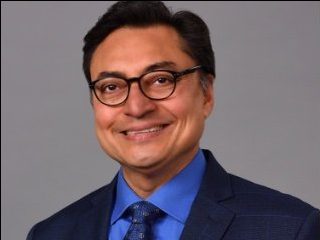
CB Bhattacharya
CB Bhattacharya is the H.J. Zoffer Chair in Sustainability and Ethics at the Katz Graduate School of Business, University of Pittsburgh. He is an expert in business strategy innovation aimed at increasing both business and social value. His research and teaching focus specifically on how companies can use underleveraged “intangible assets” such as corporate identity, reputation, corporate social responsibility and sustainability to strengthen stakeholder relationships and drive firm market value. His latest book entitled Small Actions Big Difference: Leveraging Corporate Sustainability to Drive Business and Societal Value was published by Routledge in 2019. He is co-author of the book Leveraging Corporate Responsibility: The Stakeholder Route to Maximizing Business and Social Value and co-editor of the book Global Challenges in Responsible Business, both published by Cambridge University Press.
Ulka Kelkar
Ulka Kelkar heads World Resources Institute India’s Climate programme, which aims to support India’s pathway to a climate-resilient low-carbon economy. Her policy contributions include the South Asian Association for Regional Cooperation (SAARC) roadmap on climate change adaptation, the National Strategy Study on clean development mechanism (CDM) in India, the industrial processes greenhouse gas (GHG) inventory for India’s first national communication to the United Nations Framework Convention on Climate Change (UNFCCC), and the Maharashtra State Action Plan on Climate Change. Her research has been published in international journals like Global Environmental Change, Climate Policy, Mitigation and Adaptation Strategies for Global Change, and Annual Review of Environment and Resources.
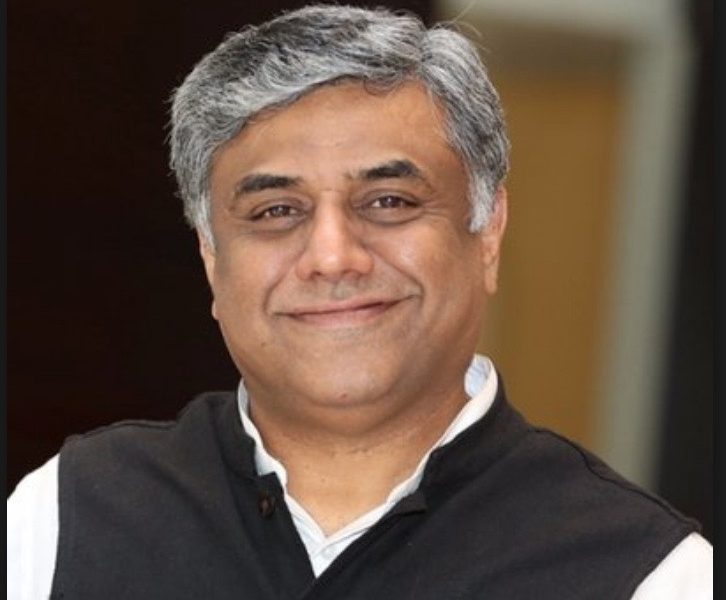
Rajeev Gowda
Rajeev Gowda was a Member of Parliament, representing Karnataka in the Rajya Sabha from 2014-20. He has taught courses in environmental policy at universities internationally. He was previously Chairperson of the Centre for Public Policy at the Indian Institute of Management Bangalore. One dimension of his research has focused on how people and societies manage environmental risk-related conflicts. His last co-edited book was India’s Risks published by Oxford University Press India in 2014.
