

- This event is over. However, time travel possible through our Audio & Video! See upcoming events
Sexual Violence and the Death Penalty
Focus on the Needs of Survivors
Speakers
India has seen a consistent legislative expansion of the death penalty for sexual offences beginning with the amendments in 2013. In the aftermath of the Delhi gang rape case, a three-member committee under the chairmanship of Retired Justice Verma was constituted to suggest amendments to the rape law. While the Verma Committee took a clear stand against the death penalty, Criminal Law Amendment Act of 2013 introduced death penalty as a possible punishment for repeat sexual offenders and for rape resulting in death or vegetative condition of the victim. More recently, in 2018, incidents of violent child rape and murder in Kathua and Unnao, led to inclusion of death sentence for the first time for rape (without murder) of girls below the age of 12 years. This was followed by the amended in the Protection of Children Against Sexual Offences Act, in 2019 where the death penalty was introduced for penetrative sexual assault of children below the age of 18 years.
In this backdrop, Project 39A, National Law University in collaboration with the Bangalore International Centre is organising a panel discussion on sexual violence and the death penalty on October 10th 2022, i.e. the World Day Against the Death Penalty. The panel comprises a child rights activist, a women’s rights activist, a former senior law enforcement officer and an expert on issues relating to the administration of the death penalty in India. The focus of the discussion will be the effectiveness of the death penalty as a response to sexual violence while locating it within the needs of the survivors. The discussion will also explore conceptions of justice for the survivors and the place of punitive justice within that framework.
In collaboration with:

Speakers
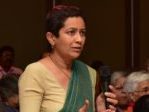
Kushi Kushalappa
Kushi Kushalappa is a trained counsellor and has been have been counseling adults and children for over 15 years now. She has been working with Enfold Proactive Health Trust, Bangalore since 2010. Her work at Enfold largely involves supporting children who have faced sexual violence and their families/caregivers.
She, along with other team members, has assisted over 250 children and families through various stages of the criminal justice and children protection processes – from preparing a family before registering a case, helping them to register a case with the police, through the medical processes, rehabilitation of the child, pre and post trial processes, obtaining special relief and compensations, ensuring overall well- being and the normalization of a child’s life. Through this work, Kushi has been working closely with stakeholders like police, medical officers, mental health professionals, Child Welfare Committees, public prosecutors, DCPUs, DLSAs, SLSAs, etc. She has an understanding of the challenges within the system and through convergence and collaboration been able to find solutions to overcome some of these issues.
Kushi was part of the team that complied the Handbook for Support Persons which was released in February 2022 by Hon’ble Justice Mr. Ravindra Bhat, Judge, Supreme Court of India. Kushi has been part of the committee in Karnataka State which created the Standard Operating Procedures for stakeholders for the better implementation of POCSO Act.
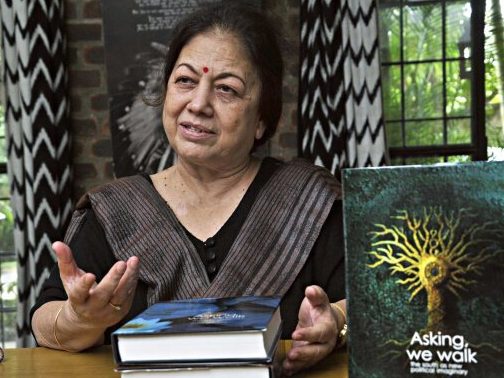
Corrine Kumar
Corinne Kumar is a philosopher, poet, human rights theoretician and activist. She helped to establish and promote the World Courts of Women, and serves as International Coordinator. The aim is to hold their governments accountable under both international law and human ethics for crimes against women and crimes of war.
She is the Co-Founder of Vimochana Forum for Women’s Rights, in Bangalore, working on issues such as domestic violence, dowry-related deaths, and workplace sexual harassment. Corinne Kumar served for over 20 years as the Secretary General of El Taller International based in Tunis, an international NGO committed to international women’s human rights, sustainable development, and both North-South and South-South exchange and dialogue across diverse cultures and civilizations.
She was formerly Director of the Centre for Development Studies (CIEDS Collective) in India. She is a founding member of the Asian Women’s Human Rights Council (AWHRC). She is the editor of two human rights journals, Sangarsh and The Quilt, and has written and spoken extensively on refugees, violence against women, militarization, and the dominant human rights discourse, critiquing it from a gender and Global South perspective.
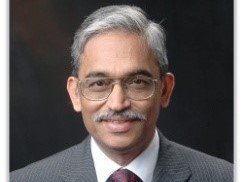
R Sri Kumar
Mr. Sri Kumar retired as the Head of the Police force in Karnataka in the rank of DG & IGP in January, 2009. Post retirement, he assisted the Confederation of Indian Industries in the Southern Region as Head of its Task Force of Internal Security. He was the member of the Central Vigilance Commission, New Delhi from 2010-14. Post retirement from Government service, he authored a public charitable Trust that in 2009, the “Indian Centre for Social Transformation” and he was its Chairman till last year.
A technocrat who joined the Indian Police Service in 1973 by choice he has had the singular opportunity of serving for a decade plus in each of the States of Uttar Pradesh and Karnataka, and in the Central Bureau of investigation, Mr. Sri Kumar is a person with a penchant for continuous learning and continual improvement. Some of Mr. Sri Kumar’s significant accomplishments are: setting up the country’s first Cyber Crime police station in Bangalore in 2001, obtaining ISO Quality System and environment and a Green Building certification from US Green Building Council for Karnataka State Police Housing Corporation, playing a vital role in the successful investigation of several important cases such as Rajiv Gandhi assassination, Church Bomb Blast cases etc.
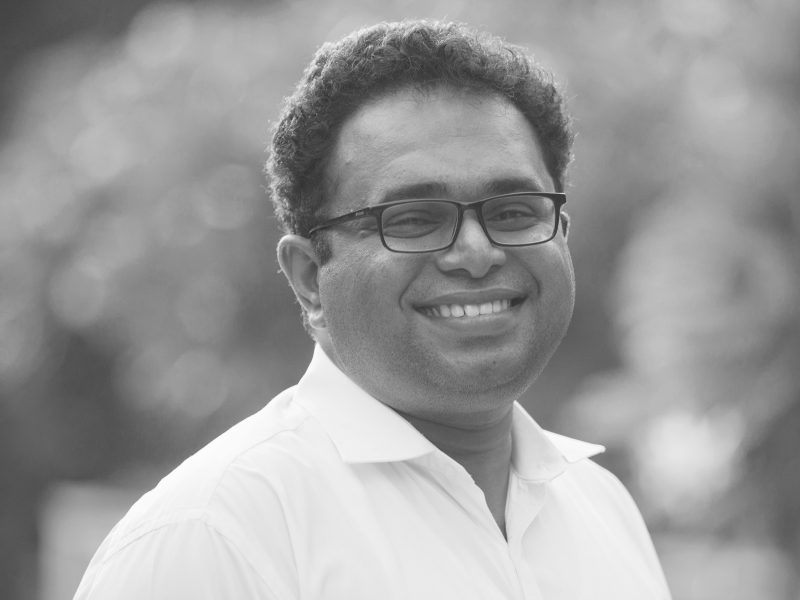
Anup Surendranath
Dr. Anup Surendranath is a Professor of Law at National Law University Delhi, where he teaches criminal law, constitutional law, and legal methods. Additionally, he holds the SK Malik Chair Professorship on Access to Justice at NLU Delhi and is also the Executive Director of Project 39A (a criminal justice programme). Professor Surendranath is also on the Advisory Council of the Bonavero Institute of Human Rights at the University of Oxford. He was invited by the Chief Justice of India RM Lodha in April 2014 to serve as the Deputy Registrar (Research) in the Supreme Court of India and served in that position until July 2015. It was an academic appointment to the Supreme Court that was made after a gap of nearly 35 years.
At Project 39A, Professor Surendranath leads a team of nearly 60 full time programme and administrative staff across three offices in Delhi, Pune, and Nagpur. As a criminal justice programme, Project 39A works on issues of forensics, mental health & criminal justice, sentencing, torture prevention & accountability, and legal aid. Project 39A also provides extensive pro bono legal representation to prisoners sentenced to death across the country and also provides legal aid to undertrial prisoners in Pune and Nagpur Central Prisons. Project 39A’s sustained representation of prisoners sentenced to death in the Supreme Court has led to significant changes and improvements in the law.
