
- This event is over. However, time travel possible through our Audio & Video! See upcoming events
Seed Stories
The Question of Sustainability
Speakers

2024 | 42 minutes | Odiya, Kui, English with English subtitles | India
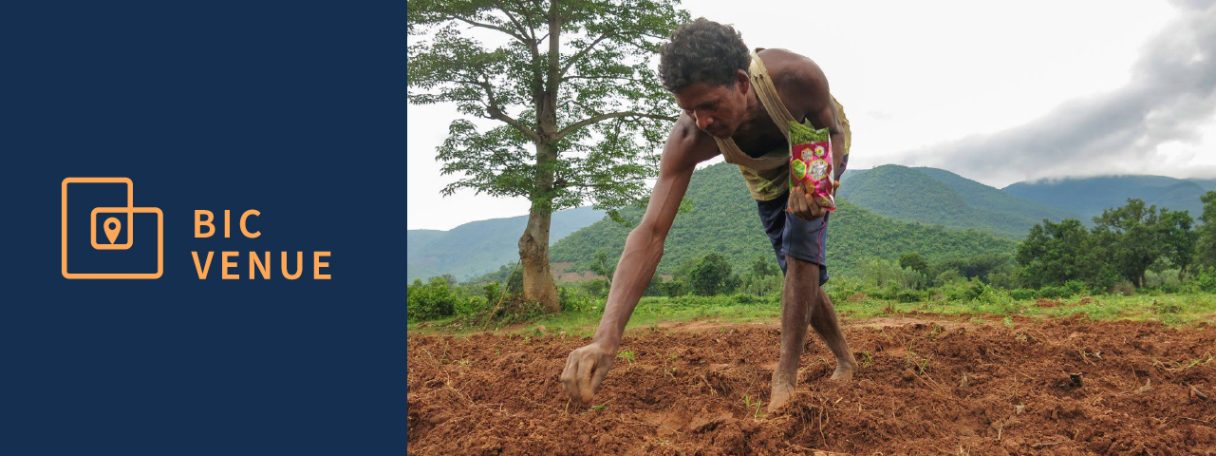
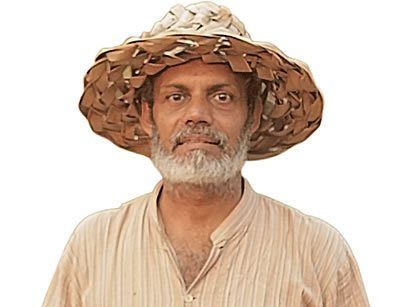
In a village in the Niyamgiri mountains of Odisha’s Eastern Ghats, a heroic effort is underway. Barefoot ecologist Dr. Debal Deb and his 3 member-team are conserving in-situ over 1000 endangered heirloom varieties of rice.
Odisha’s Eastern Ghats region is one of the world’s surviving biodiversity hotspots, with Adivasi (Indigenous) communities like the Kondhs possessing the knowledge of growing multiple crops with their folk seeds, evolved over centuries. At the same time, the village and the wider region is irreversibly changing with the coming of genetically modified cotton seeds and associated chemicals.
Seed Stories takes a worm’s eye view of how this is reshaping a geography and a people steeped in agro-ecological knowledge, and altering their attitudes towards farming, food and ecology. It invites audiences to reflect on the question, ‘What is sustainability?’
Credits
Director & Camera: Chitrangada Choudhury
Associate Director: Aniket Aga
Editor: Ajay TG
Sound: Asheesh Pandya
Colourist: Srikanth Kabothu
In collaboration with:

Speakers
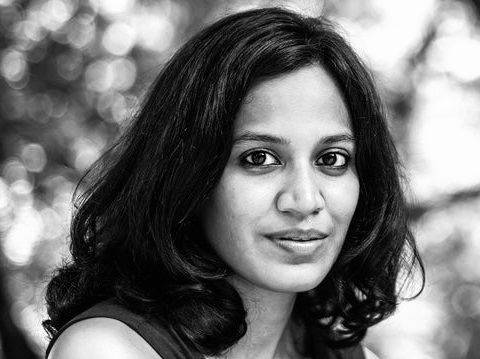
Chitrangada Choudhury
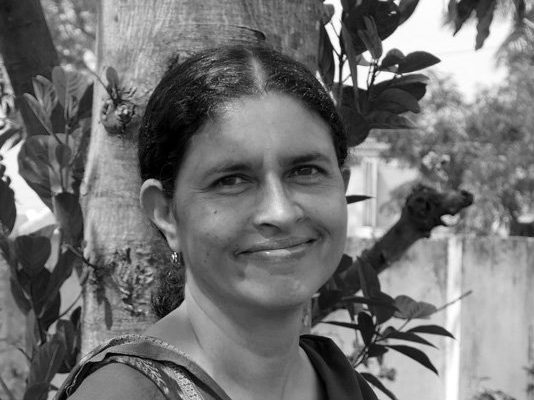
A R Vasavi
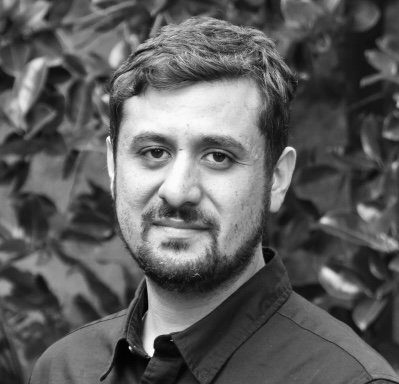
Aniket Aga
Aniket Aga is a researcher and teacher. He is the author of Genetically Modified Democracy: Transgenic Crops in Contemporary India (Yale University Press, 2021) which won the 2022 Fleck Best Book Prize from the international Society for the Social Studies of Science (4S).
Debal Deb
Debal Deb is a biologist, with doctorate in ecology from Calcutta University. He conducted post-doctoral research in human ecology of estuarine resource use at the Indian Institute of Science, Bangalore (1988), and in ecological economics at University of California – Berkeley, as Ford Foundation Fellow (2001) and Fulbright Fellow (2009).
In 1997, Deb founded Vrihi (Sanskrit for ‘rice’), India’s largest open source rice seed bank, conserving 1230 folk rice varieties, and a research farm Basudha to demonstrate ecological agriculture, ecoforestry, alternative energy use, and ecological architecture. His laboratory is engaged in study of nutraceutical properties of numerous uncultivated food plants and hundreds of rice varieties.
Deb’s conservation and research works are supported by donations from friends and well wishers. His action research has rescued not only 1440 rice varieties, but also several endangered plants and many ancient sacred groves from extinction, and revived many forgotten indigenous sports and musical traditions in Bengal and southern Odisha. His free-lance research in agroecology, crop genetic diversity, forest ecology and ecological economics has been widely published in several international journals, including Nature and Oikos. His book Beyond Developmentality: Constructing Inclusive Freedom and Sustainability (2009, Earthscan/ Routledge) contributes to development studies and ecological economics.
Sushma Veerappa
Sushma Veerappa has worked in both fiction and non-fiction films in various roles – as Sub-Editor of a film quarterly, film educator for school children, assistant director, script writer, editor, producer, director, and as founder-trustee of a film collective screening documentaries in Bangalore city since 2005.
