

- This event is over. However, time travel possible through our Audio & Video! See upcoming events
Poet of the Forest
Nature in Kuvempu’s Writing
Speakers

If there is one literary figure in India who can be described as a ‘Green Poet’, it is Kuvempu. Describing himself as a ‘poet of the forest’, he sang,
“Green here, green there,
A sea of green everywhere;
The poet’s soul turning green,
Green is the blood coursing through his veins.”
Kuvempu, who was born and brought up in Kuppali, a remote one-house hamlet near Tirthahalli, in the Malenadu region, the land of wooded hills amid the Western Ghats, says: “I am a Malenadiga, born in the womb of Malenada-amma; I’ve grown up suckling from the breasts of this mother, and playing on her lap. My love for Malenadu is blind, passionate. … It is a land of unsurpassed beauty, animated by thunder and lightning; surrounded by a range of hills and mountains; replete with rows and rows of dense forests; marked by rippling streams; resplendent with treetops lit up by shafts of sunlight and moonbeams; accompanied by a thousand notes from a thousand colourful birds …”
While this passion for nature manifests itself in every genre of his writing – poetry, plays, short stories, and essays, his fiction em-bodies nature in the most organic, most complex, and most complete manner. His novels – Kanuru Haggaditi (1938) and Malegalalli Madumagalu (1967) offer us a rich and organic source of lived experience. Malenadu is not merely a backdrop or locale here, but an active presence that determines the daily rhythms of its people who have learnt to survive by co-existing with nature.
Kuvempu spoke about his novels as, “Cosmic vision brooding on local things.” Does Kuvempu represent nature as a benign and benevolent power, or does he see nature as a callous, malevolent force in his narrative? How does Kuvempu imagine the relationship between nature and the predicament of the human world? Having moved away from a biocentric world, how do we understand Kuvempu’s unshaken faith in nature today? How do we read Kuvempu’s relevance when we are faced with the palpable challenges of climate change?
Accompanied by excerpts from the recently released audiobook of Bride in the Hills, the discussion will address these and other important questions.
This event is a part of the Environment Day programming at BIC.
Image Credits
Kuvempu’s home in Kuppali, Malnad, surrounded by wooded hills. Photo by Anand Kumar S.
Portrait of Kuvempu from Wikimedia Commons.
Speakers
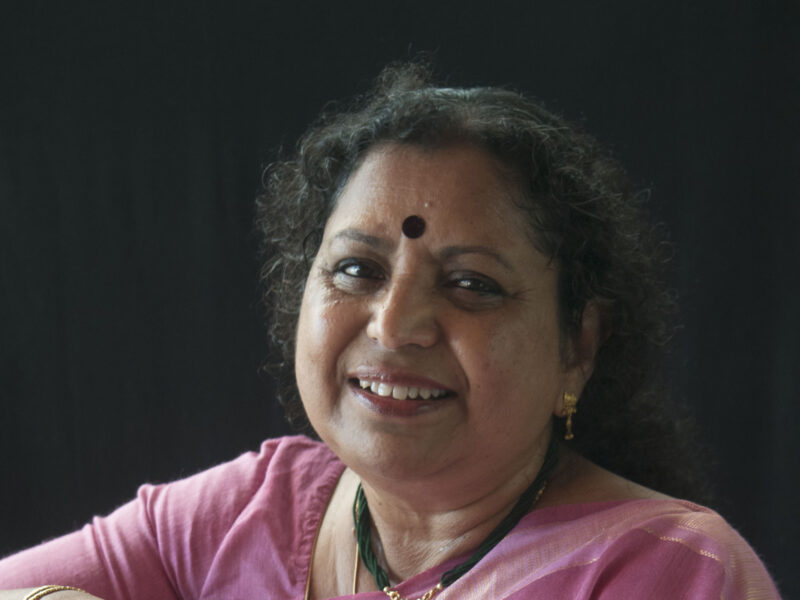
Vanamala Viswanatha
Prof. Vanamala Viswanatha taught English for over four decades in premier institutions in Bengaluru including the Indian Institute of Science, Regional Institute of English, Bangalore University, and Azim Premji University. A bilingual scholar and translator, she has translated important ancient, medieval, and modern classics from Kannada into English. Her repertoire includes the translation of 12th-century women saint poets in Vachana (2012); the 13th-century poetic text by Raghavanka – The Life of Harishchandra in the Murty Classical Library of India series (Harvard University Press, 2017); Indira Bai, the first social novel in Kannada by Gulvadi Venkata Rao (2019, OUP); Kannada literary giant Kuvempu’s epic novel Bride in the Hills (Penguin Random House, 2024), and Vaddaradhane, a 10th-century Jaina text (Harvard University Press, 2026). She has also translated into English well-known Kannada writers such as UR Ananthamurthy, Sara Aboobacker, Lankesh, and Vaidehi. A Translation Fellow at Ashoka University, she is currently translating Lakshmisha Tolpadi’s meditative essays on the Mahabharata (Penguin Random House, 2026).
Vanamala Viswanatha has served as Associate Director, Katha Regional Centre; Honorary Director, Centre for Translation, Sahitya Akademi, Bengaluru; and member, National Translation Mission. A Charles Wallace Trust India Fellow, Vanamala Viswanatha received the Best Translation award for Indira Bai in 2020, and for Bride in the Hills in 2025 from the Karnataka Sahitya Academy. She recently narrated the entire text of Bride in the Hills for the audiobook version. In 2025, she was conferred the Lifetime Achievement award from Kuvempu Bhasha Bharati Pradhikara for her overall contribution to translation.
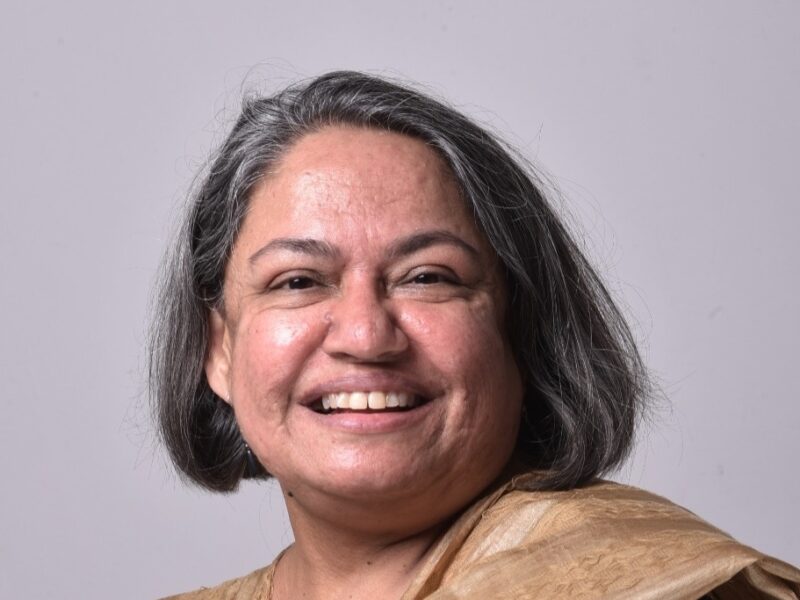
Uma Mahadevan
Uma Mahadevan is in the IAS, currently Additional Chief Secretary & Development Commissioner, Government of Karnataka. She has worked in important sectors at the centre and the state, including Women & Child Development, Skill Development and Livelihoods, Planning, Agriculture, Education and Health. She has also served in the Department of Atomic Energy, Government of India. She was a member of the working group that prepared Karnataka’s first Human Development Report. She has also been a member of the ECCE Taskforce, Government of India. She writes on development and culture.
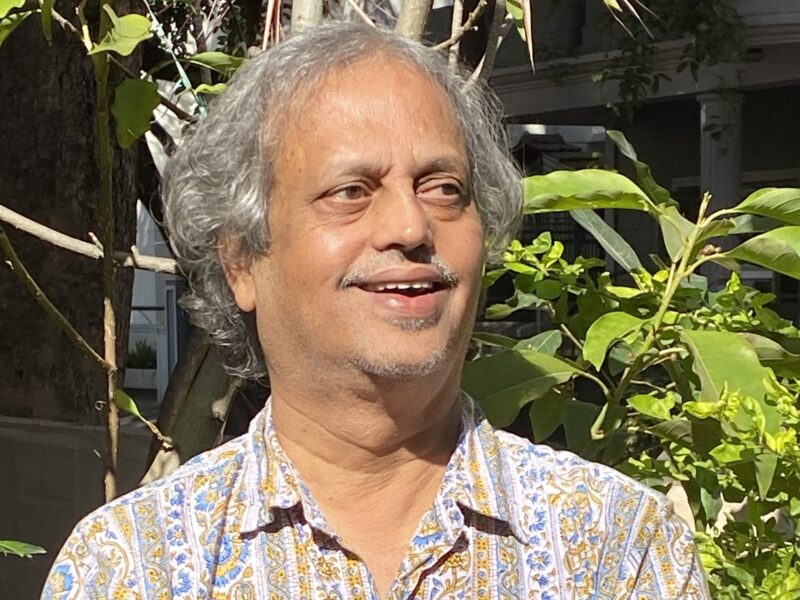
Sundar Sarukkai
Sundar Sarukkai has written across a variety of genres ranging from academic books in philosophy, to fiction and op-eds in various newspapers. He is particularly interested in language and translation.
Sarukkai works primarily in the philosophy of the natural and social sciences. He has held positions of Professor of Philosophy at the National Institute of Advanced Studies, Founder-Director of the Manipal Centre for Philosophy and Humanities, and Visiting Faculty at the Centre for Society and Policy, Indian Institute of Science. He is the founder of Barefoot Philosophers, an initiative to take philosophy to children and the public.
He is the author of the following books: Translating the World: Science and Language; Philosophy of Symmetry; Indian Philosophy and Philosophy of Science; What is Science?; JRD Tata and the Ethics of Philanthropy. He has co-authored two books with Gopal Guru: The Cracked Mirror: An Indian Debate on Experience and Theory and Experience, Caste and the Everyday Social. His book for children titled Philosophy for Children: Thinking, Reading, Writing has been translated into Tamil, Kannada, Telugu, Malayalam and Hindi. In 2022, he wrote and released The Social Life of Democracy, a response to the problems of global democracy today and extending Ambedkar’s vision of social democracy. His last two books were critically acclaimed novels, Following a Prayer (2023) and Water Days (2025). His forthcoming book is an introduction to philosophical thinking titled Homo Philosophicus: Discovering the Spirit of Philosophy in Everyday Life (Westland, July 2026).
He is the Series Editor of Routledge’s Science and Technology Studies, as well as the Co-Chief Editor of the Springer Handbook of Logical Thought in India. For more details, see www.sundarsarukkai.in
Karthik Venkatesh
Karthik Venkatesh is Executive Editor with Penguin Random House India where he commissions and edits non-fiction and fiction. He is the author of two books for young adults: 10 Indian Languages and How They Came to Be and 10 Makers of the Indian Constitution. Karthik grew up in Bangalore, speaking Tamil, Malayalam, Kannada, English, Dakhani and Hindi. He tried to learn French but failed. He did learn Punjabi though, not in Bangalore, but in another galaxy far, far away. On weekday mornings, he often runs. On weekends, he naps.
