
- This event is over. However, time travel possible through our Audio & Video! See upcoming events
Nazrana-e-Khusrau
A Living Tribute to Amir Khusrau’s Poetry, Music and Syncretic Vision
Artists
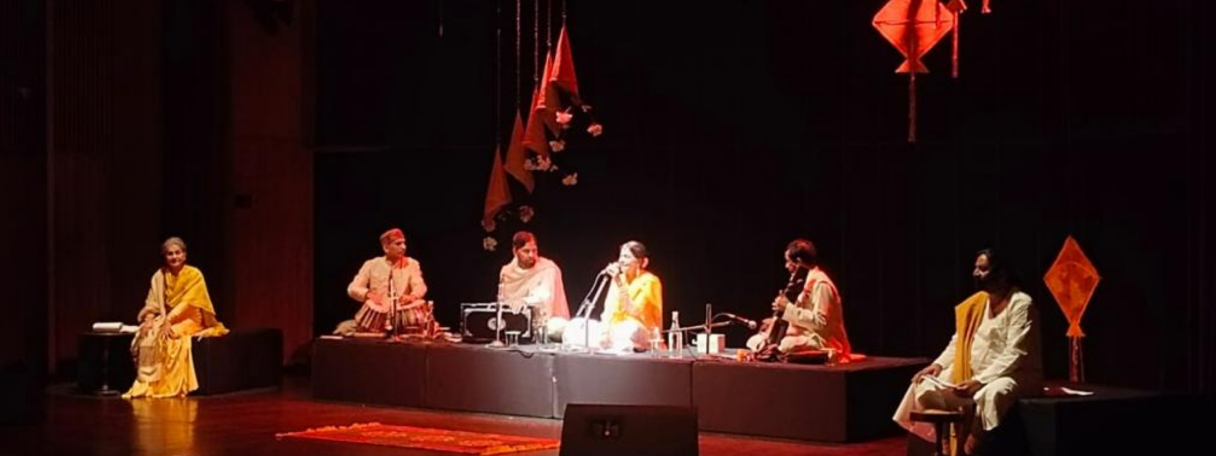
This performance is a musical-dramatic tribute to Hazrat Amir Khusrau — poet, mystic, musician, and architect of India’s Ganga-Jamuni tehzeeb. Through ghazal, qaul, qalbana, dohas, riddles, and storytelling, this intergenerational ensemble revives his legacy of cultural confluence in a format that is both scholarly and soulful. Khusrau’s work bridges Persian, Hindavi, Sufi, and Bhakti traditions. This production keeps that heritage alive, not as history, but as living art.
Nazrana-e-Khusrau has been performed nationally and internationally across several platforms and festivals, connecting deeply with audiences.
Artists
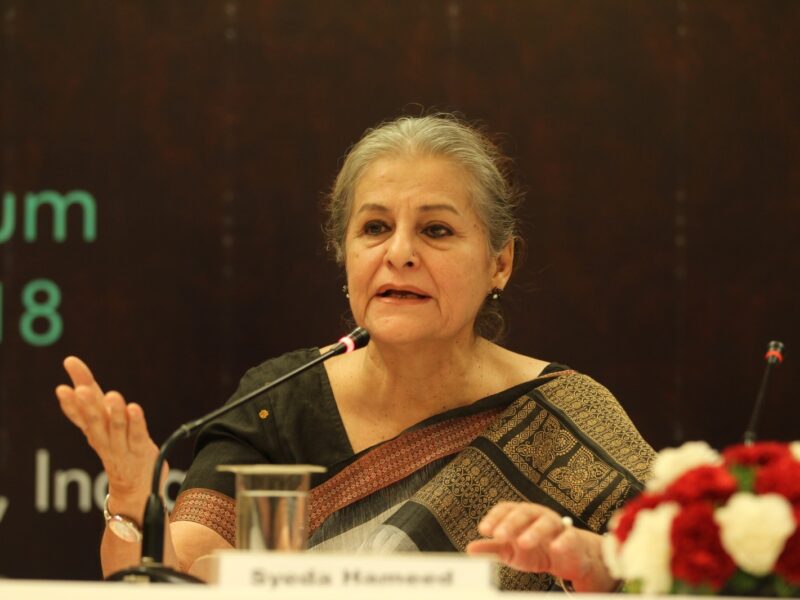
Syeda Hameed
Syeda Saiyidain Hameed is a women’s rights activist, educationist and writer. She is a former Member of the Planning Commission of India and former Member of the National Commission for Women. A feminist and writer, she is widely recognized for her passionate engagement in public affairs and social issues, especially for women, minorities and peace. She is the Founder Member of the Muslim Women’s Forum (MWF) and the Women’s Initiative for Peace in South Asia. (WIPSA).
Syeda Hameed completed her BA from Delhi University (1963) and her PhD in literature from the University of Alberta, Canada (1972). Her publications include From Rampur to Wagah: A Life of Peace, Protest, and Possibility (2025), Maulana Azad: Islam and the Indian National Movement (2013), Dr Zakir Husain: Teacher Who Became President (2000), and A Dream Turns Seventy-Five (with Kushwant Singh, 1995).
In 2018, she organized a one of a kind exhibition and colloquium titled ‘Pathbreakers: The Twentieth Century Muslim Women of India’ to develop an awareness about the Muslim women who during and after the independence movement were at the forefront of nation building but have remained largely invisible/unrecognized and unsung. The exhibition aimed to inspire the current generation and travelled to different parts of India. It was also shown at the Bangalore International Centre.
Among Syeda Hameed’s many awards are the Padma Shri conferred by the Government of India in 2007 and the Excellence in Governance Award in 2013.
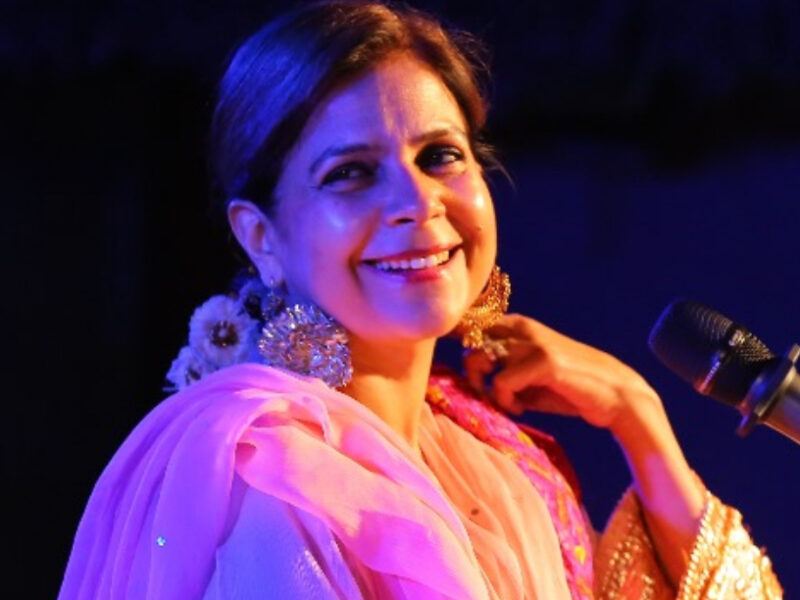
Rene Singh
Award-winning vocalist, curator and storyteller, Rene Singh is celebrated for her soulful voice, captivating audiences on national and international platforms. She trained in semi-classical music under Padma Shri Shanti Hiranand, in Thumri, Dadra, and Ghazal. Through her music, she seeks to empower young people in marginalized communities, including girls affected by terrorism in Kashmir and widows in Vrindavan. She initiated the Touch a Chord Choir, New Delhi to spread harmony and joy amongst marginalized children. In partnership with UNICEF, she has travelled to conflict zones and worked extensively with music and communities to create musical stories for local community radios.
As co-founder of Humari Urdu Mohabbat, a platform to keep the cultural heritage of India alive, Rene curates and produces historical musical narratives featuring the works of great Sufi and Urdu poets, bringing their timeless poetry alive with her voice on stages across India and abroad.
Passionate about the impact of music on well-being, Rene travels the country designing holistic workshops and performances on music and wellness, including mental health. Her work has taken her to the ASEAN Summit by invitation of the President of India, and to perform for Martin Luther King III on his visit to India, amongst other important musical assignments.
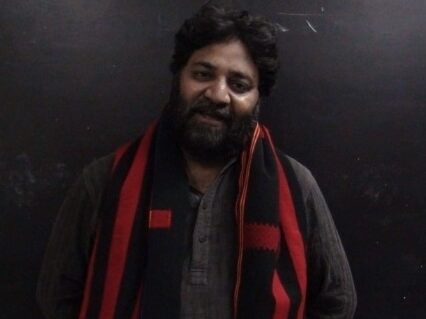
Lokesh Jain
Spanning four decades, Lokesh Jain stands as a distinguished practitioner of Educational and Applied Theatre. Trained under the legendary Ebrahim Alkazi, he has collaborated with India’s most acclaimed theatre collectives, shaping performance as a catalyst for social change.
A preeminent facilitator of Augusto Boal’s Theatre of the Oppressed in India, Jain founded ‘Jamghat’, a transformative troupe of street children, and serves as Director of ‘Mandala – The Magic Circle’. His work fuses pedagogy with performance, giving voice to the marginalised through embodied practice.
As visiting faculty at Delhi University and a heritage researcher, his scholarship centres on subaltern narratives and cultural memory. His solo performances—‘Fragrance of Blood on the Rocks’, ‘Mirage’, and ‘Akkarmashi’, the searing stage adaptation of a Dalit autobiography—are regarded as seminal testimonies of our time. He is acknowledged as one of the most compelling performers in contemporary Indian theatre.
Jain’s research and dramaturgy extend to cinema. He contributed as a researcher, writer, and actor to Anamika Haksar’s internationally acclaimed film Ghode Ko Jalebi Khilane Le Ja Riya Hoon. He is currently associated with several pivotal projects as a dramaturge, guiding processes of writing and creation across film and theatre.
Through performance, pedagogy, and research, Lokesh Jain continues to excavate silenced voices, transforming stage and screen into spaces of profound ethical human reckoning.
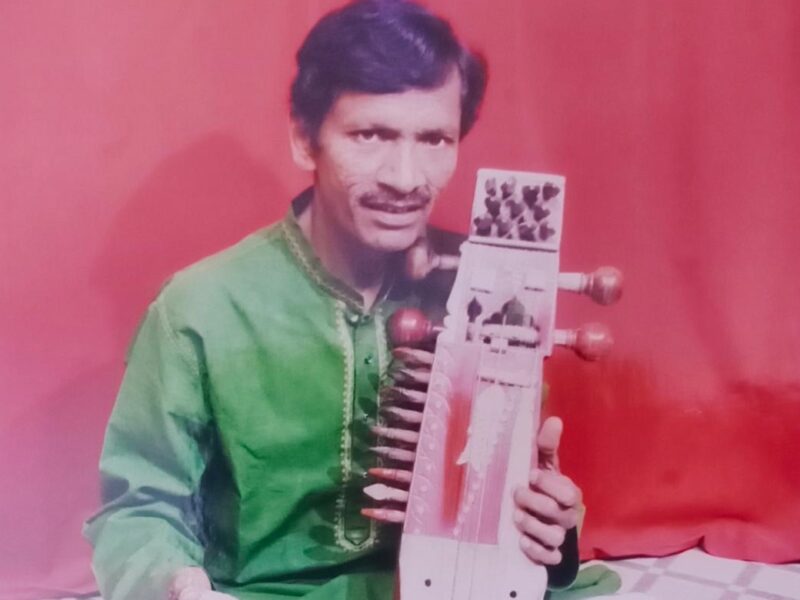
Ustad Kamaal Ahmed
Ustad Kamaal Ahmed is a 5th generation sarangi maestro from the Moradabad Gharana, carrying forward a legacy rooted in over 200 years of Hindustani classical tradition. Trained under his father Ustad Siddique Ahmed Khansahab and grandfather Ustad Shakoor Khan, he blends the purity of the gharana with his own expressive voice, making the sarangi sing like the human voice.
A Top Grade artist of All India Radio and Doordarshan, he has performed at India’s most prestigious festivals including Tansen Samaroh, Harivallabh Sangeet Sammelan, Dover Lane Music Conference, and Savai Gandharva. His music has traveled across the world — from the Royal Albert Hall, London and Carnegie Hall, New York to festivals in Germany, France, Japan, and Australia — where audiences experience the sarangi not just as an instrument, but as a storyteller.
Ustad Kamaal Ahmed has also collaborated with global artists and composed for films, bridging classical depth with contemporary reach. Today, he teaches the next generation through the guru-shishya tradition, ensuring the soul of the sarangi continues to resonate.
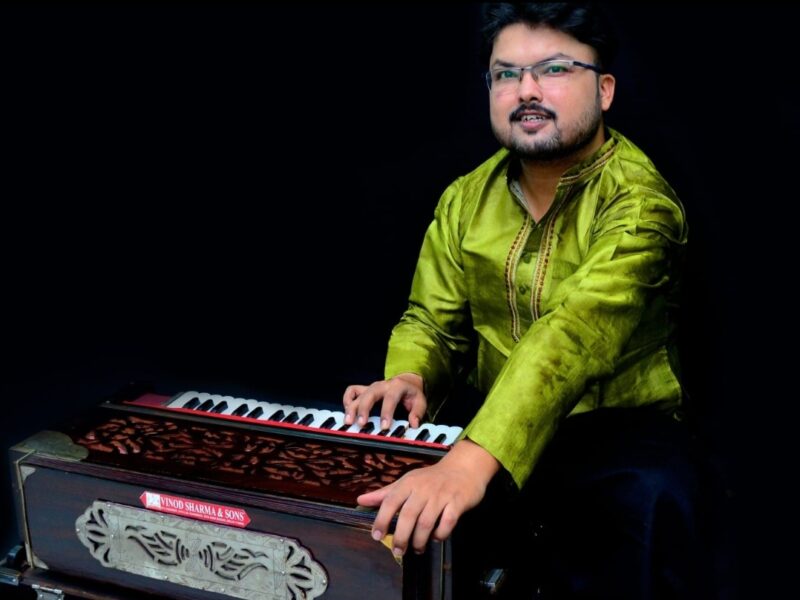
Ashique Kumar
Ashique Kumar is a young vocalist and harmonium player belonging to the Gwalior Gharana. He works as a Lecturer in the Faculty of Music and Fine Arts, Delhi University. A disciple of Pandit Laxmankrishnarao Pandit (a pioneer of the Gwalior Gharana), he completed his PhD from the Faculty of Music, Delhi under the supervision of Dr. Surendranath Soren. He is a recipient of a UGC Fellowship for his research work and an NCPA Fellowship.
Ashique Kumar has performed at many national and international music festivals, including Sur Poorva Festival, Rajkot; Udaipur Tales; Mahakaal Festival, Ujjain; and Bharat Rang Mahotsav, New Delhi. An ICCR empanelled artist appointed as a Hindustani vocal teacher and performer, he has performed in an ICCR tour of Mexico and in the XLVI International Cervantino Festival with Rashmi Agarwal. A B High Graded artist of All India Radio, he has received the Kalashree Samman (2019) and the Yuva Pratibha Samman (2015).
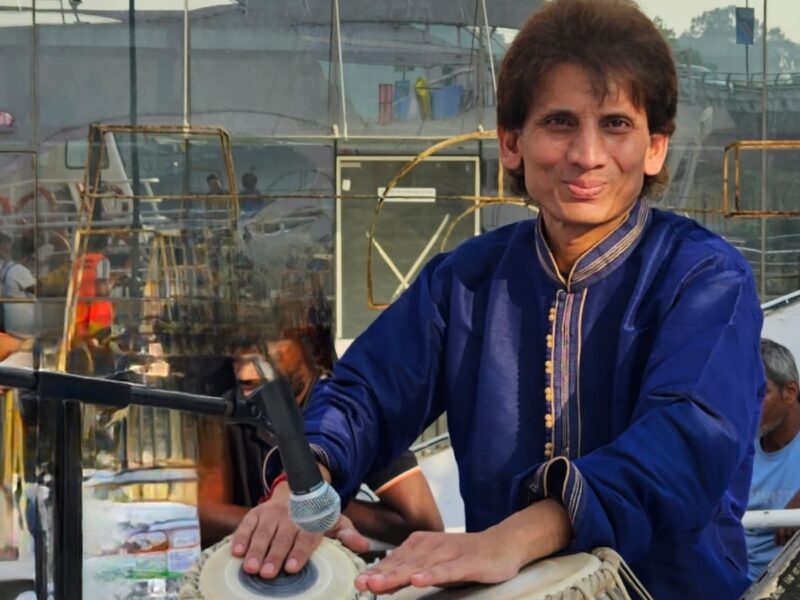
Shantibhushan Jha
Shantibhushan Jha is a graded tabla player of All India Radio. A disciple of Ustad Akram Khan of the Ajrada Gharana, he is working as an accompanist in the Faculty of Music, University of Delhi. He has performed on many national and international platforms.
