

- This event is over. However, time travel possible through our Audio & Video! See upcoming events
Navigating India’s Climate Future
Launch of a Climate Data Set for India
Speakers


Join us for the launch of a new climate data set for India, which offers high-resolution, bias-corrected climate projections down to the district level! This data set, crafted by Azim Premji University, offers critical insights into how India’s climate will change in the coming years.
The data set uses high-resolution data at a scale of 25 by 25 km to provide a detailed look at how India’s climate is projected to change. It will be accessible to everyone through interactive web-based platforms, making it easy to use this information for a variety of purposes. Individual reports will be available for each state and union territory of India, and the data will be downscaled to the district level.
This report offers insight into how climate change will impact India. This information can be used to make informed decisions and develop targeted adaptation strategies.
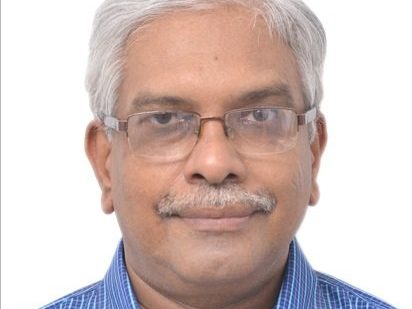
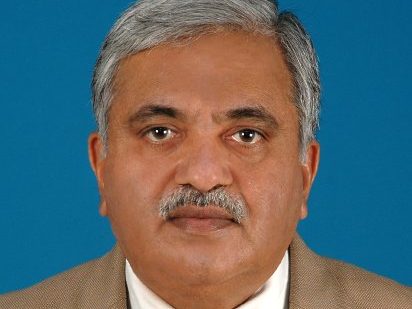
The report will be launched by Uma Mahadevan, Additional Chief Secretary and Development Commissioner in the Government of Karnataka. We will have a brief presentation on the dataset by Santonu Goswami, Faculty, Azim Premji University, followed by a panel discussion featuring Rajeevan Madhavan Nair (Vice Chancellor, Atria University and Former Secretary, MoES India) and VK Dadhwal (Indira Gandhi Chair Professor of Environmental Sciences, NIAS and Former Director, Indian Institute of Remote Sensing, ISRO). The discussion will be moderated by Harini Nagendra, Director, Research Centre and School of Climate Change & Sustainability at Azim Premji University.
Presented by:

Speakers
Rajeevan Madhavan Nair
Dr. Rajeevan Madhavan Nair, is a distinguished Climate Scientist, boasting over 38 years of research experience in weather and climate science. His illustrious career has been marked by significant contributions to various prestigious institutions.
Currently serving as the MOES Distinguished Scientist at the National Centre for Earth Science Studies, Trivandrum, Dr. Rajeevan’s career includes impactful roles at the Tata Institute of Fundamental Research, Mumbai, the India Meteorological Department, and the Indian Institute of Tropical Meteorology under the Department of Space (DOS). Dr. Rajeevan left an indelible mark during his tenure as Secretary to the Government of India in the Ministry of Earth Sciences, retiring from government service on July 31, 2021. His tenure witnessed pioneering contributions, including the launch of the ambitious Rs 4200 crore Deep Ocean Mission and the development of India’s Blue Economy and Arctic policies.
Dr. Rajeevan’s research focus has encompassed Indian monsoon variability, monsoon seasonal prediction, climate change, and extreme weather events, showcasing his commitment to advancing meteorological sciences. With over 160 research papers, an H-Index of 56, and more than 14,800 citations, his scholarly impact is evident. A Fellow of all three Science Academies of India and an Academician of the International Academy of Astronautics, Paris, He is currently a member of the Research Board of the UN/World Meteorological Organization (WMO) in Geneva. His accolades include editing two books published by Springer: “Climate Variability and Change over the Indian Region” and “Societal and Economic Impact of Earth Sciences.”
VK Dadhwal
Prof Vinay Kumar Dadhwal is currently Indira Gandhi Chair Professor of Environmental Sciences at National Institute of Advanced Studies (NIAS), Bengaluru. He has 38 years of experience in ISRO/Department of Space, including at senior positions as Dean, Indian Institute if Remote Sensing (IIRS, 2004-2010), Dehradun, Director, National Remote Sensing Centre (NRSC, 2011-2016), Hyderabad and Director, Indian Institute of Space Science & Technology (IIST, 2016-2021), Thiruvananthapuram. His research contributions are in the applications of remote sensing for crop forecasting, land-transformation, disaster management, water management and earth system science. He has published more than 325 peer reviewed journal publications and co-guided 12 PhD students. He is fellow of NAAS, and fellow of societies of Astronautics, Remote Sensing, Meteorology and Agrometeorology. He has been Chair of Science & Technology Committee of UN Committee on Peaceful Uses of Outer Space (UNCOPUOS) in 2016 and was leader of Indian delegation to UNCOPUOS in 2014 and 2015. He was won many national awards.
Dr Dadhwal obtained his BSc (Hons) in Botany from Hansraj College, University of Delhi (1976) and Masters (1978) and PhD (1983) in Plant Physiology from Indian Agricultural Research Institute (IARI), New Delhi. He was Project Director of National Carbon Project (NCP) during 2007-2016 where foundation of carbon cycle studies was laid.
Santonu Goswami
Santonu Goswami is a member of the Centre for Climate Change and Sustainability and an Associate Professor at Azim Premji University. He is currently working towards strengthening India’s response to the climate crisis through data and models. Before joining Azim Premji University, he spent five and a half years as a Senior Scientist at NRSC-ISRO, focusing on studying key ecosystems in India, namely, coastal, riverine and Himalayan mountain ecosystems using data modelling of various time-series Geospatial and Climate datasets using open-source analytics tools. He has also worked as a Research Scientist at the Centre for Urban Science and Progress in NY, USA, where he analyzed urban datasets of NYC to develop baseline scenarios for NYC neighborhoods. He has also worked as a Postdoctoral Research Scientist at the US Dept. of Energy Laboratory at ORNL focused on data-model integration to understand climate change impacts on Arctic Ecosystems.
Harini Nagendra
Harini Nagendra is a Professor at Azim Premji University, where she leads the School for Climate Change and Sustainability. Her research focuses on social-ecological transformations in cities and forests of South Asia. Prof. Nagendra received a 2013 Elinor Ostrom Senior Scholar award for her research and practice on urban commons. Her 2016 book “Nature in the City: Bengaluru in the Past, Present, and Future” examines the implications of environmental change for cities of the global South. She is also the author of the best-selling “The Bangalore Detectives Club” historical mystery series, based in 1920s colonial Bangalore.
