

- This event is over. However, time travel possible through our Audio & Video! See upcoming events
Navigating Immunity for Marital Rape
Finding a Safe Harbour
Speakers


Marital rape is a highly sensitive topic in India – where sexual violence within families is unreported or significantly underreported. The marital rape exemption refers to provisions in criminal law that give legal immunity to a man who sexually assaults his wife, an act which would constitute rape if committed against a woman, not married to him. India shares the dubious record of retaining the marital rape exemption, as one of the last remaining 32 countries in the world that have not criminalised marital rape.
The Delhi High Court is presently hearing a bunch of pleas challenging the marital rape exemption under Section 375 of the Indian Penal Code. The jurisprudence of the marital rape exemption under the Indian Penal Code has deep roots in the partiarchal, misogynistic and discriminatory history and logics of the erstwhile doctrine of ‘coverture’ once prevalent in Britain, wherein the identity of the wife is subsumed within the husband, premised on viewing ‘women as chattel or property’ of the dominant male member of her family. The marital rape exemption has been justified through theories such as Matthew Hale’s theory of implied consent, which assumes irrevocable consent on the part of the woman in marriage.
According to the latest National Family Health Survey, about 30% Indian women aged 18-49 reported having experienced spousal violence and over 75% of women justified men beating their wives in 3 states with Karnataka’s figure at a grim 77%. In terms of sexual violence, the average Indian woman is 17 times more likely to face sexual violence from her husband than from anyone else, according to the survey of 724,115 women. The issue of the marital exemption needs to be situated in the complex social, economic, political, psychological and infrastructural dynamics at play in India. Noting that in India, marriage is ubiquitous, influenced by considerations of maintaining caste and community networks, while divorce is still highly stigmatised with only 1.1% of women divorcing, according to latest UN data. Women and girls continue to be deprived of autonomy in making decisions concerning their marriage, while men’s rights groups continue to make unsubstantiated claims of misuse of the law. The feminist movement in India, historically, has also grappled with the question of legislation being a key demand, in the absence of significant efforts to construct mechanisms to ensure implementation of existing laws.
Is criminalisation of marital rape a step towards ending male intimate partner violence against women? What are the issues with the larger criminal justice framework in securing justice for women? What are the social and psychological challenges facing women experiencing intimate partner violence including marital rape in India? What are the ways in which existing urban infrastructure and policies fail women? What are the factors that foster male intimate partner violence against women? How can we facilitate women’s escape from abusive homes and find a safe harbour?
Speakers
Aarti Mundkur
Aarti Mundkur is a practising lawyer in Bangalore. She is a founder member of the Alternative Law Forum, Bangalore (ALF) – a non-profit society that integrates litigation with critical research, alternative dispute resolution, pedagogic interventions and more generally maintaining sustained legal interventions in various social issues. She worked at ALF for thirteen years before setting up her own practice. While at ALF, she worked in the area of women and violence. She has served as a member of the Juvenile Justice Board, Bangalore, has been part of several consultations on amendments to Juvenile Justice Act, was part of the nation wide consultations on amendment to sexual assault law and was part of the drafting and recommending committee on the Protection of Children from Sexual Offences Act.
Veena Satyanarayana
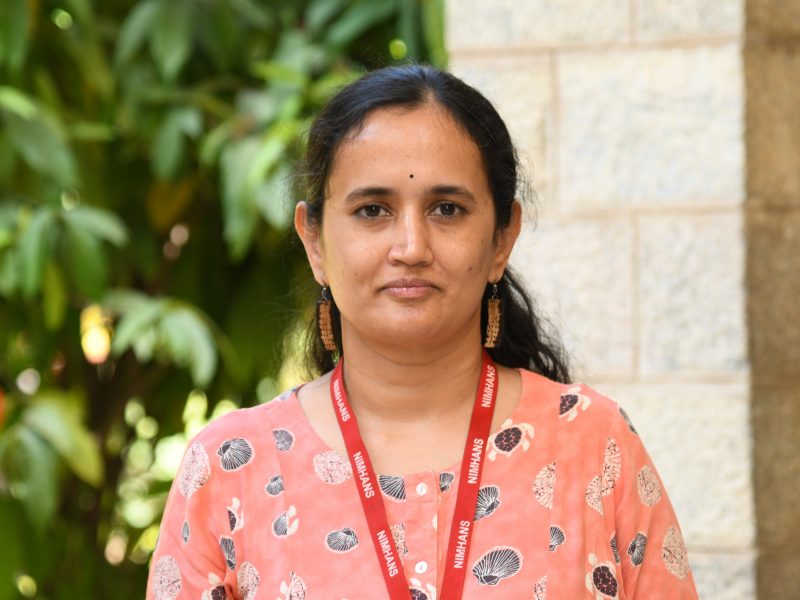
Veena Satyanarayana is an Additional Professor in the Department of Clinical Psychology at the National Institute of Mental Health and Neuro Sciences (NIMHANS), Bangalore. She provides psychotherapy services for individuals, couples and families, and supervises young trainees. She has worked on several prestigious national and international research grants on gender, violence, and women’s mental health in a leadership role. Much of her research work is also published in peer reviewed national and international journals. She has been invited as a technical expert by several national and international organisations, including the World Health Organization, in order to participate in policies and programs in the area of women’s mental health.
Sneha Visakha
Sneha Visakha is a Research Fellow at Vidhi Centre for Legal Policy, Karnataka. Her areas of research include urban development, municipal governance and feminist urbanism. She is a 2015 law graduate from ILS Law College, Pune and pursued a postgraduate diploma in liberal studies from Ashoka University. She has previously worked at the Chairman’s office, Quality Council of India on projects with the Ministry of Petroleum and Ministry of Railways, and at the Hyderabad Urban Lab, where she researched legal and policy aspects of urban heritage conservation.
