

- This event is over. However, time travel possible through our Audio & Video! See upcoming events
BIC Masterclass by Adoor Gopalakrishnan
Learning from Experience
Speakers
https://www.filmcompanion.in/adoor-gopalakrishnan-masterclass-kathapurushan-mammootty-vidheyan-mathilugal-elippathayam
https://www.filmcompanion.in/adoor-gopalakrishnan-masterclass-kathapurushan-mammootty-vidheyan-mathilugal-elippathayam – a blog post about the Masterclass by Adoor Gopalakrishnan
This masterclass by Adoor Gopalakrishnan will be structured around four of his films – Elippathayam (Rat-trap), Mathilukal (Walls), Vidheyan (The Servile) and Kathapurushan (The Man of the Story).
After each screening, the director will take the participants through a discussion and the process of making of that particular film, thus journeying from the specific to the general aspects of the craft of film making.
Schedule:
| Date/Time | Film | Synopsis |
| Nov 23 | 2:00 pm | Kathapurushan
(The Man of the Story) |
Kathapurushan is an attempt to epitomize the eternal struggle of the human spirit to assert itself against regimentation and repression that any system of establishment or governance is bound to impose on the free will of the individual. The protagonist of Kathapurushan is a never-say-die young man who turns both triumph and failures as moulds for aspiring nobility of mankind.
A society in transition – from a cast-iron feudal order to the plastic present – provides the backdrop as well as the thematic material of the film. The film traces the rational yet difficult course of the growth and development of a middle class mind – gentle, sensitive and impressionable – who ultimately finds release from his timidity and inhibitions as he discovers creativity in himself as a writer. |
| Nov 23 | 6:00 pm | Vidheyan (The Servile) | Thommi is an innocent immigrant labourer from Kerala who has moved to neighbouring South Karna taka in search of land and a new life. There, his life gets inextricably entangled with that of Patelar, a degenerate and whimsical landlord. His inability to put up any resistance in the beginning eventually leads to Thommi’s total surrender to Patelar, For Thommi, Patelar proves to be both depriver and benefactor at the same time. |
| Nov 24 | 2:00 pm | Mathilukal (Walls) | Mathilukal is a free adaptation of the novelette of the same name, written by the celebrated Malayalam writer, Vaikom Muhammad Basheer.
Autobiographical in character, it is set against the background of India’s freedom struggle in the ’40s when he was serving a term of imprisonment in the Trivandrum Central Jail. Basheer embodies the spirit of the free mind. His formal education had stopped with the fourth form when, heeding Gandhi’s call, he ran away from school to take part in India’s freedom struggle. He was beaten up by the police and jailed for defying the Salt Laws. On coming out of jail, he organised a terrorist movement on the Bhagat Singh model – which again set the police on his trail. He left his home in Kerala and wandered around the country for nearly seven years. Worked as deckhand, cook, compositor, tutor, palmist among many other odd jobs – and donned the robes of both sufi and sanyasin. On returning home, he was promptly picked up by the police of the tyrannical Dewan of Travancore.* |
| Nov 24 | 6:00 pm | Elippathayam (Rat-trap) |
Unni, head of a decaying joint family, with his vestigial feudal attitude, is unable to cope with or reconcile to the realities of a new society. He withdraws like a rat into a dark hole. Haunted by a sense of guilt and isolation he slowly slips into paranoia. Unni, the middle-aged greying man represents a disintegrating social order which held sway in Kerala (South India) for long. He remains unaffected by the socio-economic changes that have altered life even in remote villages. His vestigial feudal attitude makes him a misfit in a changing society.
|
Adoor Gopalakrishnan will be in conversation with Maithili Rao and Basav Biradar on day 1 and day 2 respectively
Speakers
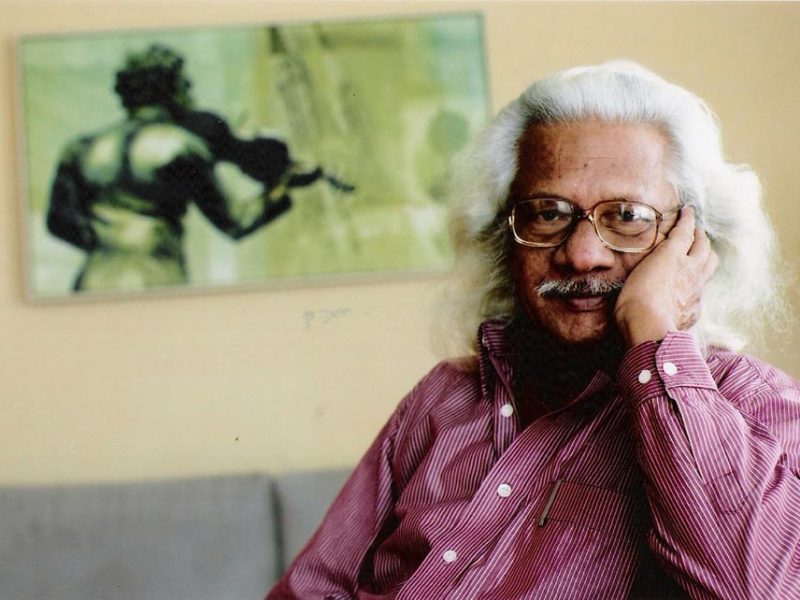
Adoor Gopalakrishnan
Writer – Director Adoor Gopalakrishnan was born in Kerala, India in 1941 into a family that patronized Kathakali and other classical performing arts. He started acting on the amateur stage at the early age of eight. He also wrote and directed several stage plays during his student days.
Adoor graduated from the Gandhigram Rural University in 1960 specializing in Economics, Political Science and Public Administration. He left the government job of a statistical investigator to study cinema at the Film Institute of India, Pune.
On graduating in 1965 with specialization in Screenplay Writing and Advanced Film Direction, he pioneered the film society movement in Kerala. The same year, he took the initiative to form India’s first film co-operative for production, distribution and exhibition of quality films.
He has scripted and directed twelve feature films and about thirty short films and documentaries. Notable amongst the non-feature films are those on Kerala’s performing arts.
His debut feature, Swayamvaram went on to win the national awards for best film, best director, best cameraman and best actress.
He has since received national awards for best director five times, best screen playwright twice and best film two times. Adoor’s third feature, Elippathayam won him the coveted British Film Institute Award for ‘the most original and imaginative film’ of 1982. The International Film Critics Prize (FIPRESCI) has gone to him six times successively for Mukhamukham, Anantaram, Mathilukal, Vidheyan, Kathapurushan and Nizhalkkuthu. Winner of several international awards like the UNICEF film prize (Venice), OCIC film prize (Amiens), INTERFILM Prize (Mannheim) etc, his films have been shown in Cannes, Venice, Berlin, Toronto, London, Nantes, Rotterdam and every important festival around the world.
His collection of essays, Cinemayude Lokam (The World of Cinema) was given the national award for the Best book on Cinema in 1984.
Cinemaanubhavam (The Experience of Cinema), a collection of articles dealing with the art and practice of cinema won the Kerala State award (2004) for best book on Cinema.
His third book, Cinema, Saahityam, Jeevitham (Film, literature and Life) was published in 2005. His fourth book, again a collection of essays, Cinema – Samskaram (Cinema – Culture) published in 2011 received the Kerala Sahitya Academy Award for Essay.
In 2002, the Smithsonian Institution in Washington honoured him by holding a complete retrospective of his work.Other major retrospectives of his films include those at the Cinematheque in Paris, La Rochelle, Pesaro, Lincoln Centre- New York, Fribourg, Lyons, Ljubljana, Munich etc. He has served on the juries of Venice, Singapore (Chair), Hawaii, Fribourg (Chair) Alexandria (Chair), New Delhi, Sochi, Shanghai, Dubai (Chair), Cairo (Chair), Valladolid (Chair), Goa (Chair) etc.
International film festivals of Denver, Cairo, MAMI (Bombay), Colombo and New Jersey have honoured him with Life Time Achievement Awards.In recognition of his contribution to international cinema, The French Govt. has bestowed on him the ‘Legion of Honour’ with the title, ‘The Commander of the Order of Arts and Letters’ the top French honour for culture (2004). In 2005 he received the Dada Saheb Phalke Award, India’s highest national honour for Lifetime achievement in cinema. The same year Mahatma Gandhi University, Kerala conferred on him the honorary degree of D. Litt. In the year 2006 he received India’s top civilian award, Padma Vibhushan for his contribution to the Arts (Cinema).
In 2010 the University of Kerala conferred on him the honorary degree of D.Litt. On 15th April, 2013 the University of Wisconsin in Milwaukee formally inaugurated ‘The Adoor Gopalakrishnan Film Archive and Research Fund’ to preserve his films and also to encourage and promote study and research of his work. In 2014 he received the high honour of ‘Deshikottama’ (D.Litt.) from the Viswabharati University of Shantiniketan.
In 2015 he was awarded the Dr. Bhupen Hazarika International Prize for Life Time Achievement. In 2017, he became the receipt of the ‘J. C. Daniel Award’ for Life Time Achievement in Cinema from the Govt. of Kerala. “ Also, the same year he became the recipient of the ICON Award given by the London Indian Film Festival.
Maithili Rao
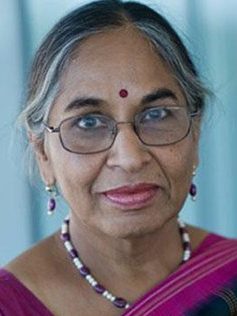
Maithili Rao is a freelance film critic and author, now based in Mysore. She is author of Smita Patil, A Brief Incandescence (Harper Collins, now translated into Marathi). Her next book, The Millennial Woman, Bollywood’s New Brand? will be out next year.
She has written for major national and international publications among them The Hindu, Frontline, Film Comment, International Film Guide, Sunday Observer and Eves Weekly where she wrote a column on ‘Images of Women’ for a decade. Currently, she writes a column on current cinema’ for Man’s World.
She has contributed chapters to many books: Encyclopaedia Britannica of Hindi Cinema, Bollywood (Dakini Publications), Chapter on Amitabh Bachchan for Icons (Roli), Bimal Roy: The Man Who Spoke in Pictures (Penguin), Madhumati (Rupa), Janani (Sage) all edited by Rinki Bhattacharya.
She has served on national and international juries and was member of nominations council of the Asia Pacific Screen Awards.
Basav Biradar
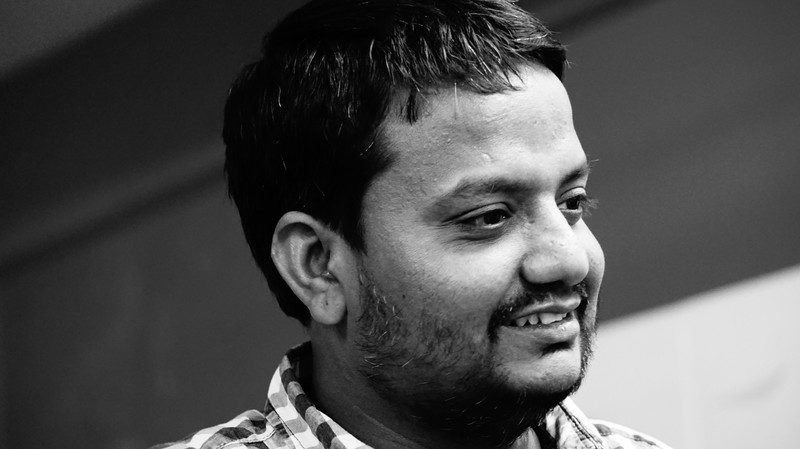
Basav Biradar is an independent writer/researcher, documentary filmmaker and theatre-maker based in Bangalore, India.
His first documentary – Before The Third Bell – was the official selection for the 2018 Martin Segal Centre Film Festival on Art in New York. The film seeks to document the theatre-making processes of noted director Abhishek Majumdar through the play Muktidham. Recently, he has finished a short documentary on the history of Kolar Gold Fields.
Biradar teaches two post-graduate courses in Azim Premji University:‘India through the eyes of Parallel Cinema’, and ‘Introduction to Contemporary Theatre in India’.
He has written for several publications on theatre, cinema, travel, history and heritage conservation, including – National Geographic Traveller, Outlook Traveller, The Hindu, New Indian Express, The News Minute and The Caravan.
Besides directing several plays, he is a playwright. His first – The Return of the Sultan – a satire set in contemporary Srirangapatnam, was longlisted for The Hindu Metroplus Playwright Award 2013; currently, he is writing a play on the youth in tier-3 & -4 towns in Northern Karnataka.
