
- This event is over. However, time travel possible through our Audio & Video! See upcoming events
Is India Today the Swaraj of Mahatma Gandhi’s Dreams?
Prof. Mridula Mukherjee Delivers the Prof. Satish Chandra Memorial Lecture
Speaker
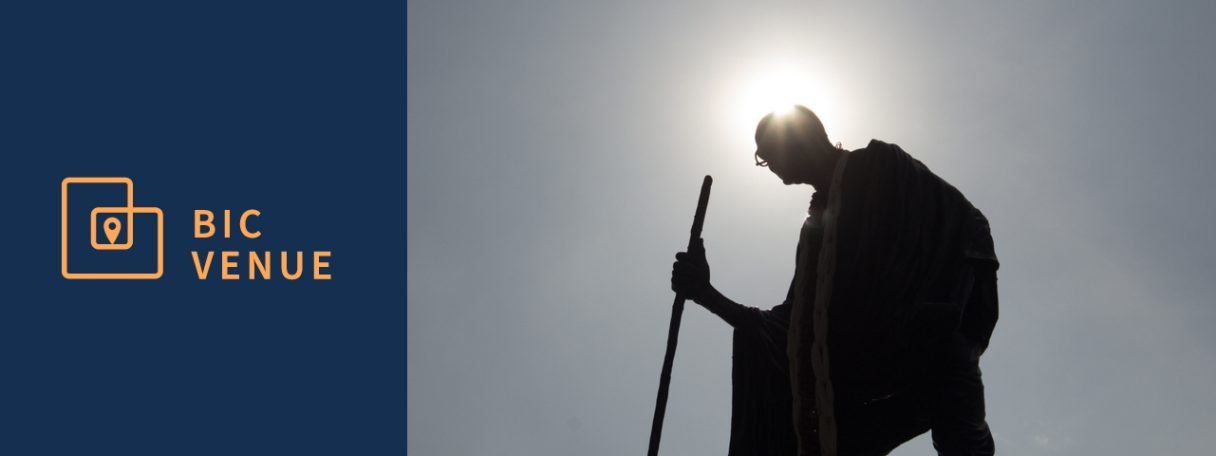
Gandhiji gave expression to his dreams for Swaraj or Independent India on many occasions in many ways.
“The Swaraj of my…our…dream recognizes no race or religious destinations. Nor is it to be the monopoly of the lettered persons nor yet of moneyed men. Swaraj is to be for all, including the farmer, but emphatically including the maimed, the blind, the starving toiling millions.” Young India, 26-3-1931
“It has been said that Indian Swaraj will be the rule of the majority community, i. e. the Hindus. There could not be a greater mistake than that. If it were to be true, I for one would refuse to call it Swaraj and would fight it with all the strength at my command, for to me Hind Swaraj is the rule of all people, is the rule of justice.” Young India, 16-4-1931
This talk will explore the multiple facts of the Mahatma’s vision for India, especially his ideas and practice on religion and secularism, democracy and dissent, violence and non-violence. It will also pose the question: to what extent have we been faithful to Gandhiji’s dreams? Where have we failed him? Does the India of his dreams remain an ideal for Indians today?
About Prof. Satish Chandra
Prof. Satish Chandra (1922 – 2017) was a leading authority on Medieval Indian History.
In a career spanning nearly 40 years, Prof. Chandra taught history at Allahabad University, Aligarh Muslim University, Delhi University, Rajasthan University, and finally the Jawaharlal Nehru University (JNU), where along with S. Gopal, Bipin Chandra and Romila Thapar he co-founded the Centre for Historical Studies.
In between, from 1972 to 1980 he was first Vice Chairman and then the Chairman of the University Grants Commission.
In 1985, along with intellectuals like Prof. Nurul Hasan and marine biologist Dr. Zahoor Qasim he founded the Society for Indian Ocean Studies, which among other activities brings out the quarterly Journal for Indian Ocean Studies.
Son of Sir Sita Ram, India’s first High Commissioner to Pakistan (1947-48), Prof. Chandra has along with some other JNU historians been said to have been a ‘left leaning historian’ who espoused the Marxist approach to history, and one whose early experiences helped bridge the intellectual gap in interpreting medieval Indian history and modern times.
Speaker
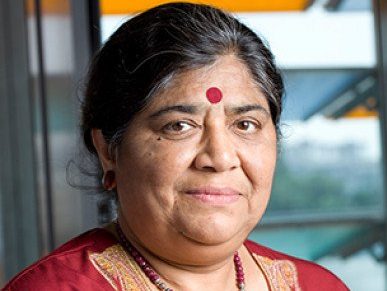
Mridula Mukherjee
Professor Mridula Mukherjee taught history at the Jawaharlal Nehru University for over four decades, having joined their Centre for Historical Studies in 1972. She was also the Director of the Nehru Memorial Museum and Library. She has authored many books, including the best- selling India’s Struggle for Independence and India since Independence (with Bipan Chandra and others).
