
- This event is over. However, time travel possible through our Audio & Video! See upcoming events
Gandhi, the Philosopher
In His Time and Ours
Speakers
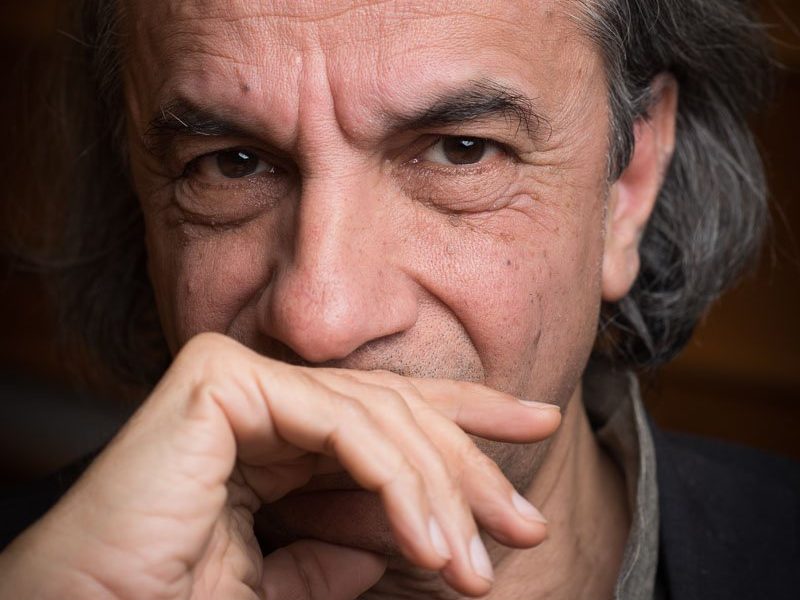

In Gandhi’s Integrity: Thinking Radically with Gandhi on Religion, Caste, Capital, Liberalism, Science, and Culture (forthcoming Columbia University Press), Akeel Bilgrami presents an account of the many aspects of Gandhi’s thought in a framework that integrates his resistance against imperialism with his critique of capitalist modernity, raising fundamental questions about how we should understand the relevance of these ideas for our own time and concerns.
A panel discussion with Akeel Bilgrami (Author), Chandan Gowda (RK Hegde Chair Professor, ISEC) and Rajeev Kadambi (Associate Professor, OP Jindal Global University) moderated by Vishnupad (Dean, ESLA, SRM University, AP) will be followed by a Q&A session with the audience.
In collaboration with:

Speakers
Akeel Bilgrami
Akeel Bilgrami got a B.A in English Literature from Elphinstone College, Bombay University and went to Oxford as a Rhodes Scholar, where he read Philosophy, Politics, and Economics. He has a Ph.D. in Philosophy from the University of Chicago.
He has held the Johnsonian Professorship of Philosophy and holds the Sidney Morgenbesser Chair of Philosophy at Columbia University, where he is also a Professor on the Committee on Global Thought. He has been the Director of the Heyman Centre for the Humanities from 2003-2011 as well as the Director of the South Asian Institute at Columbia from 2013-2016.
His publications include the books Belief and Meaning (Blackwell, 1992), Self-Knowledge and Resentment (Harvard University Press, 2006), and Secularism, Identity and Enchantment (Harvard University Press 2014, Permanent Black Press 2014), Culture, Capital and the Commons (Permanent Black Press 2022 and Juxta Press 2022). He is due to publish two new books in 2024 and 2025: Gandhi’s Integrity (Columbia University Press) and What is a Muslim? (Princeton University Press). His long-term future work is on the relations between political agency, value, and practical reason.
Vishnupad
Prof Vishnupad is the Dean of Easwari School of Liberal Arts (ESLA), SRM University, AP. Before joining ESLA, he taught at Azim Premji University, Bangalore, and several institutions in North America. He researches on Indian secularism, on consumption practices following economic liberalization in I990s, and on social implications of the new media technologies in India. He has a doctorate in anthropology from Columbia University.
Chandan Gowda
Chandan Gowda is Ramakrishna Hegde Chair Professor of Decentralization and Development at the Institute for Social and Economic Change, Bengaluru. A book of his essays titled, Another India: Events, Memories, People (Simon and Schuster, India), was published last year.
Another book of his titled, Birmingham in Mysore: The Colonial Origins of India’s Developmental State, will be published by Oxford University Press (New York) later this year. At present, he is co-translating and editing The Greatest Kannada Short Stories Ever Told (Aleph) and Daredevil Mustafa (HarperCollins, India), a book of short stories by the Kannada writer, Purnachandra Tejasvi. He is a columnist with Deccan Herald.
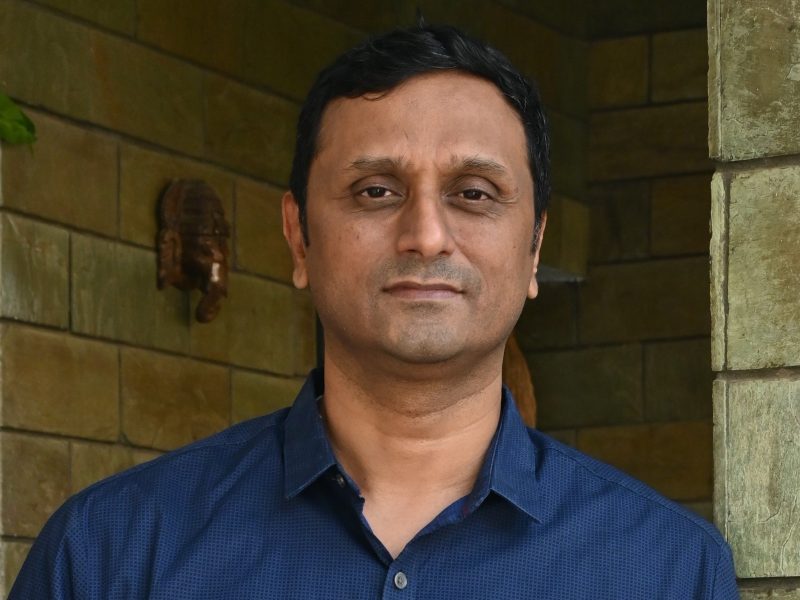
Rajeev Kadambi
Rajeev Kadambi is an Associate Professor at O.P. Jindal Global University, where he teaches political theory/political philosophy. He is interested in political theory from a comparative philosophical and ethical perspective. Rajeev is currently working on his manuscript on M.K. Gandhi’s ethical thought, examining Gandhi’s reconstruction of Indian traditions as forms of knowledge.
