
- This event is over. However, time travel possible through our Audio & Video! See upcoming events
From the Frugal to the Ornate
Stories of the Seat in India
Speakers
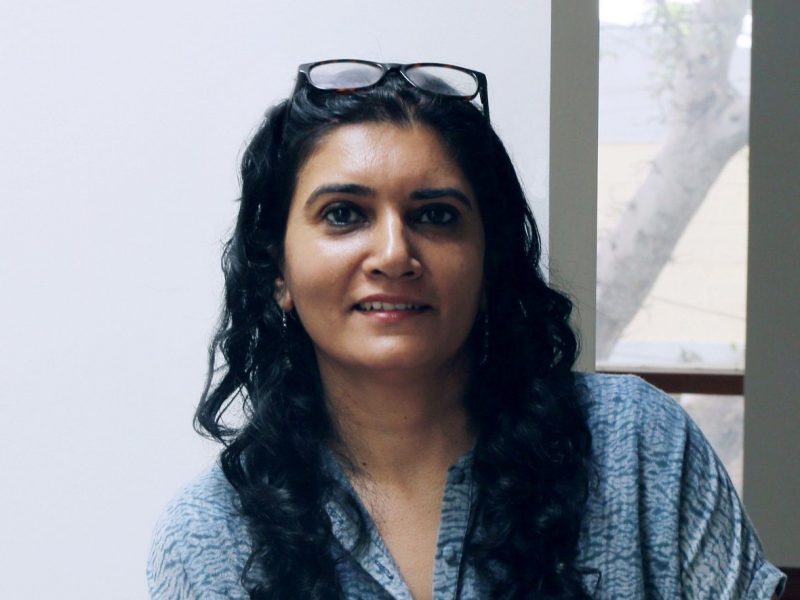
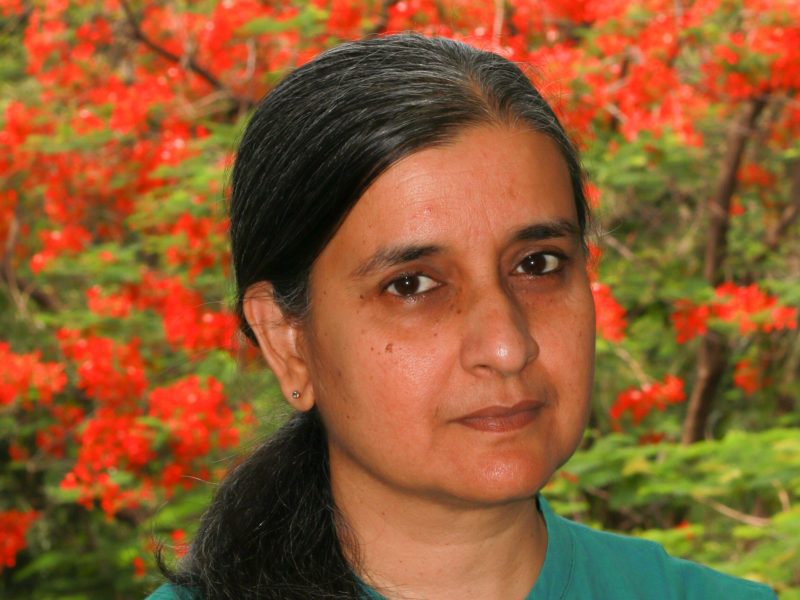
Cross-linking disciplines from contemporary design practice and production to design anthropology and cultural trends, Sarita Sundar’s book ‘From the Frugal to the Ornate’ investigates and spotlights the seat’s relationship with its sitter, and other people in its periphery. It examines the power the seat wields, and the power it grants by sheer association. Bestowing life and spirit into objects, the book asks: what is the seat for, what are the worlds to which it belongs, what worlds have been (and will be) opened by it? By deconstructing the seat, From the Frugal to the Ornate: Stories of the Seat in India, reflects upon the marked shift in the way practitioners, users, and analysts conceptualize and engage with object culture and a subsequent ‘turn to the material’.
Godrej Archives launches the book ‘From the Frugal to the Ornate’ by Sarita Sundar on 19th July. There will be a panel discussion with Sarita Sundar (Author of the book and Founder, Hanno), Deepak Srinath (Founder/CEO, Phantom Hands), Sandeep Sangaru (Designer/Founder, Sangaru Design Objects) moderated by Suchitra Balasubrahmanyan (an independent scholar of Design Studies), around the evolution of the seat or The Chair in the backdrop of the larger social and cultural history of the Indian subcontinent.
Presented by Godrej Archives

Located in Mumbai, Godrej Archives collects, preserves and manages records covering 125 years of the company’s history. The idea was mooted in 1997, the group’s centenary year, by Mr. Sohrab Godrej, former chairman of the Godrej group, who had over the years, taken up the task of collecting relevant documents and photographs. Since then, Archives has been recording the history of Godrej – its products, plants and people – and making it available for research. The Archives helps the organisation identify records that are of historical value. Godrej Archives works in collaboration with preservation and conservation experts in the country to conserve records using state-of-the-art standards and practices. Over the years, the Archives has motivated researchers, academicians, students as well as artists to engage with history through research fellowships, lectures and artistic interventions to educate the masses about the imminent importance of the Archives and the valuable history of our lived world that is especially significant for the Indian subcontinent.
Speakers
Sarita Sundar
Sarita Sundar’s practice and research spans heritage studies, popular and visual culture, and design theory. At Hanno, her heritage interpretation and design consultancy, she combines 30+ years of working with brand design and strategy with her academic training in museum studies. Over the years, she has engaged in critical enquiries into how culture engages with the visual, ranging from research into Indian vernacular typography (‘Indians don’t like White Space, 2016-) to studies of intangible culture in performance practices (The Goddess and her Lieutenant: objects systems at a village festival, 2016). She recently contributed an essay on the recording of crafts in India for an edited volume by Routledge.
Sarita has a Postgraduate degree (M.Des.) in Visual Communications from the National Institute of Design, NID, Ahmedabad (1990) and a Master of Arts in Museum Studies from the University of Leicester, UK (2016). She was founding partner at an award winning multi-disciplinary design company, Trapeze for a decade before moving her focus to her research interests at Hanno. She received The Professor Eilean Hooper-Greenhill Academic Prize for 2016 from the School of Museum Studies, University of Leicester and an Arts Research Grant from the India Foundation for the Arts (IFA) to study Poothan Thira, a Ritual Performance from Kerala (2015-2017). She builds upon her past work through an upcoming 2022-2023 Fulbright Visiting Scholar Fellowship that takes a critical look at the intersectional milestones in Indian and American design histories.
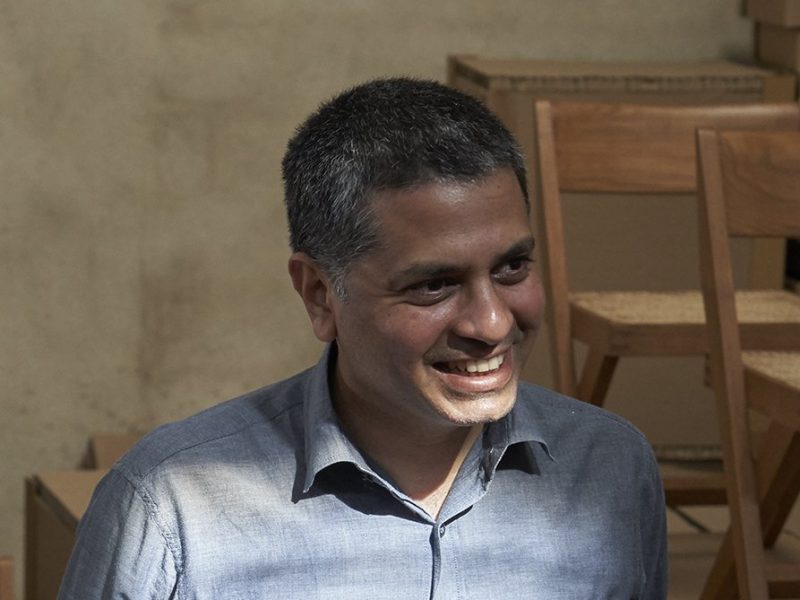
Sandeep Sangaru
Sandeep Sangaru is a multidisciplinary designer, educator, entrepreneur and a nomad by nature. He studied Industrial design and has specialised in Furniture design from the National Institute of Design, Ahmedabad with a background in Mechanical Engineering. He owns Sangaru Design Studio, a multidisciplinary design consultancy firm and founded Sangaru Design Objects Pvt. Ltd, a design led manufacturing company based in Bangalore, India.
Being multidisciplinary, Sandeep explores different Mediums and Materials. Since inception his studio has been actively involved with the Craft Sector working with local people with local material to create global products as this is exciting and creatively satisfying. Craft has always been a need-based process from ages and using design to interface the skills of the artisans is something he wants to work towards. Sangaru Design Objects Pvt. Ltd. designs, manufactures and markets furniture, products and accessories for contemporary urban Home, Work and Play, which will “bring together traditional knowledge & skills in crafts with design and technology to make objects of daily use invaluable, accessible and enjoyable”. Teaching is a refresher, and he enjoys it. Photography and filmmaking are some of his other passions and he tries to create an opportunity to explore these mediums to document the fascinating “Way of Life” in different regions.
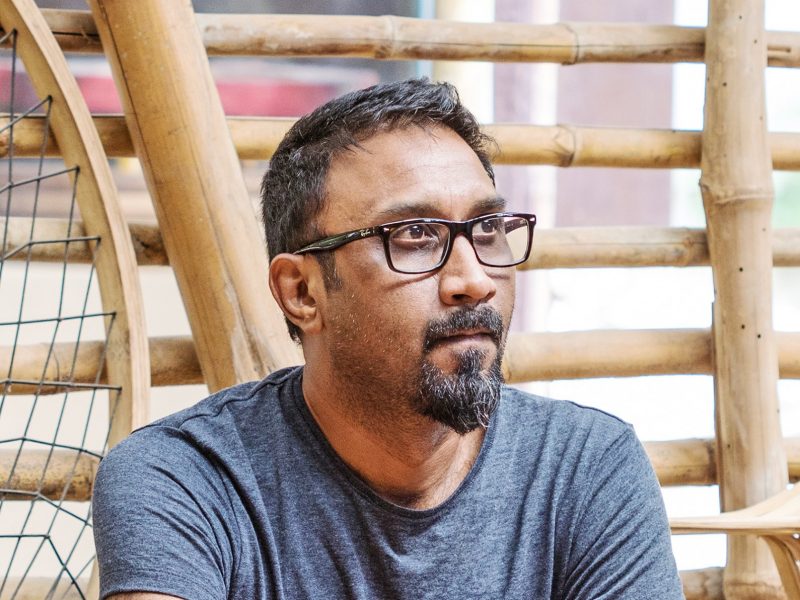
Deepak Srinath
Deepak Srinath is Founder & CEO of Phantom Hands, a design and craft driven furniture making firm based in Bangalore, India. With a focus on Indian Modernism, Phantom Hands’ collections include re-editions of mid-century classics, as well as contemporary objects created in collaboration with acclaimed furniture and textile designers. Their products are retailed in over 20 countries via a network of premium retail partners and distributors.
Prior to this, Deepak started out as an entrepreneur in the field of information technology and later went on to work with other IT firms in India and abroad. For the last several years, he has led multiple venture capital fund raising advisories for Internet, SaaS and Digital Technology firms. His intense passion for architecture, design and vintage furniture led him to set up Phantom Hands that creates handcrafted, design-driven contemporary furniture and whose name itself is a homage to the legacy of the past artisans whose contributions manifest in each piece they make.
Suchitra Balasubrahmanyam
Suchitra Balasubrahmanyan is an independent scholar and visiting professor of design based in Ahmedabad, India. Her research interests centre on nineteenth and twentieth-century craft and design in India against the backdrop of decolonization and nationalism. Her publications include “The India-Pakistan border as site for the production of national identity: Heritage by design” (2021); “Moving away from Bauhaus and Ulm” (2019) and “Craft and Design in the Hindu way of life” (2018); Atoot Dor/Unbroken Thread: Banarasi Brocade Saris at Home and in the World (co-edited 2016); Ahmedabad 1411-2011: Portraits of a City (co-edited 2011); Ahmedabad: From Royal City to Megacity (co-authored 2011), The Shaping of Modern Gujarat: Plurality, Hindutva and Beyond (co-authored 2005).
Her current research is about ‘modern’ block printed textiles in western India through two interconnected projects. The first is a biography of Maneklal Gajjar (c.1933-2012), textile block maker and master craftsman from Pethapur, Gujarat, supported by India Foundation for the Arts, Bangalore. The second project, supported by the Royal Ontario Museum, explores urban textile-craft histories in India through an archive of over 7000 hand-carved wooden blocks retrieved from a textile printing unit in Mumbai/Bombay. Both projects challenge the association of block-printed Indian textiles with an unbroken past, by uncovering their adaptive response to contemporary issues and their receptivity to global influences.
