

- This event is over. However, time travel possible through our Audio & Video! See upcoming events
41. The Pandemic in Focus (with Veena Das and Maya Ratnam)
What can anthropology & sociology tell us?
Speakers
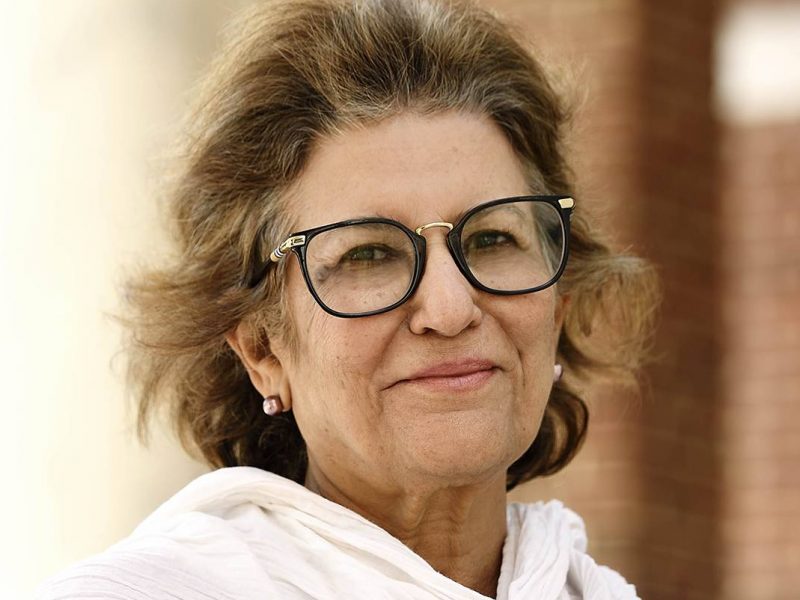
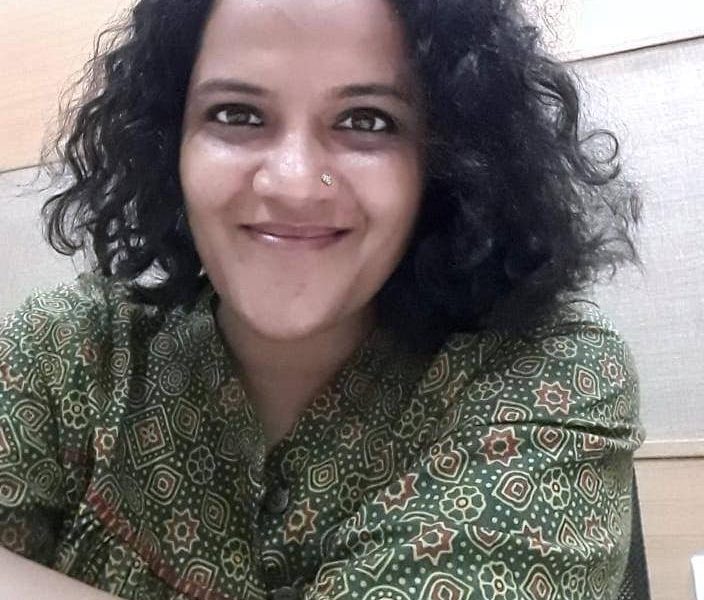
Anthropologists Veena Das and Maya Ratnam explore what sociology and anthropology can inform us about the ongoing pandemic and crisis and how it affects the everyday lives of people, the nature of the State, and societal reaction to the crisis.
Veena Das is Krieger-Eisenhower Professor of Anthropology at the Johns Hopkins University. Before joining Johns Hopkins University in 2000, she taught at the Delhi School of Economics for more than thirty years and also held a joint appointment at the New School for Social Research from 1997- 2000. Veena is passionately interested in the question of how ethnography generates concepts; how we might treat philosophical and literary traditions from India and other regions as generative of theoretical and practical understanding of the world; how to render the texture and contours of everyday life; and the way everyday and the event are joined together in the making of the normal and the critical.
Maya Ratnam is an Assistant Professor in the Social Sciences Division of Ahmedabad University. Her training is in Social Anthropology, and her academic areas of focus are the environmental history and anthropology of India, with particular reference to indigenous and resource-dependent communities.
Don’t miss jazz singer Radha Thomas from Bangalore and pianist Tomoko Ohno Farnham from New York presenting the love song, Corona Kinda Crazy, at the end of the episode.
More from Veena Das:
Charity alone cannot win this war on the poor: Deccan Chronicle, April 06, 2020.
Corona policy must factor in scientific uncertainty: Deccan Chronicle, May 24, 2020.
The ‘new normal’ in healthcare is a myth: Deccan Chronicle, June 28, 2020.
Speakers
Veena Das
Veena Das is Krieger-Eisenhower Professor of Anthropology at the Johns Hopkins University. Before joining Johns Hopkins University in 2000, she taught at the Delhi School of Economics for more than thirty years and also held a joint appointment at the New School for Social Research from 1997- 2000. She is a Fellow of the American Academy of Arts and Sciences and of the Academy of Scientists from Developing Countries. She was awarded the John Simon Guggenheim Fellowship in 2009 and the Anders Retzius Award of the Swedish Society of Anthropology and Geography in 1995 and the Ghurye Award in 1977. She received an honorary doctorate from the University of Chicago in 2000 and from the University of Edinburgh in 2014. Most recently she was awarded the Nessim Habif Prize by the University of Geneva.
Veena Das’s research covers a range of fields. She is passionately interested in the question of how ethnography generates concepts; how we might treat philosophical and literary traditions from India and other regions as generative of theoretical and practical understanding of the world; how to render the texture and contours of everyday life; and the way everyday and the event are joined together in the making of the normal and the critical. Her work on collective violence and urban transformations has appeared in many anthologies. Her most recent books are Life and Words: Violence and the Descent into the Ordinary (2007) Affliction: Health, Disease, Poverty (2015) and three co-edited volumes, The Ground Between: Anthropologists Engage Philosophy (2014), Living and Dying in the Contemporary World: A Compendium (2015) andPolitics of the Urban Poor (forthcoming). Her graduate students are working on a number of issues in different parts of the world and her work is deeply informed by her heady interactions with them.
Veena Das has taught graduate level courses in which she take students through major concepts (networks, relations, ontology, ethics, the subjunctive, sovereignty , etc.) embedded in ethnographic texts for the Proseminar; how to find a thematic within a region (Regions course); how to analyze the pre-dissertation fieldwork so as to write a paper that is anthropological (Methods course). She has taught graduate level courses on Anthropology and Historiography, Performance Theory and Anthropology and Philosophy. She has taught upper level undergraduate courses on the themes of Death and Dying. Violence and Non-Violence, Visual Vocabularies in Medicine, and lower level courses such as “Invitation to Anthropology” Students are expected to do groups work to learn the virtues of co-operation.
Maya Ratnam
Maya Ratnam joined the Social Sciences division of the School of Arts and Sciences as Assistant Professor in 2019. Her training is in Social Anthropology, and her academic areas of focus are the environmental history and anthropology of India, with particular reference to indigenous and resource-dependent communities.
Professor Ratnam’s dissertation, titled Dwelling in the Forest: Nature, Power, and Society in Tribal Central India is presently being revised for publication. The dissertation explored the poetics and politics of everyday living in a ‘tribal’ or ‘adivasi’ landscape in eastern Madhya Pradesh, in the context of the enactment of the Forest Rights Act. Her continuing and expanding areas of interest include human-non human relationships, ecological futures in an era of climate change, and the relationship between politics and aesthetics. Professor Ratnam specialises in ethnographic and field-based research methods, bringing her understanding of the lived experience of communities to bear on wider conversations about environmental justice, state power and development.
A graduate of Delhi University, Professor Ratnam received her PhD in Anthropology from Johns Hopkins University in the US in 2017. Her doctoral research was funded by prestigious grants from the Wenner-Gren Foundation for Anthropological Research and the American Institute of Indian Studies. She has previously held teaching positions at Ashoka University and the Delhi School of Economics, and has taught both undergraduate and postgraduate students.
