
- This event is over. However, time travel possible through our Audio & Video! See upcoming events
181. #GirishKarnad(7/9): The River Has No Fear of Memories | Making of Modern Indian Theatre ft. Shanta Gokhale and Sunil Shanbag Part II
Conversations with Girish Karnad
Speakers
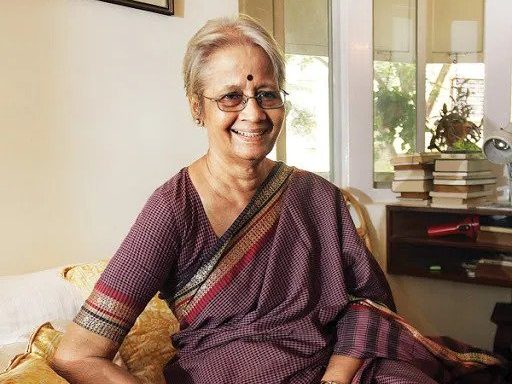

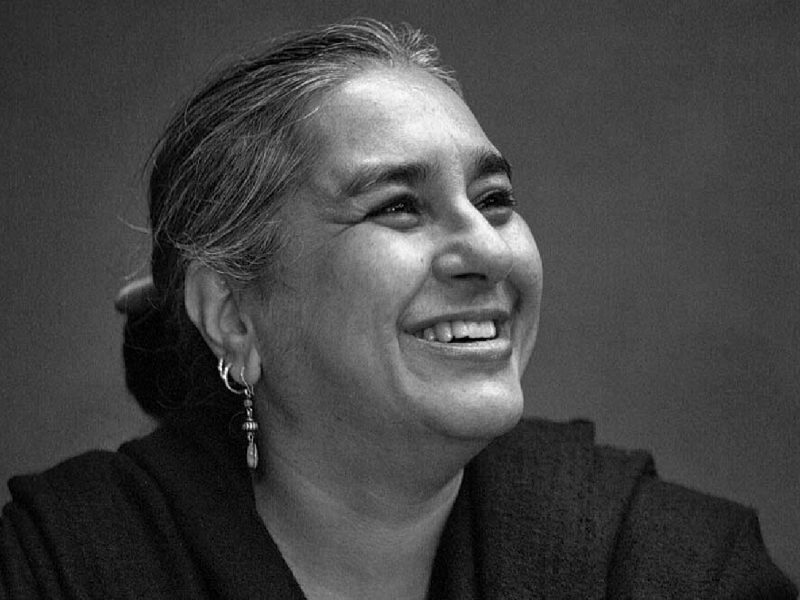

What was Girish’s impact on the national theatre scene? Did his plays influence or inspire other playwrights and theatre makers? In Part 2 of this episode, Shanta Gokhale and Sunil Shanbag talk about how the 60s and 70s were such a critical moment for theatre in different parts of India. They talk about the unique sensibilities that Girish brought to the stage and how Girish set himself apart from his contemporaries such as Vijay Tendulkar.
About the Series:
In June 2019, a few days before his death, Girish Karnad and Arshia Sattar had extensive conversations about his work, his life, and the concerns that had occupied him over almost sixty years as a writer and a public intellectual. This podcast is a distillation of those freewheeling conversations, a short intellectual biography to celebrate the life and work of one of India’s finest playwrights and thinkers. In this series, we hear Girish talk about Kannada literature, existentialism, making of modern Indian theatre, the art and craft of playwriting, and his life as a public intellectual.
The series is hosted by Arshia Sattar and Anmol Tikoo, with special guests such as Vivek Shanbhag, Shanta Gokhale, and Sunil Shanbag, who provide the context for Girish’s comments. Each episode also contains scenes from his plays read by members of Bangalore’s theatre community. The readings show us how closely his philosophical and political ideas were to what he wrote. They also provide an opportunity for audiences, particularly those who might not be already familiar with Girish’s works, to experience the power of his work.
The title for the series is taken from the song in Hayavadana (ಹಯವದನ), a song which has been musically recreated for us by Pallavi MD and Konarak Reddy. Apart from the fact that Neerina Mele Chitra remains one of Kannada’s most beloved ranga geethe, we found it to be particularly evocative as we remember a man who profoundly impacted India’s cultural arena in the last half of the 20th century. This podcast series, we hope, will bear witness to Girish Karnad, a man who gave us so much to remember, but also so much to take forward.
- Girish Karnad’s time with The Madras Players. (02:10)
- ‘Theatre in India’, by Girish Karnad, published in Daedalus, Vol. 118. (02:10)
- Shanta Gokhale on translation. (05:59)
- Photographs of Walchand Terrace and plays performed there. (10:56)
- Sunil Shanbag on the value of public spaces. (12:22)
- Girish Karnad on Vijay Tendulkar: Video and Essay (13:28)
- The original music of Ghashiram Kotwal. (16:13)
Other:
Supported by:

Speakers
Shanta Gokhale
Shanta Gokhale is a novelist, playwright, translator, cultural critic, columnist and theatre historian.
She was born in Dahanu and brought up in Mumbai. She did her Senior Cambridge from Bombay Scottish Orphanage Society’s High School, now known as Bombay Scottish School, B.A in English Literature and Language from Bristol University and Masters in English from Mumbai University. She has worked as a lecturer in English at Elphinstone College and H R College of Commerce, as a sub-editor with Femina, as a P R Executive with Glaxo Laboratories and as Arts Editor with the Times of India.
Shanta has been a writer and translator since 1960. She has written two novels, a few plays, a scatter of short stories, film scripts and innumerable newspaper articles. She has been a culture columnist with The Independent, The Sunday Times of India, Mid-Day and, since 2006, with Mumbai Mirror. Besides essays, short fiction, novels and autobiographies, she has translated plays by Vijay Tendulkar, Mahesh Elkunchwar, Satish Alekar, G. P. Deshpande and Rajeev Naik from Marathi into English and Gieve Patel’s play “Mr Behram” and Jerry Pinto’s novel “Em and the Big Hoom” from English into Marathi.
Shanta has also written a history of Marathi theatre and edited books on the works of theatre directors Satyadev Dubey and Veenapani Chawla as well as edited an oral history of experimental theatre in Mumbai, “The Scenes We Made”.
Sunil Shanbag
Sunil Shanbag is a Mumbai based theatre director, and documentary filmmaker and producer.
His film, Maihar Raag,directed by Arunabh Bhattacherjee, won the National Award for best non-fiction film in 1993. His Aamakaar, The Turtle People, directed by Surabhi Sharma, won the prestigious Ramsar MedWet Award at Ecocinema in Greece in 2004.
His films include a re-telling of the history of the Palanpuri Jain community which dominates the diamond trade in India and Europe, and “Sharing A Dream” which traces 50 years of the history of IIT Kanpur.
He works closely with contemporary dancer Astad Deboo in an ongoing project of visual documentation of his work. He has also created a visual archive in collaboration with ethnomusicologist Dr. Greg Booth of Auckland University, New Zealand, of oral histories of film musicians from Mumbai and Goa.
Arshia Sattar
Arshia Sattar obtained her PhD in South Asian Languages and Civilizations from the University of Chicago in 1990. Her abridged translations of the epic Sanskrit texts, Kathasaritsagara and Valmiki’s Ramayana have both been published by Penguin Books. She has also written books for children and her literary reviews appear regularly in various Indian and international publications.
Anmol Tikoo
Anmol Tikoo is a filmmaker and educator, most recently at the United World College, where he taught philosophy and film. He has worked on Indian and international film projects and written for various media outlets.
