
- This event is over. However, time travel possible through our Audio & Video! See upcoming events
ನೀಲಿ ಪರದೆ | Neeli Paradé (Season 3)
A Showcase of Short Films
Speakers
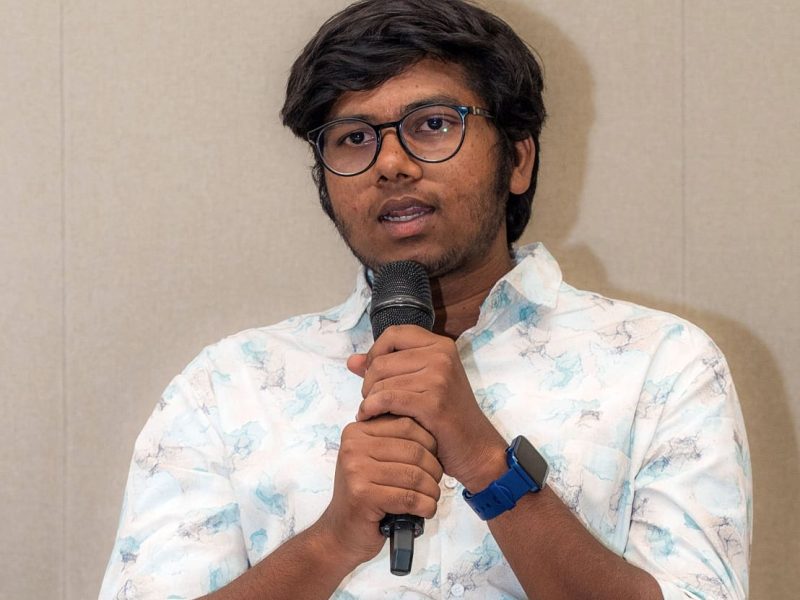
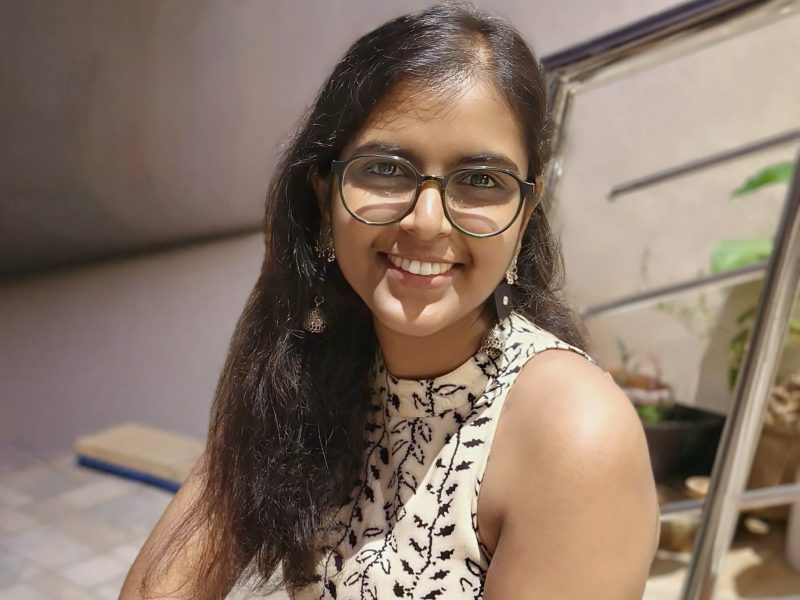
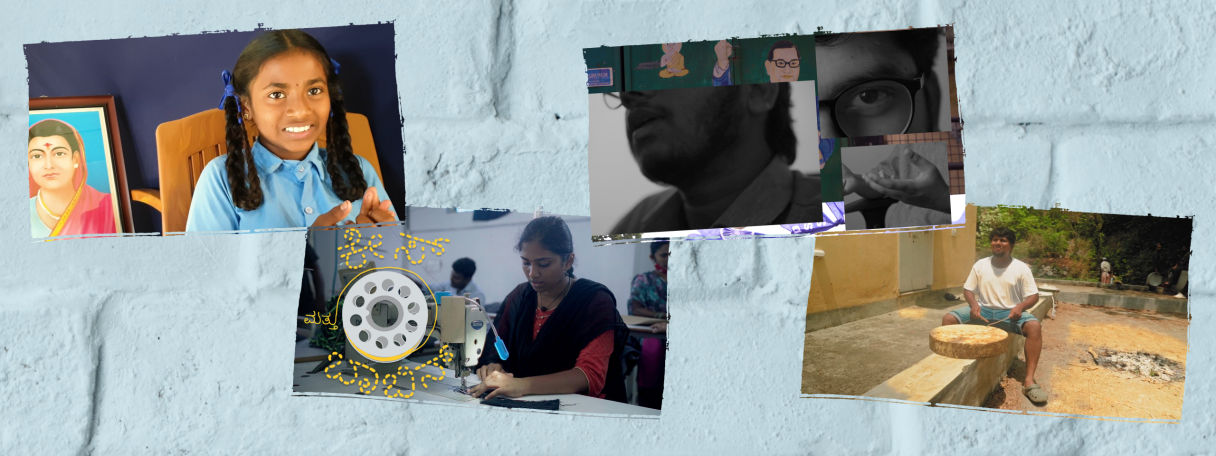
Neeli Paradé is a curated showcase of short films by Bahujan filmmakers under Neelavarana. The program celebrates Bahujan lives and experiences while creating a space for meaningful engagement with the filmmakers through conversations and discussions.
Following the screening, the filmmakers will be in conversation with the audience, moderated by Apeksha Singegol. The session will be in Kannada.
Film Schedule:
Song of Ghetto – Keri Haadu | 33 minutes | Kannada with English subtitles | 2025 | Chandrashekara K
It’s a film that documents the aftermath of a revolutionary protest that took place in Dindguru, a village in Karnataka. The event that sparked this revolution was when a man was not allowed to enter a coffee shop because he was a Dalit. This is unfortunately the case in every village in India. Caste is woven into the very fabric of the nation, an inescapable foe.
The Dalit Ghettos in Dindguru and the neighbouring village organised their movement against casteism. While the movement was successful, they now had to face the consequences of this protest. This is what the film captures, the state, stories of and resilience of the people and the many shapes and forms it takes. For those living in this ghetto, survival itself has become a form of resistance. The film captures the everydayness of this resistance as well as the everydayness of oppression.
Halgi Naadha | 8 minutes 27 seconds | Kannada with English subtitles | 2025 | Mahishaa and Bharath Dingri
The Tamte is everywhere in India except in its cultural institutions. Sounding through life’s most important moments of celebration and mourning, the instrument remains marginalised because of the caste of those who play it. Through the journey of Bharath Dingri, a generational Tamte artist, this documentary follows a quiet yet radical rebellion to challenge caste-based exclusion. By reimagining Tamte through workshops and pedagogy, Bharath asserts its place within India’s classical arts and works to restore dignity to its players.
Babasaheb in Bangalore | 4 minutes 22 seconds | Kannada with English subtitles | 2025 | Mahishaa
Bengaluru is a metropolitan city but you can’t escape the imagery of Dr. B.R. Ambedkar as a sign of assertion from India’s subaltern Marginalized castes. Statues are built by the blood and sweat of the people. Dr. B.R. Ambedkar or Babasaheb as his admirers affectionately call him has the most number of statues in India but the interesting fact is that none of these are built by the government like other statues. The film is a dedication to the people who have kept the philosophy of Dr. B R Ambedkar alive through his statues, we hear from the filmmaker and young people in the city & their relationship with these images.
Case & Bobbin – Casu Mathu Bobbin | 6 minutes 33 seconds | Kannada with English subtitles | Bharath Raj
In the heart of Bengaluru’s thriving garment industry, Shankuntala, Munira Banu, and Vijayamma work tirelessly in factories where the clothes of multinational brands are produced. While their labor is the backbone of the global fashion world, their lives are far from the glamorous image the industry projects. Enduring long hours, meager wages, and grueling working conditions, these women navigate a world defined by sacrifice and struggle, with little hope for work-life balance or personal fulfillment.
Their stories are a reflection of the millions of women in the industry who face similar challenges, yet continue to press on with remarkable resilience. Amidst the harsh reality, it is the dream of a better future for their children that keeps them going. Through their personal journeys, this documentary reveals the strength, endurance, and quiet defiance of women who fight not only for survival, but for dignity and hope.
In collaboration with:
Neelavarana
Neelavarana is a Bengaluru-based Ambedkarite production house and artist collective working primarily in the Kannada language. Engaging in counter-cultural practice through Dalit-Bahujan aesthetics, the collective produces films, music, and cultural events while nurturing artists from marginalized communities. Through collaboration, mentorship, and community-driven processes, Neelavarana creates spaces where Dalit and Adivasi voices can tell their own stories, challenge dominant narratives, and reclaim cultural expression.

Speakers
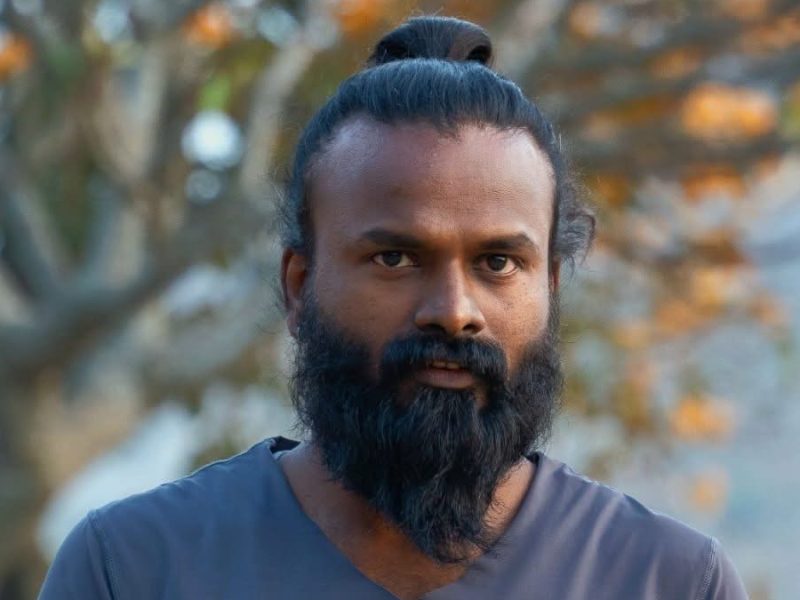
Chandrashekara K
Chandrashekara K is a director, filmmaker, and pedagogue whose practice is deeply rooted in movement and devising. His theatre journey has taken him across countries such as Japan, Germany, Lebanon, South Africa, and Switzerland, where he has been part of several international theatre experiments that shaped his artistic language.
Alongside theatre, Chandrashekara has worked as an actor in Kannada cinema, playing lead roles in films such as Gavisiddha and Mahasampark. As a director, he has helmed innovative and critically engaged plays like “Keri Haadu” and “Panchamapada”, reflecting his commitment to form, politics, and collective creation. He holds a postgraduate degree from the Department of Performing Arts, Bangalore University.
A founding member of the Jangama Collective, Chandrashekara continues to actively build theatre movements with marginalized communities and sexual minorities, using performance as a tool for dialogue and resistance. A collection of his stories is currently being prepared for publication. His recent performance in the play “Bob Marley from Kodihalli” has significantly strengthened the emotional and political force of the production.
Bharath Dingri
Bharath Dingri hails from Ashapura in Raichur district, Karnataka. He was introduced to songs of resistance at a young age by his father, a street play artist and activist. Growing up, Bharath traveled across villages and regions alongside his father, performing and immersing himself in people’s movements. During these journeys, he began playing the Tamate, a traditional folk percussion instrument, which became central to his artistic practice.
After working with well-known theatre repertories in Karnataka, Bharath pursued a Theatre Diploma from Ninasam and also holds a Diploma in Journalism. He regularly conducts workshops on playing the Tamate, sharing both its technique and cultural context.
Through songs and Tamate, Bharath engages deeply with Dalit aesthetics. He initiated his independent venture, Halgi Culture, with the aim of encouraging young people not only to learn the instrument but also to connect with Tamate rhythms as expressions of people’s lives and histories. In recognition of his work as a performer, he received the META award for Best Supporting Actor for his role in the play Daklakatha Devikavya.
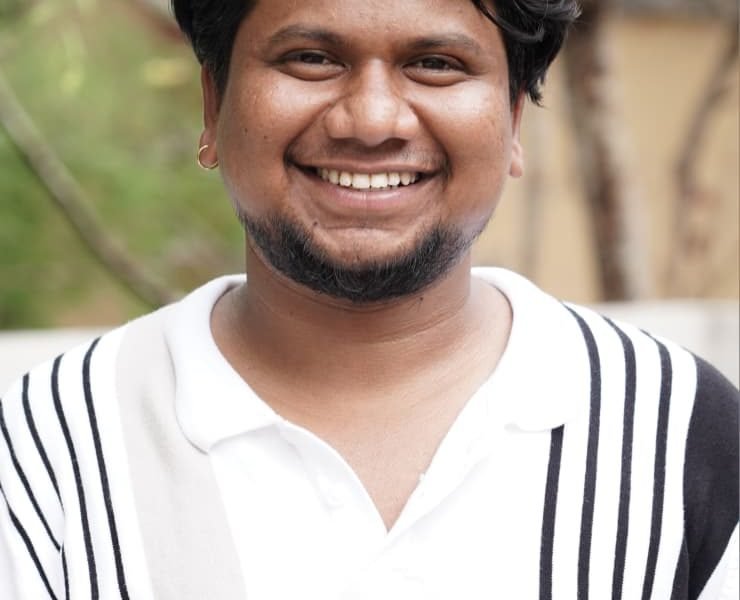
Mahishaa
Mahishaa is an Ambedkarite filmmaker based in Bangalore. Most of his work focuses on urban Bengaluru. His films navigate intersections of caste, gender & masculinity. He is the founder of Neelavarana, an Ambedkarite artist collective that produces short films, music videos & documentaries focusing on Bahujan stories made by people from the DBA community. His works try to focus on creating counter-culture narratives. His works have been showcased internationally like Melbourne, Australia , Berlin Germany and many other places.
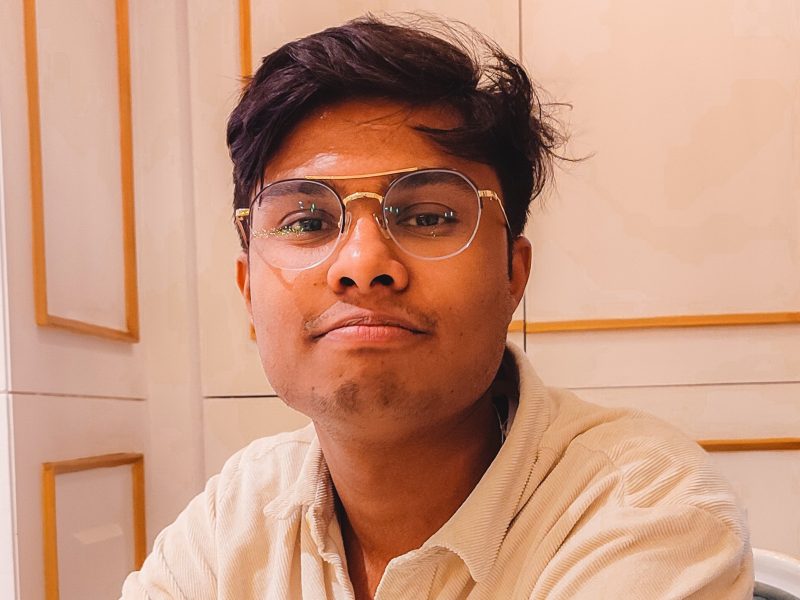
Bharath Raj
Bharath Raj is a Final Year MA (Kannada comparative study) student with a passion for writing, reading books, and drawing. In addition to his academic pursuits, he works as a part-time tattoo artist and creates commission art pieces using charcoal pencil drawings. Currently, he is involved in managing the script and acting in the play “Porakeya Haadu,” which is based on the real-life experiences of pourakarmikas. The play is written by Du Saraswathi and directed by Lakshman KP.
Apeksha Singegol
Apeksha Singegol is a Research Scholar with a Junior Research Fellowship in Sociology at Christ University, Bengaluru. Her doctoral research engages with caste, Dalit studies, and the sociology of media and popular culture, with a particular focus on Dalit narratives in cinema. She has contributed film reviews and critical essays to various platforms, including The Indian Express, The Wire, The News Minute, Round Table India, and The Ambedkarian Chronicle, among others. She has also previously worked with the Dr Ambedkar International Centre, New Delhi.
