

- This event is over. However, time travel possible through our Audio & Video! See upcoming events
A Dialogue Beyond the Blueprints
In Search of Feminist Spatial Pedagogies
Speakers


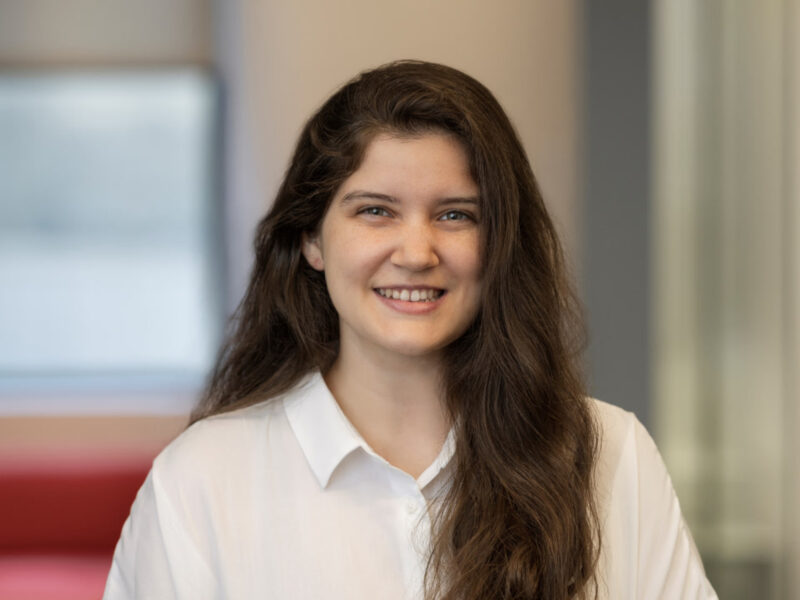
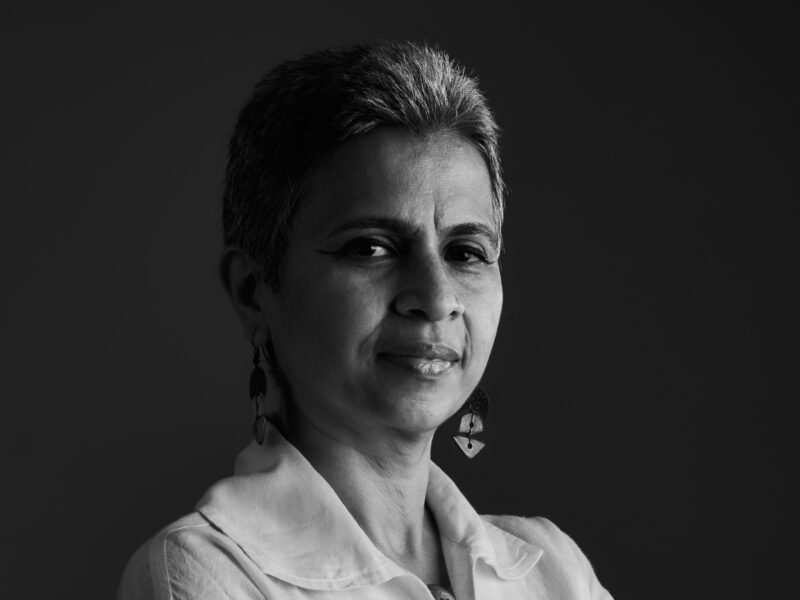

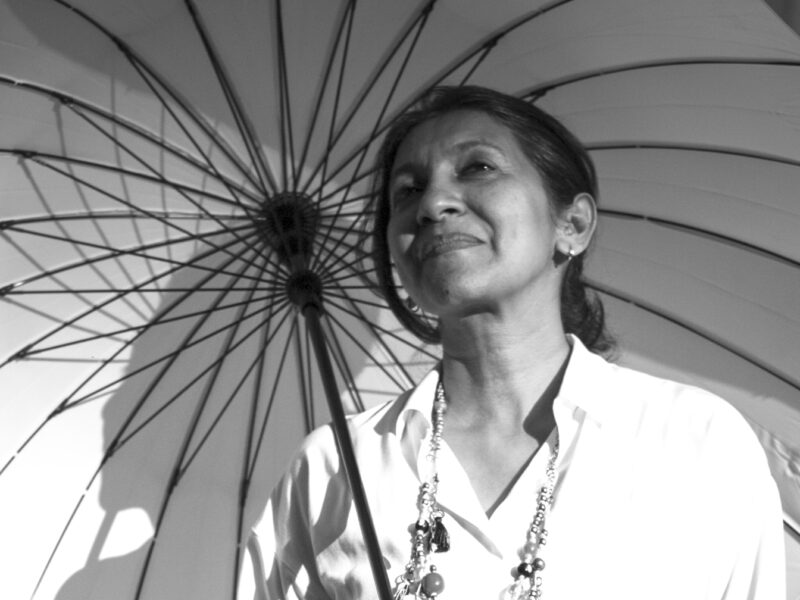
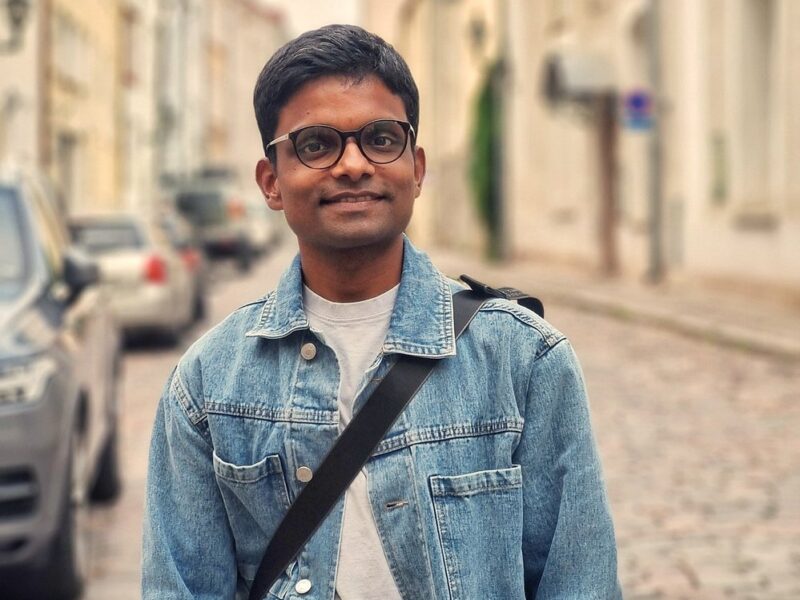

Can we relearn placemaking?
This workshop asks how questions of agency, care, resilience, and regional context can be brought into architectural education and practice. The session begins with short presentations and reflections by members of the Feminist Spatial Practices network, followed by presentations of invited practitioners from India.
Participants will then engage with project processes and experiences presented at the exhibition by the researchers of Women of Vaastukala Archive, examining how feminist approaches emerge through practices of listening, understanding, and making different kinds of spaces. Working in smaller groups, participants will collaboratively identify the questions, principles, and pedagogical approaches that arise from these experiences. This workshop explores the creation of a manifesto for feminist spatial pedagogies, as a co-created framework that can critically transform how space and place-making are taught and practised, both regionally and globally.
This event is a part of the “Expanding Agency and Archival Silences” exhibition. Find the BIC schedule here.
View the complete list of events here.
In collaboration with:




Venue: Seminar Halls
Speakers
Renske Maria van Dam
Dr. Ir. Renske Maria van Dam is an architect, artist, and researcher whose work is motivated by the ambition to give form to social and ecological transformation. Her expanded spatial practice emphasizes bodily action and movement in the experience of the built environment. It intersects architecture and urbanism with insights and methods from cognitive and contemplative sciences as well as other visual and performative arts. She founded Spacious, which she guides in collaboration with a transdisciplinary, global constellation of cultural organizations, academic institutes, researchers, and creative pioneers.
Mamuna Iqbal
Dr. Mamuna is an architect and academic with 14 years of experience in practice and research. Her Ph.D. at the Welsh School of Architecture (WSA) Cardiff University was focused on “The impact of students’ social background on their learning experiences and approaches in the school of Architecture”. She is an advocate of empathy and care in design pedagogy as a means of facilitating the learning process where the teacher acts as a facilitator. Her research agenda is focused on social equality in architecture and architectural education.
She has taught design studios in Pakistan and the UK and this cross-border and cross-cultural experience enabled her to engage in deep and meaningful teaching and learning interactions. Her current research interest is focused on Architectural Design Research as a method of engaging with complex urban and architectural contexts.
She is running an international collaborative studio with the Masters in Architectural Design (MA AD) at WSA. Students from WSA are working with her 4th year and MArch students in the context of the walled city of Lahore using design research methodologies. This cross-border and vertical teaching model feeds into her research on innovative design pedagogies.
She is the Vice president of Women in Architecture Pakistan (WAP) and chair of Research and Development Unit WAP.
Lýdia Grešáková
Lýdia Grešáková is a sociologist working at the intersection of feminist values, climate justice, and the role of art in shaping urban spaces. Her work spans research, interviews, archiving, art, writing, and public speaking. She is a statutory representative of Spolka, a member of the Feminist Spatial Practices network, and a PhD researcher at the Institute of Sociology of the Slovak Academy of Sciences.
Spolka is a collaboratively run interdisciplinary research and design studio based in Slovakia, focused on creating good cities. It brings inclusion, equality, and sustainability into urban planning and contemporary architecture, with sensitivity to planetary limits and more-than-human needs. Spolka collaborates with communities and cities through mapping, prototyping, and hands-on workshops: https://www.spolka.cc/en.
Abriannah Aiken
Abriannah Aiken (she/her) is a designer and activist, currently working at DLR Group in New York. She is a co-founder of Architecture + Advocacy, a non-profit that empowers communities to un-design spatial injustice. She also helped write and edit Disappearing Queer Spaces, which documented important queer landmarks from the Harlem Renaissance that have been lost to demolition.
Meeta Jain
Meeta Jain is the founder of Meeta Jain Architects, a Bangalore-based practice grounded in the belief that architecture is a social and ecological act. Her ongoing inquiry into a feminine way of architecture treats the built environment as a vessel for transformation and community rather than static shelter. She began independent practice in 2000 with projects for artists and became known as the “artist’s architect,” notably through her work on 1Shanthiroad, Bangalore’s art residency. In 2009, she founded MapBee, a collective creating temporary public interventions. Her studio’s multidisciplinary work spans residences, institutional campuses, and cultural infrastructure across Mysore, Varanasi, and Hampi.
Gita Chadha
Dr. Gita Chadha is Professor at Azim Premji University, Bengaluru, and formerly taught sociology at the University of Mumbai. Her research spans critical science studies and feminist reimaginations of sociology, and she has been central to shaping Feminist Science Studies in India. She held the Obaid Siddiqi Chair Professorship (2023–24) at the National Centre for Biological Sciences, Bangalore, and was recently Honorary Senior Fellow there. Her recent publications include the edited volume Mapping Scientific Method: Disciplinary Narrations. She received the 2025 Laadli Media and Advertising Award for Gender Sensitivity for the series Gender in/of Science: Feminist Conversations Part 1.
Nisha Mathew Ghosh
Nisha Mathew Ghosh is an architect, artist, curator, and transdisciplinary spatial practitioner based in Bengaluru, and co-founder of Mathew and Ghosh Architects. Her work moves across architecture, landscape, urbanism, art, craft, and ecological action, exploring the relationships between space, material, labour, and community. Her recent book, Excavate, Accrete, Stratify: An Ecology of Ideas (Routledge, 2026), examines over two decades of the practice’s work. Through the MGSCC Foundation and its Circular Textile Labs, she extends architecture into social and ecological action, exploring women’s agency, green livelihoods, circular economies, and space as infrastructure for collective empowerment.
Shantesh Kelvekar
Shantesh Kelvekar is an architect, educator, and founding partner of Reading Grounds, a Bengaluru-based design practice. His work sits at the intersection of architectural history, landscape urbanism, and the philosophical inquiry into how built environments are perceived. He is visiting faculty at CEPT University and holds an MA in Landscape Urbanism from the Architectural Association, London. He has worked in the field since 2009. Rather than defining landscape and architecture by physical attributes, he reads them through perception: landscape as flexible and transitory, architecture as curated and structured, revealing the “landscapeness” within built space.
Ishita Shah
Ishita Shah is trained as an interior designer and architectural historian. Over the last decade, she has developed a community-based curatorial practice focused on cultural preservation across India and South Asia, including Constructing Personal Archives, an incubation program for aspiring archivists, and the Women of Vaastukala Archive, a digital oral history repository, both under her collective, Curating for Culture. She currently consults as archivist/curator with the Pattani Archives, Glenmorgan Estate, and Anthology A+C, and is a recipient of several fellowships.
Meenakshi Jayan
Meenakshi Jayan is a Gender Studies researcher working at the intersection of gender, culture, and public life. She is currently associated with the Women of Vaastukala Archives project, working across research and curatorial initiatives with an interest in documenting everyday experiences and bringing overlooked narratives into public conversation.
