

- This event is over. However, time travel possible through our Audio & Video! See upcoming events
Neuroscience, Empathy, and Artificial Intelligence
How Neuroscience Can Inform the State of Human-Aligned AI
Speaker
What does it truly mean for a system to be empathic?
As artificial intelligence increasingly inhabits our daily environments, from workplace tools to conversational agents, this question has shifted from theoretical curiosity to practical necessity.
In this talk, Akila Kadambi will draw on cognitive and social neuroscience to unpack the neural mechanisms underlying empathy and social understanding. Connecting these insights to recent advances in artificial intelligence, including large language and multimodal models, she will highlight where current systems succeed, where they fall short, and what neuroscience can contribute to the design of more socially aligned AI.
The talk will be followed by a Q&A with the audience.
Speaker
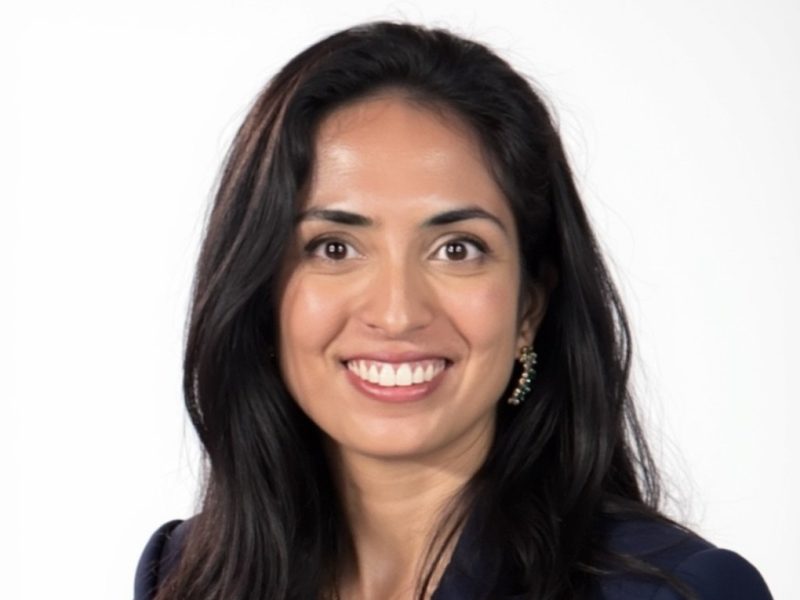
Akila Kadambi
Akila Kadambi is a Postdoctoral Scholar jointly appointed in the Department of Psychiatry and Biobehavioral Sciences at the David Geffen School of Medicine at UCLA and the Brain and Creativity Institute at USC. Building on her PhD work from UCLA, her postdoctoral research investigates the neural mechanisms of empathy and social perception through functional neuroimaging, non-invasive brain stimulation, and neuroethological methods. Her current studies examine how narratives and music foster belonging, how the brain supports rehumanization of marginalized groups, and how humanistic neuroscience can inform the development of more trustworthy and empathic AI systems. Her research is supported by Google Research, the Aspen Institute NeuroArts Blueprint, Templeton World Foundation, and Dana Foundation, and published in NeuroImage, Journal of Neuroscience, and Psychonomic Bulletin & Review.
