

- This event is over. However, time travel possible through our Audio & Video! See upcoming events
Blueprints of Strength
Inside India’s Defence R&D Revolution
Speakers

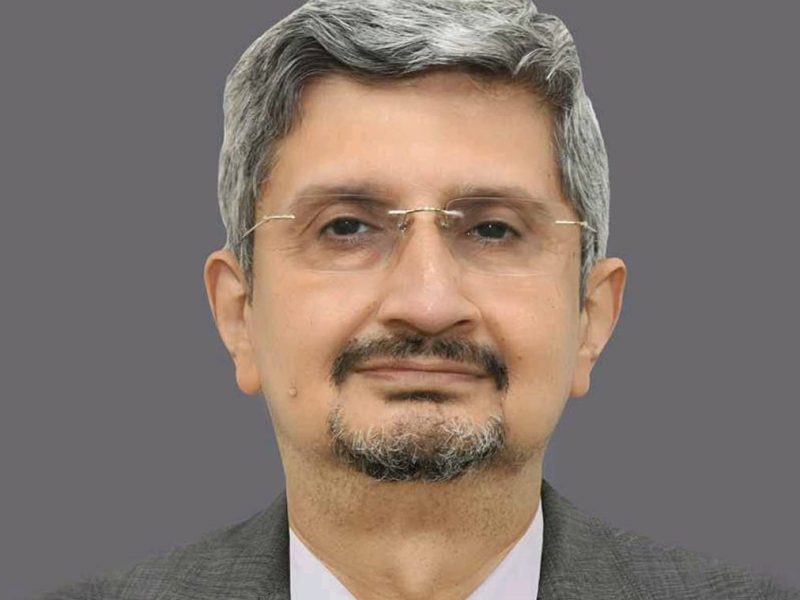
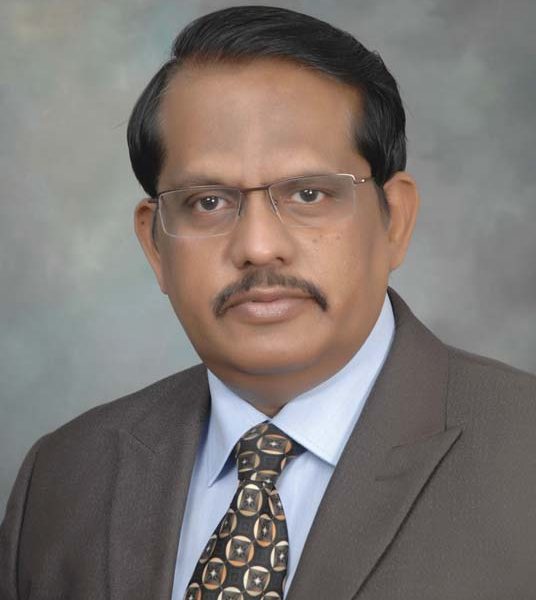

This session offers a deep and reflective exploration of India’s journey toward self-reliance in defence research and development, inspired by the DRDO publication “Endeavours in Self-Reliance: Defence Research 1983–2018”, by KG Narayanan. The book captures a critical period of transformation in India’s defence landscape, chronicling key achievements, institutional efforts, and the steady march toward technological autonomy over three and a half decades.
The session will open with a keynote presentation by Mr. Narayanan, who will outline the central themes and insights drawn from the book. This includes the evolution of DRDO’s role, the emergence of indigenous capabilities, and the broader strategic imperative of self-reliance in defence. The presentation will set the stage for a nuanced conversation about the motivations, challenges, and breakthroughs that have defined India’s R&D efforts in the defence sector.
Following the keynote, a panel discussion will bring together eminent voices who have been closely involved in shaping this journey. Dr Samir V. Kamat, Chairman DRDO and Secretary, Department of Defence R&D; Dr S. Christopher, former Chairman DRDO; and Dr Anantha Krishnan M, senior defence journalist and author, will engage in a dynamic exchange of perspectives. The discussion will be moderated by Air Marshal (Retd.) P Rajkumar, providing context and continuity across decades of institutional memory and technological evolution.
Together, the panel will reflect not only on past achievements but also on the pressing needs and strategic directions for the future, offering valuable insights into what it will take to secure and sustain a truly self-reliant defence ecosystem in India.
Speakers
KG Narayanan
Dr. KG Narayanan, Principal Editor of Endeavours in Self-Reliance, concluded his distinguished career in DRDO as Chief Advisor at Headquarters, following a long tenure from 1965 to 2002. An avionics engineer by profession, he led two key DRDO laboratories, Aeronautical Development Establishment (ADE) and Defence Avionics Research Establishment (DARE), between 1986 and 2001.
Dr. Narayanan played a central role in the development of drones and UAVs, flight control systems for the LCA, and various electronic warfare programmes. He also served as Co-Chair of the Indo-US Joint Technology Group, fostering bilateral cooperation in defence technologies.
A Fellow of the Indian National Academy of Engineering and a Distinguished Alumnus of IIT Kharagpur, Dr. Narayanan was also an early member of the Executive Committee of BIC.
Samir Kamat
Dr. Samir V Kamat assumed the role of Secretary, Department of Defence R&D and Chairman, DRDO on August 26, 2022. He earned his B.Tech (Hons) in Metallurgical Engineering from IIT Kharagpur in 1985 and a Ph.D. in Materials Science and Engineering from The Ohio State University in 1988. He joined DRDO in 1989.
Dr. Kamat has led key materials research initiatives, including high-strength steels for naval ships, high-temperature titanium and nickel alloys for aero-engines, tungsten alloys for penetrators, fused silica radomes for missiles, advanced armour systems, and stealth materials. His work has been integral to numerous DRDO-developed platforms.
He has also overseen the development of advanced naval systems, such as lightweight torpedoes, anti-torpedo decoys, AUVs, sonar systems, and fuel cell-based AIP systems for submarines.
A Fellow of INAE and IEI, Dr. Kamat has received several accolades, including the Distinguished Alumni Award from IIT Kharagpur, the Metallurgist of the Year Award (Ministry of Steel), and DRDO’s Scientist of the Year Award. He has published over 180 papers in peer-reviewed international journals.
S Christopher
Dr. S Christopher is a former Chairman of DRDO and Secretary, Department of Defence R&D. A renowned radar technologist, he is best known for leading the development of India’s indigenous Airborne Early Warning and Control (AEW&C) system—one of DRDO’s notable successes.
As Programme Director for AEW&C and Director of the Centre for Airborne Systems (CABS), he played a pivotal role in advancing airborne surveillance capabilities. He also served as Project Director for the LCA’s Multi-Mode Radar, spearheading the development of slotted array technology used in various airborne and missile platforms. Additionally, he led the development of the SuperVision 2000 maritime patrol radar for the Indian Navy.
Dr. Christopher is a Fellow of the Indian National Academy of Engineering (INAE) and currently serves as a Visiting Professor at IIT Madras.
Anantha Krishnan M
The writer is a seasoned aerospace and defence journalist in India. He was a Post-Doctoral Fellow with the University of Mysore and an Advisor to Dr. A P J Abdul Kalam International Foundation, Rameswaram.
P Rajkumar
Air Marshal Rajkumar (Retd.) was commissioned into the Flying Branch of the Indian Air Force in 1962. He served for nine years in frontline fighter squadrons across both the Eastern and Western sectors. During the 1965 Indo-Pak war, he flew 22 operational missions and was awarded a Mention in Despatch for gallantry.
In 1971, he was selected for training as an experimental test pilot in France. His key operational roles included commanding a frontline fighter squadron in Punjab and leading a Jaguar strike base in the central sector.
As part of the Aeronautical Development Agency (ADA) in Bengaluru, Air Marshal Rajkumar played a pivotal role in planning and executing the flight test programme for the Light Combat Aircraft (LCA) Tejas. His leadership at the National Flight Test Centre established rigorous procedures and a modern testing philosophy, contributing to the Tejas entering operational service with the IAF without any accidents or aircraft loss—a significant achievement.
Following his retirement from the IAF, he continued his service to the nation as Director of ADA for an additional two-year term.
