

- This event is over. However, time travel possible through our Audio & Video! See upcoming events
Copenhagen
A play directed by Prakash Belawadi
Actors
A Centre for Film & Drama production, Michael Frayn’s Copenhagen written in 1988 relies on the historical fact of a meeting between physicists Niels Bohr and Werner Heisenberg in Copenhagen in September 1941, at the height of Nazi power. It speculates on a conversation that possibly had profound implications for the question – who would make the atom bomb first: the Nazis or the Allied forces.
The play begins with the question: Why did German physicist Werner Heisenberg come to visit Danish physicist Neils Bohr and his wife Margrethe Bohr in Copenhagen in 1941? This is during World War II, even as the allied forces and the Nazis race against each other exploring the possibilities of making the atomic bomb.
The two-act drama speculates on a possible conversation between the physicists on opposite sides of the war, presenting, debating and rejecting theories that may answer that question.
Heisenberg – “No one understands my trip to Copenhagen. Time and time again I’ve explained it. To Bohr himself, and Margrethe. To interrogators and intelligence officers, to journalists and historians. The more I’ve explained, the deeper the uncertainty has become. Well, I shall be happy to make one more attempt.”
Along the way, Heisenberg and Bohr “draft” several versions of their 1941 exchange, arguing about the ramifications of each potential version of their meeting and the motives behind it. They discuss the idea of nuclear power and its control, the rationale behind building or not building an atomic bomb, the uncertainty of the past and the inevitability of the future.
Playwright: Michael Frayn
Director: Prakash Belawadi
Cast:
Margrethe: Rukmini Vijayakumar
Bohr: Prakash Belawadi
Heisenberg: Nakul Bhalla
Directors’ Note:
Michael Frayn’s Copenhagen(1988) relies on the historical fact of a meeting between physicists Niels Bohr (Danish half-Jew) and Werner Heisenberg (German) in Copenhagen in September 1941, at the height of Nazi power, as it advanced into Russia and only three months before America entered the war. It speculates on a conversation that possibly had profound implications for the question – who would make the atom bomb first: the Nazis or the Allied forces. The Germans feel the urgency because they know the allies are working on it.
The play opens to an abstract time-space setting when all the three characters – Bohr, his wife Margarethe and Heisenberg – are dead. Crucially and controversially, the play wonders whether Heisenberg actually knew what it would take to make the bomb, but went slow on it because he did not want to arm Hitler with such a weapon. In 1956, Robert Jungk (Brighter Than a Thousand Suns) published the extract from a letter in which Heisenberg seemed to be claiming the moral high ground. It made the real life Bohr angry, as surely as it outraged scientists and historians in the Allied world.
Frayn’s real interest is to use the fuzzy records of physics and politics to invoke serious ethical questions of human intent and agency. On 2 August, 1939, Albert Einstein wrote to US President Franklin D Roosevelt the letter (probably drafted by Leó Szilárd) in which he claimed: “…it may become possible to set up a nuclear chain reaction in a large mass of uranium… extremely powerful bombs of a new type may thus be constructed.”
In another letter on 25 April, 1940, Einstein was more insistent: “I am convinced as to the wisdom and the urgency of creating the conditions under which that and related work can be carried out with greater speed and on a larger scale than hitherto.” The process he set off culminated in the dropping of nuclear bombs on Hiroshima and Nagasaki, and, eventually, the global arms race. Einstein himself did not work on the atom bomb and Linus Pauling is widely credited with the claim that Einstein later expressed regret about his first letter to Roosevelt.
But on the evening of 6 August, 1945, after the uranium bomb destroyed Hiroshima and its citizens were still dying in masses, chief of the Manhattan Project J Robert Oppenheimer told a cheering full house at Los Alamos, “clasping his hands over his head and waving them in the air,” that his only regret was not making the bomb in time to use it against the Germans. “He tormented himself afterwards,” the character Niels Bohr declares in Frayn’sCopenhagen. That scientists will continue to work creatively and professionally to make newer weapons of mass destruction but still exhibit all this moral angst could bother sane and rational human beings around the world.
The play keeps returning to the question why Heisenberg came to Copenhagen in 1941: Whatever Bohr’s silence on the particular question may imply, the real life Margrethe, as Frayn reports in his postscript, said after the war: “No matter what anyone says, that was a hostile visit.” Heisenberg’s own defence, according to Jungk, was that “under a dictatorship, active resistance can only be practised by those who pretend to collaborate with the regime.”
Under attack from a section of critics who called him a Heisenberg apologist, Frayn responded in The New York Review of Books (March, 2002): “Why shouldn’t (Heisenberg) have the same conflicting loyalties and the same mixed motives and emotions that we all have? Why shouldn’t he try to juggle principle and expediency, as we all do? Why shouldn’t he fear his country’s defeat, and its destruction by nuclear weapons? Why shouldn’t he lament its ruin and the slaughter of its citizens?”
The play also reveals something that was not known before (to Friedrich Dürrenmatt, for instance, when he wrote The Physicists): At Farm Hall, where the team of German nuclear scientists were kept under house arrest by the British, when they got news of the the Hiroshima bomb on their radio, their shocked and hushed conversation was secretly recorded. The English translation of the German transcripts were released only in 1992 : Heisenberg tells Otto Hahn (who discovered fission), after their Nazi coordinator “has retired to sob in his room, “I always knew it could be done with 235 with fast neutrons.”
Did Heisenberg really know? Frayn suggests he did, but that is not his own central question. “The great challenge facing the storyteller and the historian alike is to get inside people’s heads, to stand where they stood and see the world as they saw it, to make some informed estimate of their motives and intentions – and this is precisely where recorded and recordable history cannot reach.”
Actors
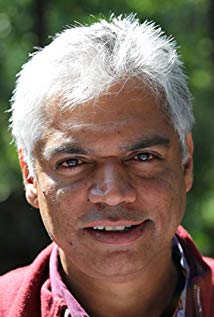
Prakash Belawadi
Prakash Belawadi is an Indian theatre, film, television and media personality, an activist and a journalist from Bangalore. He co-founded the Centre for Film and Drama and launched the Suchitra School of Cinema and Dramatic Arts, both in Bangalore, the latter in 2012

Rukmini Vijayakumar
Rukmini Vijayakumar is a Bharatanatyam dancer and actor from Hyderabad, Telangana. She has studied the dance form from the age of eight under Guru Narmada, Guru Padmini Rao and Guru Sundari Santhanam. Rukmini holds a BFA degree from the Boston Conservatory in Ballet and Modern Dance. She is the Artistic Director of Raadha Kalpa, a dance company where she teaches, choreographs and creates new Bharatanatyam, Modern and experimental theatre work.
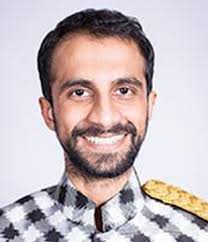
Nakul Bhalla
Nakul Bhalla is an actor, theatre director, mechanical engineer, fabled punster and avid ambigramist. After working in the theatre for over a decade in Bangalore and Mumbai, he made his film debut in 2016 with ‘Tu Hai Mera Sunday’.
