

- This event is over. However, time travel possible through our Audio & Video! See upcoming events
Natural Farming: It’s been handed down to us!
An explainer by Prabhakar Rao, Farmer at large
Speaker
Takeaways from the session by Parvathi Menon – https://medium.com/@parvathimenon/the-powerful-insights-hidden-in-prakritik-kheti-b6606a81c057
The government expects natural farming to help double farmer’s income. While there is familiarity with organic farming, few are aware about the concept of Natural Farming. It comes as a shock to most people when they are told that Organic Farming and Natural Farming are two entirely different techniques in chemical free farming. While some may have heard of Masanobu Fukuoka and his “do-nothing-farming” philosophy, very few are aware of Natural Farming or “Prakithik Kheti” in the Indian context.
Natural Farming in India has been practiced since the beginning. Extensive documentation exists in ancient texts like Vriksha Ayurveda, Charaka Samhitha, and eighteen chapters in the Rig Veda that detail how agriculture is to be done. Except for the last, say 200 years, we had an unbroken record of practicing a system of agriculture that was successful, profitable and most importantly sustainable.
The fundamentals of Natural Farming are based on a very holistic understanding of the plant ecosystem, not just above the soil, but also below the soil. Modern day research had validated the principles of Natural Farming in no uncertain terms. The ancients had placed all their focus on creating and preserving the vitality or “satva” of the soil. To them, agriculture was a means of preserving the health of soils and the agricultural produce harvested, was only a by-product of this process. Hence sustainability was integral to the practice of Natural farming. Understand how different this philosophy is compared to chemical farming, where agricultural yield is the all-consuming focus, and the rampant degradation of soils is the by-product.
Natural Farming is based on the concept of stabilizing the nutrient solubilizing microbes in the soil. These exist in a symbiotic relationship with the plants, where in exchange for every molecule of nutrient they solubilize for the plant, they are rewarded with a molecule of sugar. This is what happens in a rain forest where nature grows in abundance without the need for anyone to put urea or spray chemicals. All the plant nutrition is taken care by the soil microbes.
We had an intuitive understanding even though there were no microscopes to observe this plant-microbe interaction. The talk will focus on unraveling the inner secrets of this wonderful technology known in India as “Prakrithik Kheti”. We will understand the differences between Organic and Natural Farming. We will explore the scientific basis of our ancient farming system. We will explore traditional pest repellents that works well today. The talk will also address the traditional bio-diversity of crop species and stored seeds.
Speaker
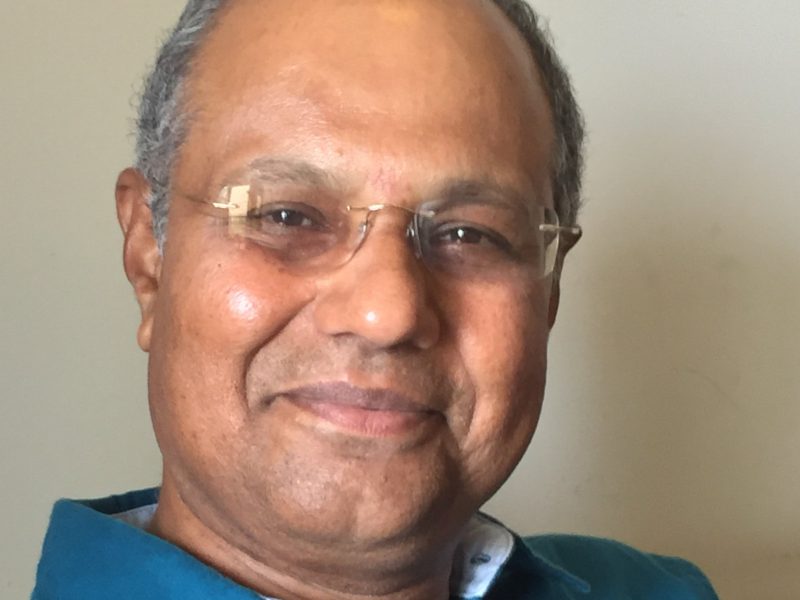
Prabhakar Rao
Dr. Prabhakar Rao has been a Seed Keeper for over 25 years, collecting indigenous native vegetable seeds that are on the brink of extinction. His travels have taking him to remote parts of the world where his interactions with the older generation of farmers has allowed him access to these forgotten varieties.
Returning to India in 2011, he conducted extensive testing of over 500 such varieties in his farm in Bengaluru, for genetic stability and environmental suitability. He has now successfully stabilized around 140 rare indigenous vegetable varieties, collected from both within the country and abroad. From his farm Hariyalee Seeds, he now reaches out to other passionate Seed Keepers, Farmers and Urban Gardeners, and collectively works towards the preservation and propagation of these rare vegetable varieties that are on the brink of extinction.
When while studying for his Ph.D in Agriculture, a little over 30 years ago, Prabhakar Rao instinctively knew, that there was something amiss in what he was propagating. He belonged to the generation of scientists from the lineage of Dr. Norman Borlaugh and Dr. M.S. Swaminathan, who created the Green Revolution, and who pushed farmers to use hybrid seeds, fertilizers and pesticides for industrial agriculture. But deep inside he was not sure if industrial agriculture was a sustainable model.
He then changed his field of study to Architecture and set up practice in Dubai specializing in Landscape Architecture for over 20 years. He designed several iconic projects all over the world, including the Palm Island, Waterfronts in Kazan, and several sustainable architectural projects in the Far East, Africa and the Americas. He returned to India in 2011 and returned to his passion of saving seeds. Presently he consults for several iconic projects in India including the Sardar Vallabhai Bhai Patel statue in Gujarat, the Green project for the New capital city Amaravati, Waterfront township in Bhutan, etc.
As a Trustee, in the Agriculture Trust of The Art of Living, he now promotes sustainable Chemical Free Natural Farming technologies across the country. He specially trains farmers on Climate Resilient Agriculture. He mentors youngsters on start-ups in the field of sustainable agriculture.
