
- This event is over. However, time travel possible through our Audio & Video! See upcoming events
Exploring the Temples of the Deccan
7th to 13th Centuries
Speaker
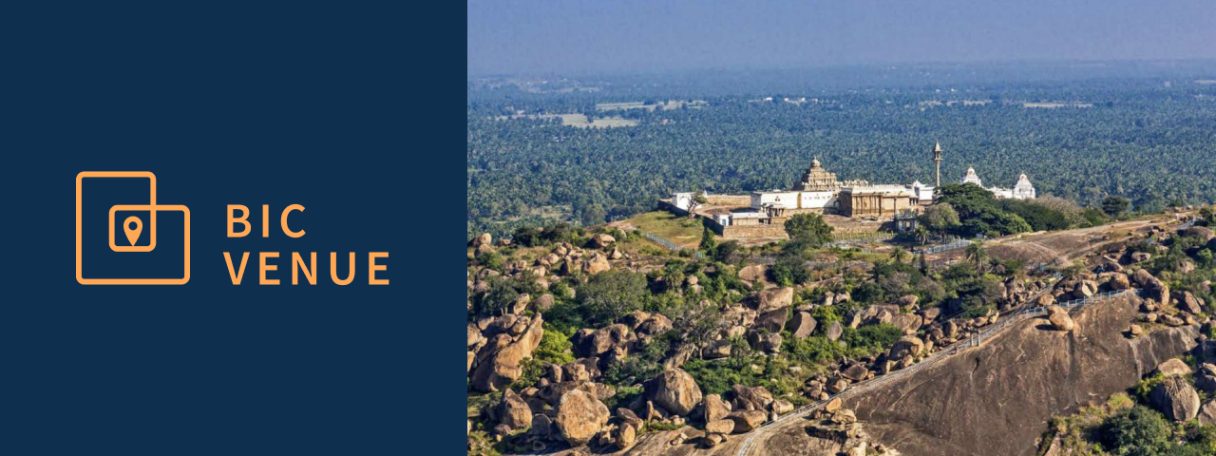
Of all regions of India, the Deccan has the most diverse architectural traditions, nowhere better shown than in the variety of stone temples sponsored under a succession of dynasties which ruled peninsular India over some 700 years. To illustrate this unique diversity, Michell explores religious monuments at lesser-known sites. He begins with Early Chalukya temples overlooking the Tungabhadra river at Alampur, and ends with the imposing Kakatiya monument at the out of the way village of Palampet, both in Telangana. In between, he discusses the Nolamaba period shrines at Nandi and Shravana Belgola, and those of the Later Chalukyas at Sudi, Kuruvatti and Lakkundi, all in Karnataka. He concludes with the little visited Hoysala period shrines at Belavadi, Mosale and Agraha Bachhahalli.
The lecture will be followed by a Q&A Session with the audience.
Image credit – Surendra Kumar
In collaboration with:


Speaker
George Michell
George Michell studied architecture in Melbourne before attending the School of Oriental and African Studies at the University of London, gaining a PhD there in 1974 with his dissertation on Early Chalukya temples in the Badami area. Since then, he has undertaken surveys of historical sites and monuments in Rajasthan, Gujarat, Bengal and Tamil Nadu. During the 1980s and 1990s, together with the American archaeologist John M. Fritz, he undertook a reconnaissance of the imperial city of Vijayanagara and Hampi. Michell has published widely. His most recent book, Temples of Deccan India, Hindu & Jain, 7th to 13th Centuries, on which his lecture is based, was brought out in 2021 by ACC Art Books and the Deccan Heritage Foundation, of which he is a Founding Trustee.
