

- This event is over. However, time travel possible through our Audio & Video! See upcoming events
Politicizing Bharatanatyam
Critical Histories, Aesthetics, and New Political Futures
Facilitators
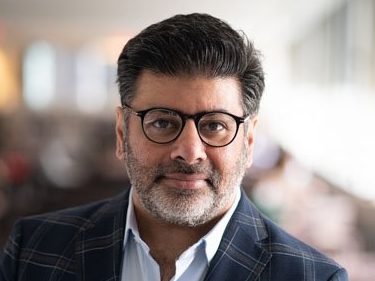
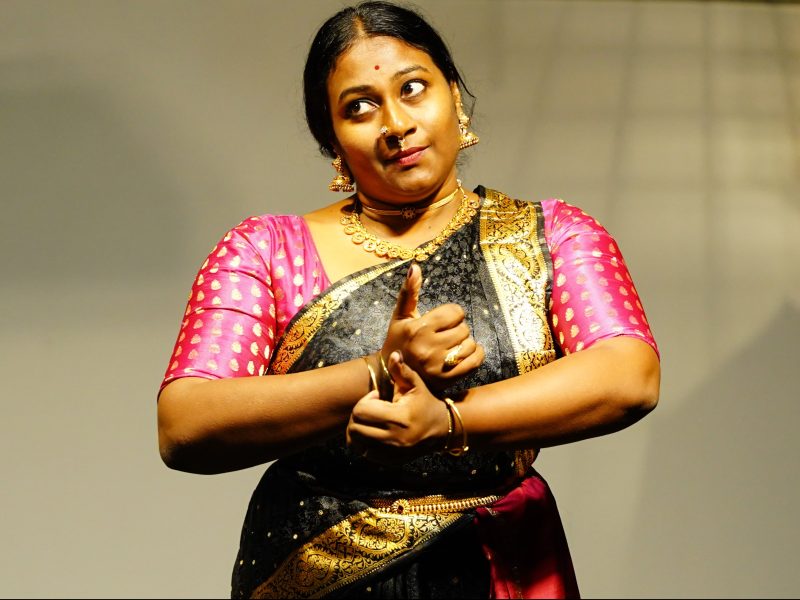
This two-day event, consisting of lectures and discussion, examines key issues of power and representation in the making of modern Bharatanatyam. Participants will engage in crucial conversations around a range of issues including caste and Brahminic power, colonial and postcolonial histories, ethno-nationalism, and somatic politics in contemporary India. Our goal is to disseminate evidence-based histories for Bharatanatyam, create discussions around caste-based power and performance, and think critically about equitable futures for the arts of South India.
Preregistration is required for this workshop and participants must commit to attending all sessions. No on-site registration. Participants must preregister before December 18, 2024. Lunch and coffee will be provided. Participants must commit to attending both days. Participants will be selected based on their responses to questions on the registration form.
Day 1 | Friday, Dec 27
9:30am: Welcome and Introductions
10:00am – 12:00pm: Lecture
Bharatanatyam: Critical Histories, Power, and Politics
Professor Davesh Soneji (University of Pennsylvania)
12:00pm – 1:00pm: Lunch
1:00pm – 3:00pm: Lecture and Q & A
Caste: Servitude, Labor, and the Question of Bharatanatyam’s Historical Narrative
Professor Davesh Soneji (University of Pennsylvania)
3:00pm – 3:30pm: Coffee Break
3:30pm-5:30pm: Group Discussion
History, Politics, Caste, and Religion
Led by Nrithya Pillai and Rituparna Pal
Day 2 | Saturday, Dec 28
10:00am – 12:00pm: Lecture
Aesthetic Questions in Modern Bharatanatyam: Sources of Authority, Casteist Taste Habits, and the Politics of Performance
Professor Davesh Soneji (University of Pennsylvania)
12:00pm – 1:00pm: Video Commentary
Professor Davesh Soneji (University of Pennsylvania)
1:00pm – 2:00pm: Lunch
2:00pm – 3:00pm: Video Commentary
Nrithya Pillai
3:00pm – 4:30pm: Group Discussion
Aesthetic Practice and Imagining New Futures
Led by Nrithya Pillai and Rituparna Pal
4:30pm – 5:30pm: Coffee and Informal Conversation
In collaboration with:

Facilitators
Davesh Soneji
Davesh Soneji, an Associate Professor at the University of Pennsylvania’s Department of South Asia Studies, holds a Ph.D. in Religious Studies. His research focuses on the intersections of social and cultural history, religion, and anthropology, particularly in South India. Over the past two decades, he has explored topics such as religion, performing arts, gender, class, caste, and colonialism. Notably, his work on the social history of professional female artists in Tamil and Telugu-speaking South India, presented in Unfinished Gestures, earned him the 2013 Bernard S. Cohn Book Prize from The Association for Asian Studies.
Soneji has held positions as a Visiting Professor in India and Paris and previously taught at McGill University in Montreal. His recent research delves into the history of music in modern South India, covering diverse subjects like Tamil Islamic music, Tamil Catholic music, Marathi kīrtan, Tamil theatre music, and transoceanic sonic histories of the Tamil diaspora. This ongoing research will be featured in his forthcoming monograph, Unbounded Tunes: Genealogies of Musical Pluralism in Modern South India. Additionally, he is editing a volume of essays on caste, community, and the performing arts, and co-editing The Routledge Handbook of Indian Music with Anna Morcom.
