
- This event is over. However, time travel possible through our Audio & Video! See upcoming events
Karri-Djarrk-Durrkmirri (We-Together-Work)
Hand Printed Textiles From First Nations Australia and South India
Artistes


Timings: 11 am to 8 pm
Exhibition on show until Sunday, 13 October
Walkthroughs with the Artists:
Friday, 4 October, 11:30 am
Saturday, 5 October, 11:30 am
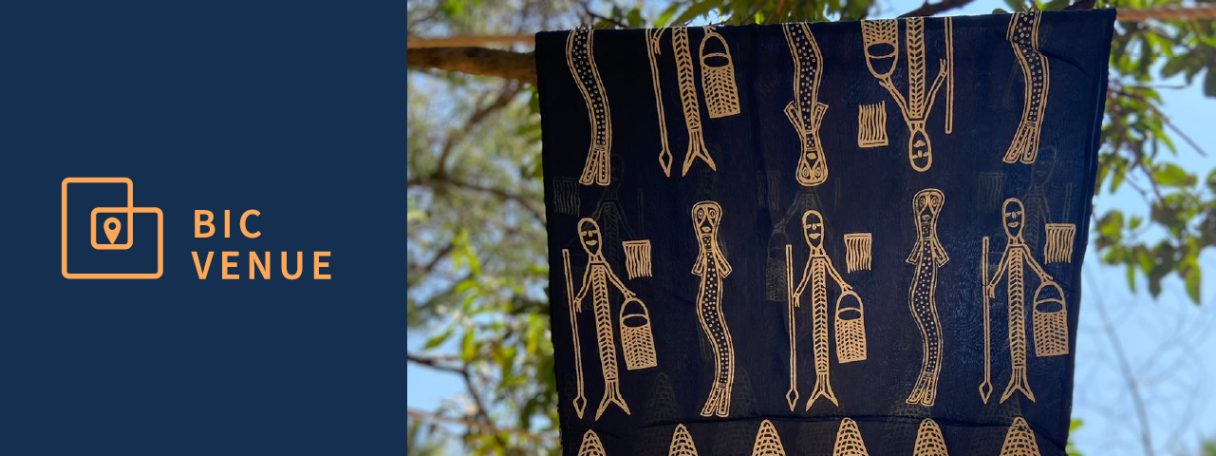
Bábbarra Women’s Centre, in collaboration with Tharangini Studio, presents a collection of woodblock textiles, supported by the Australian Government’s Centre for Australia-India Relations. “Karri-djarrk-durrkmirri,” meaning “we work together” in the Kuninjku language of West Arnhem Land, embodies the collaborative spirit of this exhibition, which blends heritage Indian textile traditions with culturally significant designs by Indigenous Australian women.
Based in remote Maningrida, 500 km east of Darwin, Bábbarra Women’s Centre is dedicated to producing unique screen printed and Lino printed textiles that tell the stories of West Arnhem Land—its people, traditional foods and spiritual beings like yawkyawk (mermaids). Since its inception in 1987 as a women’s refuge, the Centre has supported women’s economic and social development.
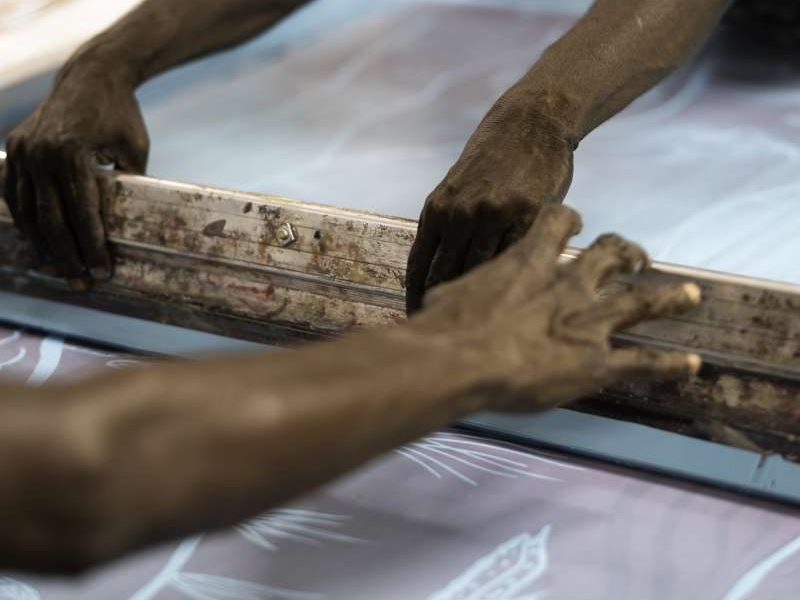
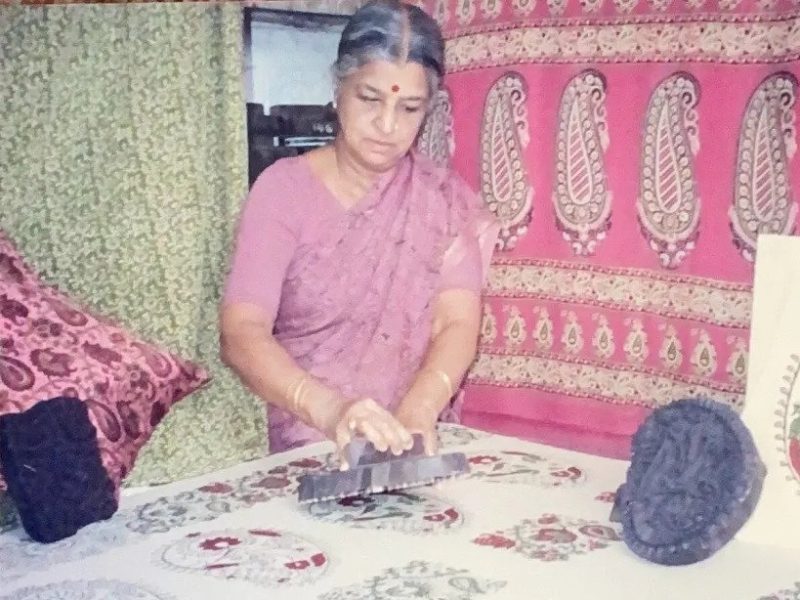
Tharangini Studio, a women-owned woodblock printing studio, shares a commitment to craftsmanship and sustainability. Curators Prithi Pais and Anshu Arora have worked closely with director, Padmini Govind to interpret the complex design briefs of the Babbarra women and add their expertise in ethically sourced fabrics, natural dye and repeat patterns.
Karri-djarrk-durrkmirri is an example of the beautiful artwork that can be created when Australia and India work together. Twenty-one unique textiles made from 77 individual woodblocks will be displayed. The woodblock designs were created by Bábbarra Women’s Centre artists over 20 years and reinterpreted into woodblocks by Tharangini Studio artisans. The fabric was produced under curatorial direction of Prithi Pais and Anshu Arora and Jessica Stalenberg in liaison with Bábbarra Women’s Centre. The exhibition also features embroidery by Porgai women artisans and two video works by Indian-Australian video artist and filmmaker Naina Sen with photographer Anahita Ananth.
Artists: Deborah Wurrkidj, Jennifer Wurrkidj (dec), Janet Marawarr, Raylene Bonson, Susan Marawarr, Joy Garlbin, Helen Lanyinwanga (dec), Lucy Yarawanga, Nancy Gununwanga (dec), Carol Liyawanga, Abigial Gurawiliwili Namundja, Ruth Bindiedbal, Susan Marawarr, Jay Jurrupula Rostron, Elizabeth Wullunmingu, Verity Bangarra and dilly bags by Maningrida Arts
The exhibition is open to all, at the BIC Gallery, from 4th October to 13th October 2024. Artist talks with visiting artists from Australia will be held on Friday, 4th October and Saturday, 5th October at 11:30am.
This marks Bábbarra’s second exhibition at BIC, following their successful Jarracharra (Dry Season Winds) tour across India in March 2023, supported by the Kolkata Consul-General.
Presented by:

Image credit: Artist Jennifer Wurrkidj (dec) and Janet Marawarr. Discharge print by Tharangini Studio
Artistes
Bábbarra Women’s Centre
Bábbarra Women’s Centre is an Australian Indigenous textile Art Centre with a proud history of positive social impact. We are part of Bawinanga Aboriginal Corporation, which was set up by Maningrida community leaders in 1974 to support people to live on their Indigenous homelands. Bábbarra Designs is our main enterprise. We have a textile workshop specialising in the production of hand-printed fabric design using linocut block prints and screen prints. We are one of only a few Indigenous textile-producing art centres in Australia that design, print and sew onsite, in community.
Tharangini
Tharangini is a heritage wood-block printing studio dedicated to producing sustainable textiles with a deep commitment to craftsmanship, equality, and environmental responsibility. Led by skilled artisans, Tharangini emphasizes fair wages, private medical insurance, and pandemic support for its team. Established by women, Tharangini is led by Tharangini Govind, daughter of the founder, Lakshmi, who studied art in Delhi in the 1960’s. The studio champions environmental awareness through local textile sourcing, minimal waste practices, and the use of organic, GOTS-certified dyes. Workshops at Tharangini offer the training of traditional techniques and inspire textile enthusiasts, designers, and lovers of culture from around the globe.
Porgai
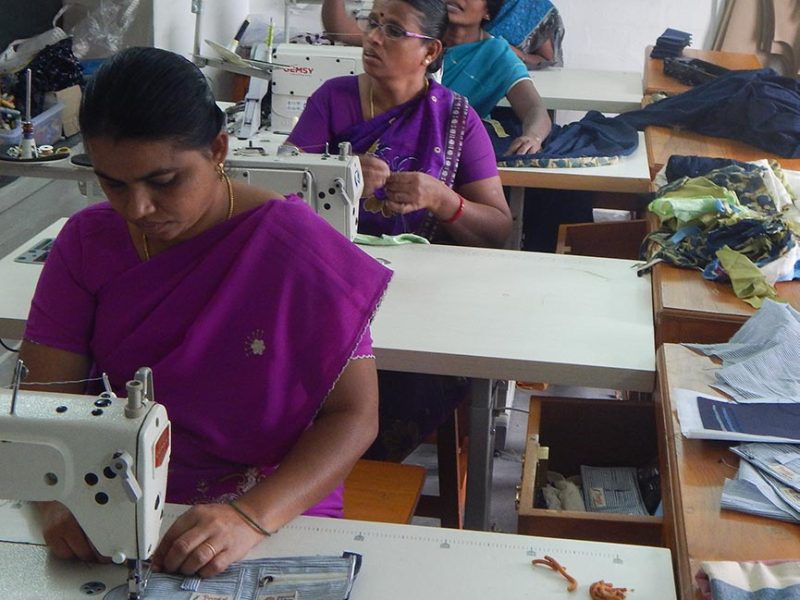
Several hundred years ago, the Lambadi tribals migrated from North Western India to down south for a living. They were a nomadic tribe but ended in settling down in Madhaya Pradesh, Maharashtra, Karnataka, Andhra Pradesh and Tamilnadu. Sittilingi Valley is the second southern most settlement of Lambadis in India. We, the women of the community had a rich tradition of hand embroidery which our ancestors did on the clothing and other day to day articles. In course of time, when we stopped wearing the traditional dress, the craft was lost for more than 2 generations. Since 2006, with the facilitation of Tribal Health Initiative we have revived the craft.
From Neela & Gammi who had learned the craft from their grandmothers, but had no need to practice it, a few of us learned it. And thus was formed the PORGAI Artisans Association. “Porgai” in lambadi dialect means “Pride”.
We are now a registered society of 60 lambadi women.
Anshu Arora
Anshu Arora is a multidisciplinary design practitioner. She moonlights between fashion, space design and crafts.
She has worked with artisan groups and organisations filling design gaps based on their ask. Some of these are commissioned projects, others have become mutually enriching relationships. All of them inform her process and practice. For Anshu, design is a an act of finding solutions together. She believes that empathetic design can contribute to creating new ways of seeing the familiar.
Working closely with artisans, understanding techniques, artisanal production systems, their limitations, strengths and collaboratively finding solutions is deeply satisfying for Anshu. The act of re-presenting this vast and endless body of work is critical to building true appreciation towards the poetics that inform the processes and products, together with stories of people who make them.
Prithi Pais
Pink Pepper is a collaborative multidisciplinary design studio that works across Visual Communication Design, Product Design and Space Design. Good Design is at the heart of all that is meaningful and therefore memorable. Pink Pepper believes in a conceptual approach that is uncomplicated and minimal, always looking for a balance between form and function.
Pink Pepper’s strength lies in constantly pushing the boundaries between various visual mediums, materials and practices that fuel the multidisciplinary approach to produce products and user experiences that engage and excite. Pink Pepper’s work covers a wide range of clients, from multinational companies, luxury brands to start ups and artisans.
Jessica Stalenberg
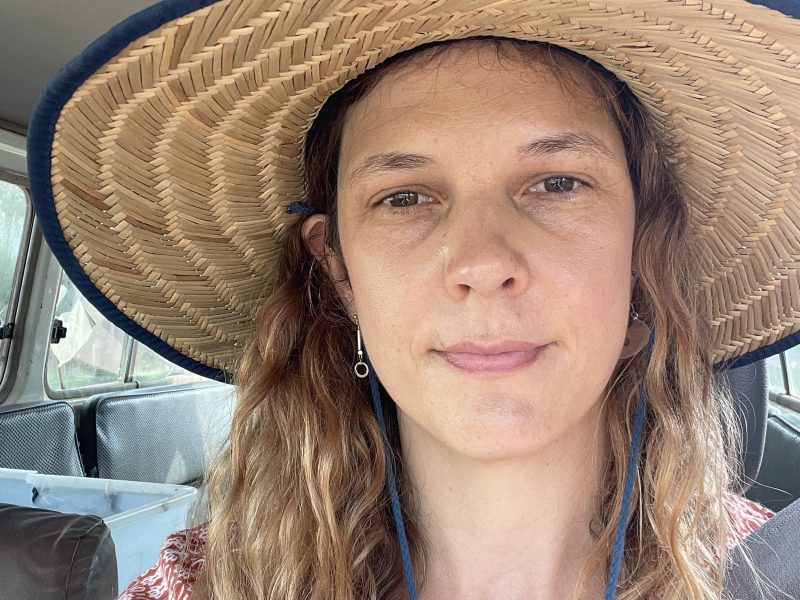
Jessica Stalenberg is a multidisciplinary project coordinator with expertise in printmaking, textile design, international development and Indigenous Art Centre management. She holds a Bachelor of Fine Arts from Sydney University, a Diploma in Textile Design, and is pursuing an MBA in Arts and Cultural Management. From 2020 to 2024, Jessica managed the successful Bábbarra Women’s Centre, where she led an operational reset and secured successful licensing collaborations for artists, including a unique partnership with the ethical Australian millinery company Helen Kaminski. Recently, she spearheaded an intercultural project between textile artists from India and West Arnhem Land, supported by the Australian Government’s Centre for Australia–India Relations.
Naina Sen
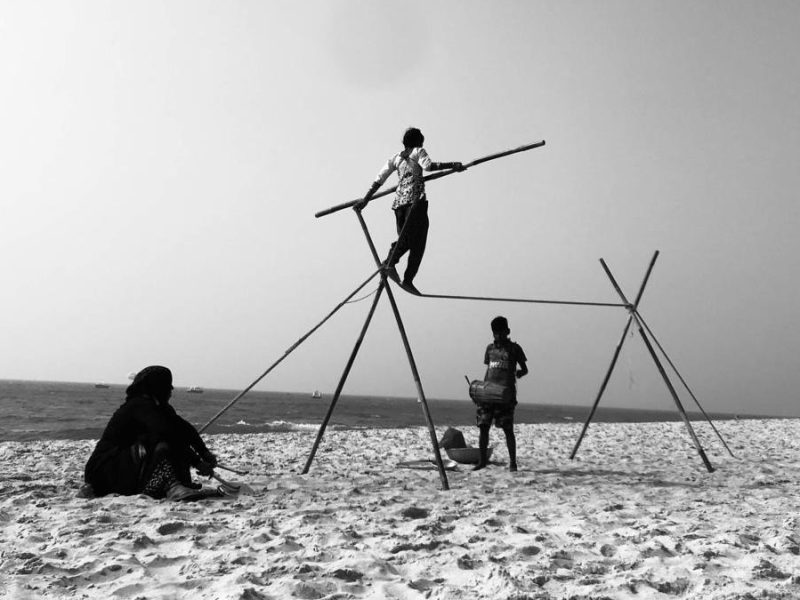
Born and brought up in New Delhi, India, Naina Sen is a Walkley and AACTA nominated filmmaker and video artist. Based on the lands of the Larrakia People in Darwin, Australia, Naina has collaborated extensively with artists from across remote communities in North-East and North- West Arnhem Land and the Central Desert in the Northern Territory for the last 12 years.
A practice built on long term cross- cultural and inter-cultural collaboration and storytelling, Naina works across documentary, installation and live projection, using image making to explore gender, cultural identity, equity, place and memory, privileging First Nations and South Asian and South East Asian diasporic narratives.
Anahita Ananth
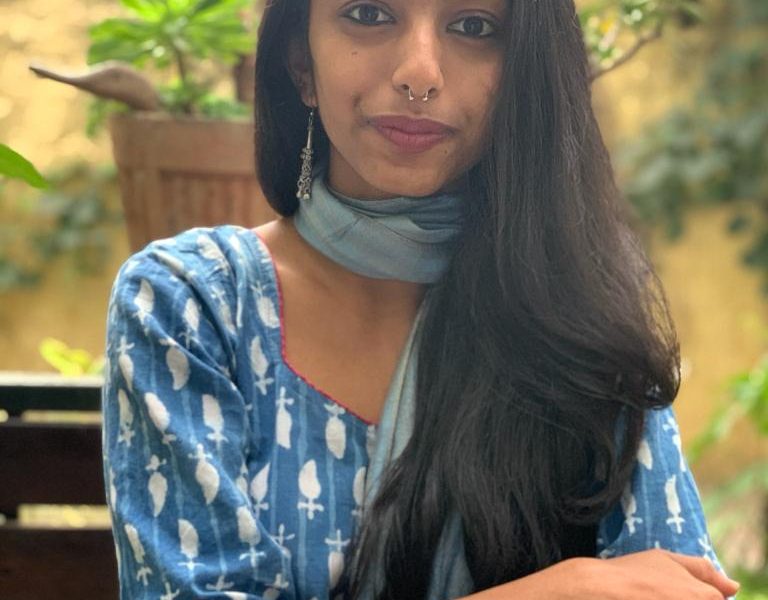
Anahita Ananth is a visual storyteller and media professional, blending photography, videography, and content strategy. She is passionate about handcrafted textiles and the endless possibilities that hand block printing presents.
She collaborates closely with the artisan community at Tharangini Studio, documenting the delicate processes that go into making beautiful textiles. Obsessed with exploring the untold stories woven in fabric and craft, her work captures the dialogue between traditional technique and contemporary practice. She’s passionate about documenting not just the art of textile creation, but the human stories. When she’s not behind the camera, she’s getting her hands full of colour at Tharangini, hunting for new print combinations and ways to showcase them.
