
- This event is over. However, time travel possible through our Audio & Video! See upcoming events
Beyond Story
Encounters with Essay Films
For Ages 18+
Speakers, Filmmakers & Interlocutors

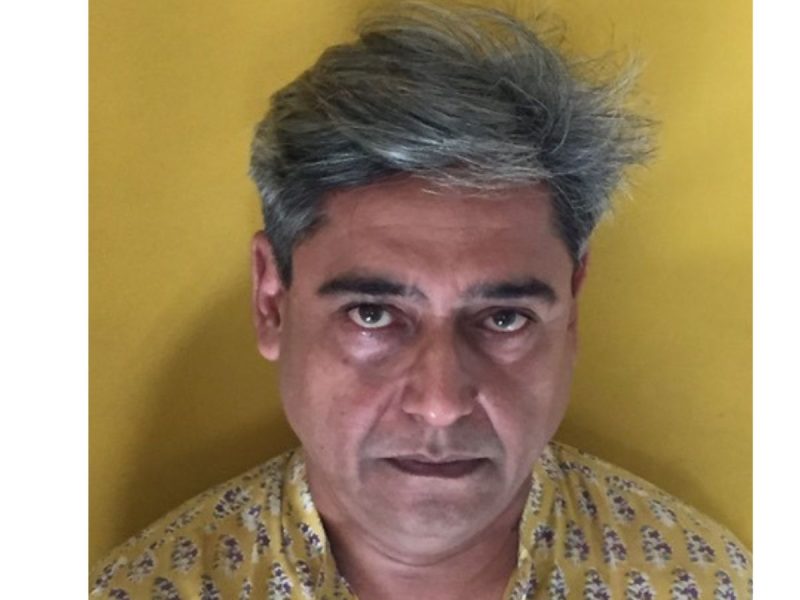
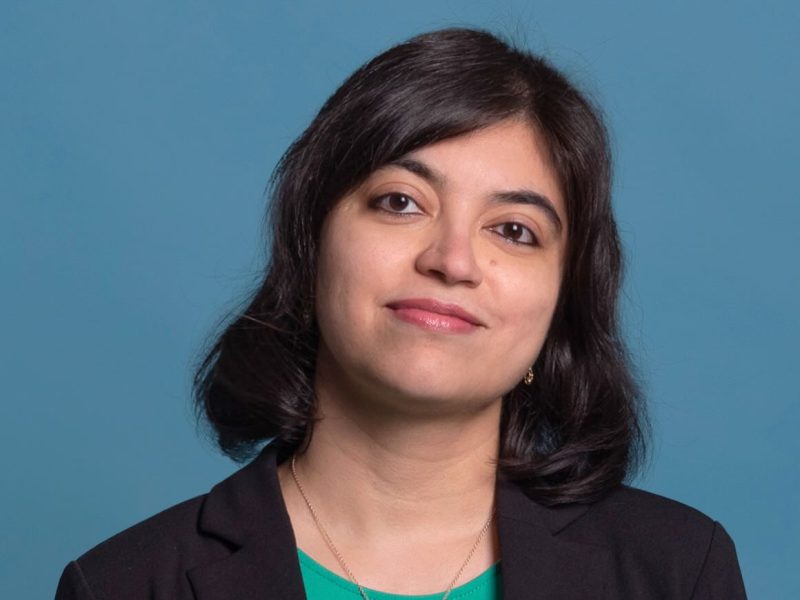
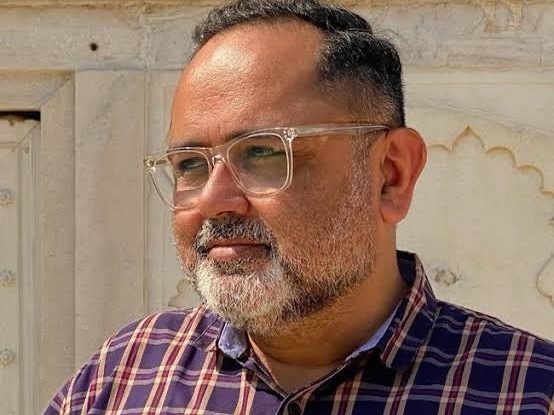
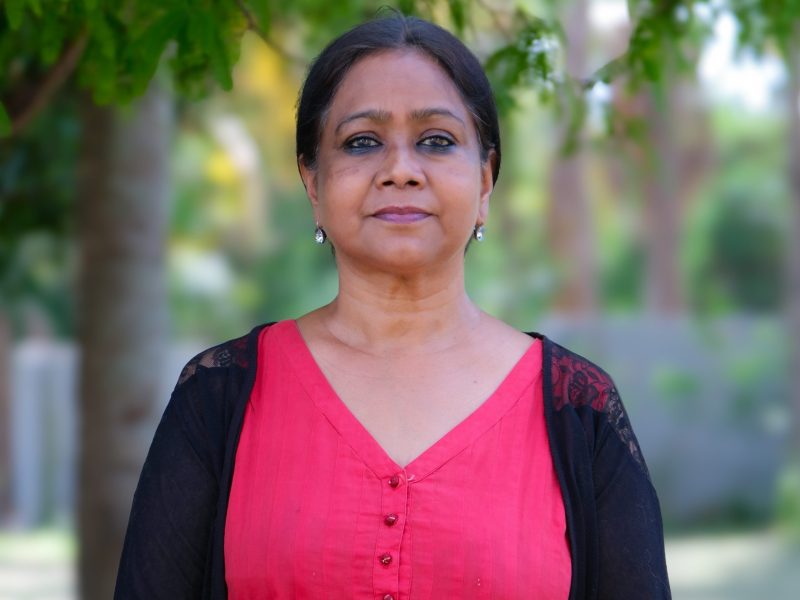
Friday | Aug 23 | 6:30 pm onwards
Saturday | Aug 24 | 10:30 am onwards
Sunday | Aug 25 | 10:30 am onwards
Stories dominate our lives, whether in books, films, religion or politics. Ideas and thoughts seem to become palatable only when they are contained within stories with strong characters and tightly woven plots. Of late, even non-fiction filmmakers tend towards single-character narratives, with clearly defined three-act structures.
Beyond Story explores an alternative – the essay film – over three days of interactive sessions with filmmakers and film scholars.
Schedule:
| Friday | Aug 23 | Saturday | Aug 24 | Sunday | Aug 25 | |
| 10:30 am | Screening:
Night and Fog La Jetée |
Screening:
Looking for Horses |
|
| 12:15 pm | Talk:
Digital Afterlives of Films |
Talk:
Eat your Mother and Father
|
|
| 02:30pm | Talk:
The making of an Essay Film – Impetus and Discovery |
Talk:
Non-Narratives with Conceptual Extensions
|
|
| 04:30 pm | Screening:
I Am Yet to See Delhi Jamnapaar Chadariya (Films from the Creative Documentary Course, SACAC, New Delhi)\ |
Talk:
Essay Film and the Voice
|
|
| 06:30 pm | Talk:
Image and Sound as Text
|
Screening:
Tales from Planet Kolkata by Ruchir Joshi
|
Screening:
Night and Fear (Raati O Bhaya) by Lipika Singh Darai Letter From Your Far-off Country by Suneil Sanzgiri Golden Jubilee by Suneil Sanzgiri |
Day 1
23 August | Friday
6:30 pm
Image and Sound as Text
A Talk by Avijit Mukul Kishore
Film is a temporal art form that employs multiple registers of image, sound, music and memory to make meaning. This talk will feature in-depth analysis of short films and excerpts from longer essay films in different genres that include actuality, observational documentary, found-footage film and autobiography, to look at the complex ways in which film’s formal elements come together to create meaning while drawing on our lived experience.
Day 2
24 August | Saturday
10:30 am
Screening: Night and Fog
Alain Resnais | 1956 | 32 mins
This poignant and harrowing documentary reflects on the horrors of Nazi concentration camps, blending historical footage with contemporary observations to evoke the stark reality of genocide and the importance of remembering its lessons.
Screening: La Jetée
Chris Marker | 1962 | 28 mins
In a post-apocalyptic future, a man is sent back in time to explore the past and find a way to save humanity, but his journey leads him to an unexpected and haunting conclusion. This innovative sci-fi short film is told almost entirely through still photographs.
12:15 pm
Digital Afterlives of Films
Talks by Chloé Galibert-Laîné and Ritika Kaushik
Chloé Galibert-Laîné: In this deeply personal video diary, a young researcher tries to make sense of her fascination for the film “The Pain of Others” by Penny Lane. A deep dive into the discomforting world of YouTube and online conspiracies, that challenges traditional notions of what documentary cinema is or should be.
Ritika Kaushik: Ritika Kaushik will consider the video essay as a form for examining the digital afterlives of films from the past. Kaushik’s talk will take us through her formal experiments with online and desktop interactions and how they can enliven archival and contemporary digital materials to bring out new configurations of film historiography. She will specifically discuss the ‘reaction video’ as an essayistic technique for creating an embodied and affective engagement with pre-existing audiovisual media.
2:30 pm
The making of an Essay Film – Impetus and Discovery
A Talk by Sameera Jain
Stemming from a practitioner’s perspective, the session looks at some recent short films and traces their journeys of making. We find that the form appears through a search for a relationship with image, sound, time, meaning and affect, a pursuit that is not governed by existing formulations, but by the creative processes in practice. The talk will attempt to unpack phases in these navigations and present how the cinema essay is ‘found’, reflecting on the openness, expanse, fluidity and inclusivity of the form. In addition, referencing contemporary and historical cinema, we explore facets of the essay film, walking through with some examples.
4:30 pm
Screening: Films from the Creative Documentary Course, SACAC, New Delhi
• I Am Yet to See Delhi by Humaira Bilkis | 2014 | 19 mins
• Jamnapaar by Abhinava Bhattacharyya | 2017 | 24 mins
• Chadariya by Nimisha Srivastava | 2022 | 25 mins
6:30 pm
Screening: Tales from Planet Kolkata
Ruchir Joshi | 1993 | 38 mins
Tales from Planet Kolkata anticipates the period Calcutta was approaching in the early 90s: the wasteland of violent traffic, the orgy of rampant construction, the severing of old traditions, the rise of cynical politics, the strange, once again subservient relationship with the west. Seeing it today, it’s startling how much of it still resonates with the city Calcutta/Kolkata has become. Part fiction, part spoof, part essay, part documentary, the film weaves together disparate strands: a critique of Western media’s construction, from the 1960s to the 1990s; of Calcutta as ‘the black hole’ and ‘the worst place in the world’; an ‘elegy’ to Deepak Majumdar, one of Calcutta’s great intellectual mavericks, a teacher and friend to Joshi and many others, who died while the film was being made; and the images and song of a patua – a traditional Bengali scroll-painter.
The screening of the film will be followed by a discussion with the director, Ruchir Joshi. A Q&A with the audience will follow.
Day 3
25 August | Sunday
10:30 am
Screening: Looking for Horses
Stefan Pavlovic | 2021 | 88 mins
Travelling to Bosnia in search of his origins, filmmaker Stefan Pavlović meets a solitary fisherman. One man has language impairment, the other lost his hearing during the war. Camera in hand, the director films the onset of this improbable and profound friendship.
12:15 pm
Eat your Mother and Father
A Talk by Yashaswini Raghunandan
In this session we will look at how filmmakers weave in their families and themselves to expand the conversations around identity, alienation and political histories. Through the films ‘Looking for Horses’ by Stefan Pavlovic, ‘Will you look at me?’ by Shuli Huang and ‘A picture of you’ by Ajay Naronha, we will look at how the essay is constructed through the making of the film, revealing an intimate side of filmmaking. All three filmmakers use filmmaking as a method to ask difficult questions and to re-connect, allowing for some form of catharsis.
2:30 pm
Essay Film and the Voice
A Talk by Matthew Barrington
In this session we explore the complexities of voice as both a narrative device and a vehicle for personal expression, as we examine its transformative power in shaping cinematic discourse. From subjective introspection to objective analysis, we unpack how the voice navigates the intricate intersections of truth, perspective, and interpretation within the essay film landscape. The voice as subjective – departing from a dominant, authoritative narrator.
4:30 pm
Non-Narratives with Conceptual Extensions
A Talk by Vasanthi Mariadass
Visual essays are noted for non-narrative style. A re-editing to re-narrate stories untold or less told. I engage with works by Ursula Biemann, and Harun Farocki, to examine their theoretical insertions through the visual form. I would not just call them visual essays but an unfolding of visual theory. Images collide or they are quietly juxtaposed, despite the events and topics coming from different spaces, times, and seemingly unrelated topics/images, hence refreshing found images and concepts. Conceptual works by Biemann relate to Environmental concerns and Farocki’s concept examines an already established idea such as the enlightenment but rethinks and retells other not-so-visible concepts such as perfection and precision that silently negotiate the development of scientific and technological production.
6:30 pm
Screening: Night and Fear (Raati O Bhaya)
Lipika Singh Darai | 2023 | 28 mins
The residuals of recorded material generated by the filmmaker over a decade of filmmaking practice, with the passing of time, have acquired new meaning. With a range of experiences – from a local witch hunt to a meeting with a stunning waterfall – the past, the present, the fear and the intuitive self, have found shelter in the characters and spaces from the world captured through image and sound which have aged just enough to correlate and run a parallel narrative. Having a twofold interior, Night and Fear is a personal essay addressed to the filmmaker’s late grand aunt, but also a reflection on the impact of making films – on the filmmaker herself and the society.
The screening of the film will be followed by Q&A with the Director.
Screening: Letter From Your Far-Off Country
Suneil Sanzgiri | 2020 | 18 mins
Shot with 16mm film stock that expired in 2002—the same year as the state-sponsored anti-Muslim genocide in Gujarat—and filmed amid the anti-CAA protests in Delhi, the filmmaker traces lines and lineages of ancestral memory, poetry, history, songs, and ruins from his birth in 1989.
Screening: Golden Jubilee
Suneil Sanzgiri | 2021 | 19 mins
What is liberation when so much has already been taken? Who has come for more? ‘Golden Jubilee’, takes as its starting point scenes of the filmmaker’s father navigating a virtual rendering of their ancestral home in Goa, India, created using the same technologies of surveillance that mining companies use to map locations for iron ore in the region. A tool for extraction and exploitation becomes a method for preservation. The father, sparked by a memory of an encounter as a child, inhabits the voice of a spirit known locally as Devchar, whose task is to protect the workers, farmers, and the once communal lands of Goa. Protection from what the filmmaker asks.
In collaboration with:


Speakers, Filmmakers & Interlocutors
Matthew Barrington
Matthew Barrington is based in London and curates films for the Barbican Centre and the Birkbeck Institute for the Moving Image. He has worked with the Essay Film Festival and the London Korean Film Festival. His writings featured in publications like Sight and Sound, ASAP Journal and Afterall. Matthew is dedicated to exploring the cultural and creative factors behind film restoration, exhibition and distribution.
Lipika Singh Darai
Lipika Singh Darai is a director, writer, and editor based in India. She is an alumnus of Film and Television Institute of India with a specialisation in Film sound recording and design. She has been making socio-cultural films in Odisha where she belongs to the Ho indigenous community. Lipika has received four National Film Awards for direction, sound recording, and narration in the non-feature section. Her documentary Night and Fear (2023) premiered at the International Film Festival Rotterdam in the Ammodo Tiger Short competition. She is developing her debut fiction feature Birdwoman which has received the Hubert Bals Development Fund 2023. She is one of the ten creative talents in Bafta Breakthrough-India 2023.
Sameera Jain
Sameera Jain is an educator, editor and director. She has a sustained interest in structuring pedagogic practice which pushes boundaries, to experiment and to interrogate accepted codes in nonfiction cinema. She was course director, Creative Documentary Course, SACAC, New Delhi, from 2013-23 and has been working in the field of cinema in various capacities for over four decades.
Chloé Galibert- Laîné
Chloé Galibert- Laîné is a French filmmaker and researcher, working as tenured Assistant Professor in Film Studies at the American University of Paris. Their work explores the intersections between cinema and online media, around questions related to embodied spectatorship, gestures of appropriation, processes of knowledge production and mediated memory. Their films, video essays and desktop documentaries have received support from CNC, CNAP, Eurimages and the Sundance Institute, and screened at IFFRotterdam, IDFA, FIDMarseille, Berlin Critic’s Week, Kurzfilmtage Oberhausen and Ars Electronica. Solo shows include Transmediale festival in Berlin and Casa do Cinema Manoel de Oliveira in Porto.
Ruchir Joshi
Ruchir Joshi is a film-maker, writer and columnist based in Kolkata. His 16mm films Eleven Miles (1991), Memories of Milk City (1991), and Tales from Planet Kolkata (1993) have won awards at festivals in Paris, Oberhausen, and Mannheim. He writes for The Telegraph, India Today, Granta UK, and other major publications. His first novel, The Last Jet-Engine Laugh was published in 2001. Poriborton – An Election Diary, a series of travelling reports on the West Bengal state elections of 2011 came out that same year. He is also the editor of India’s first anthology of contemporary erotica, Electric Feather: The Tranquebar Book of Erotic Stories.
Ritika Kaushik
Ritika Kaushik is a film historian and video-essayist who specialises in documentary cinema and South Asian cinema. Her academic and videographic research focuses on the history, infrastructures, archives, and afterlives of state-sponsored documentaries in India. Her writings and video essays have appeared in journals like Bioscope: South Asian Screen Studies, Economic and Political Weekly, NECSUS, Tecmerin: Journal of Audiovisual Essays, Docalogue, ASAP | art, and in the edited volume Accidental Archivism (meson press).
Avijit Mukul Kishore
Avijit Mukul Kishore is a filmmaker and cinematographer based in Mumbai. He has a background in theatre and broadcasting; studied history at Hindu College, Delhi and cinematography at FTII Pune. He works primarily in documentary and interdisciplinary moving-image practice and is involved in cinema pedagogy as a lecturer and programmer.
Vasanthi Mariadass
Vasanthi Mariadass’ expertise lies in Visual Studies, Film Studies programs, Contemporary Art, Cultural Studies, Critical Thinking, and Critical Theory. More specifically, her work includes experimental cinema, visual essays, documentaries, and docu-fiction which engage with environmental issues. She has conducted research at IISc, Bangalore, Humboldt University, Berlin, Freiburg University, Germany, and Gothenburg University, Sweden. Currently, she is Program Chair for Liberal Arts Design at Vidyashilp University.
Yashaswini Raghunandan
Yashaswini Raghunandan works with film and sound to build narratives in the form of docu-fiction. She is based in Bangalore. Her 2019 film, ‘That Cloud Never Left,’ was supported by the People’s Archive of Rural India and premiered at the International Film Festival Rotterdam. She has been a resident of the Rijksakademie van beeldende Kunsten, Amsterdam and a recipient of the Inlaks Scholarship to study sound art at the Royal College of Art, London. She is currently working on a film about translations with her father.
Suneil Sanzgiri
Suniel Sanzgiri is an artist, researcher, and filmmaker. Spanning experimental video and film, animations, essays, and installations, his work contends with questions of identity, heritage, culture, and diaspora in relation to structural violence and anticolonial struggles across the Global South. Sanzgiri’s award-winning films offer sonic and visual journeys through family history, local mythology, and colonial legacies of extraction in Goa, India – where his family originates – vividly blending together 3D renderings, drone videography, photogrammetry and lidar scanning, 16 mm film and animation, archival footage, and desktop documentary practices. He was named one of the 25 New Faces of Independent Film in Filmmaker Magazine’s fall 2021 issue and was included in Art in America’s New Talent issue in 2022.
Basav Biradar
Basav Biradar is a writer, critic and filmmaker based in Bangalore. He teaches film at Srishti Manipal Institute of Art, Design and Technology. Basav’s writing has appeared in leading Indian publications – Caravan, The Hindu, Outlook India, Film Companion, The News Minute, Open Magazine and many more. He has also contributed an essay to the anthology “Where Gods Dwell – Thirteen temples and their (his)stories”. Basav’s recent film “In Search of Gold” was selected for screening at several Film Festivals. He is also the founder of a history collective called “Historywallahs.
Usha Rao
Usha Rao has traversed several paths. She’s been a trainer, educator, Jazz RJ, and an independent researcher. She is trained as a cultural anthropologist. Usha’s work in non-fiction film began with Our Metropolis (2014, co-directed and co-produced with Gautam Sonti), which has been screened widely at international and national festivals. She also works with sound and her projects have been shown at the AIWART festival (New Delhi). Usha’s current film (work in progress) explores the idea of childhood. She is also working on short films on the shifting nature of public spaces in the city.
