

- This event is over. However, time travel possible through our Audio & Video! See upcoming events
Dr B R Ambedkar: Now & Then
A Feature Length Documentary through a Bahujan Feminist Gaze
Speakers
111 Minutes | English, Hindi, Tamil, Telugu and Gujarati with English Subtitles
Dr. B. R Ambedkar: Now & Then is a feature length documentary film that explores deep questions of human condition. Questions of liberty, equality, fraternity, social justice, exclusion and marginalized representation through, Jyoti Nisha, a Bahujan feminist filmmaker’s gaze in an upper caste Indian film industry. The film aspires to translate the praxis of Ambedkarite politics to image making and representation of marginalized subjects’ culture, history, politics in popular cinema and media.
Driven by Dr. Ambedkar’s philosophy epistemologically, the film symbolically and politically documents the representation and assertion of Bahujan people in the contemporary era. Questioning the institution of caste in India, this film is a commentary on religion, revolution, politics, and the freedom of speech.
Director’s Statement:
“Indians today are governed by two different ideologies. Their political ideal set in the preamble of the Constitution affirms a life of liberty, equality and fraternity. Their social ideal embodied in their religion denies them.”
~Dr. Bhimrao Ramji Ambedkar (Indian jurist, economist, politicial leader and social reformer)
This dual imagination of the Indian nation, as Dr. Ambedkar forewarned, finds its manifestation even on the silver screen. India’s popular imagination of its colonial past has been that of a “haloed” history of Indian nationalism. Ambedkar has not been part of this popular imagination, and neither do the politics, history, and social movements of the marginalized. The assertion of the marginalized has hardly made it to the pre- and post-independence Indian cinema. Largely, the image of Indian nationalism in the popular imagination has been that of M. K. Gandhi, and Ambedkar and his social justice movements against Brahmanism have been absent from the public conscience.
This gaze of “othering,” silencing, and appropriating the existence of history, knowledge, and symbols of the marginalized communities have been tools employed by the upper-caste film-makers deliberately. Evidently in that process, they have not only capitalized on such discourses, but have also stripped the marginalized characters of their dignity and agency replicating the same hierarchical structures of caste on screen.
Stories of marginalized Bahujans (the Scheduled Castes, Scheduled Tribes, Other Backward Class and converted minorities) who form the 85% of Indian population have not been told from the perspective of a hero. This is where ‘Dr. BR Ambedkar: Now & Then’ stands different because it not only documents the lived experiences of Bahujan communities in India but also tells their story from an oppositional Bahujan feminist gaze resisting the type- casting and branding of popular culture’s imagination of marginalized narratives.
Crew
Crowdfunded by Wishberry
Editing: Supervising editor- Sahil Gada
Editors- Himanshu Chutiya Saikia & Uttkarsh Parmar
Background score: Rakshit Malhotra, Abhishek Bonthu & Hopun Saikia
Sound Design: Mohit Rana
Directors of Photography: Pooja Jain, Jyoti Nisha, Lakshya Bhutani, Vimal Mylon
Himanshu Chutiya Saikia, Sumantha Sharma & Sandesh
Original Songs: Jai Bhim (Shankuraj Konwar)
Ambala Pombala (Arivu feat Chinmayi Sripada)
Lyrics (Ambala Pombala): Uma Devi & Arivu
Location Sound: Anuroop Kukreja, Priyankar Basu, Kapil Dev Singh, Moinak Basu
Parvez Sheikh, Sanku & Partha
Graphics & Visual Effects: Harikrishnan Sasindran & Mriganka Bora
Animation: Harikrishnan Sasindran
Illustration: Sunil Abhiman Awachar
In collaboration with



Speakers
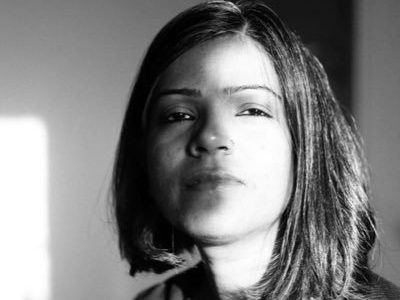
Jyoti Nisha
Jyoti Nisha is a multi disciplinary professional – an academic, writer, screenwriter, filmmaker and a producer with a focus on cinema, gaze, caste, gender and mass media. She theorized a political theory, Bahujan Spectatorship that opposes the popular culture’s casteist male gaze and stereotypical representation of the marginalised, earlier called as untouchables, on the silver screen and explores the consumption and spectatorship of popular cinema’s representation of caste, gender, and sexuality by the marginalized of India.
Her second theory, The Oppositional Bahujan Agency replaces the Brahmanical aesthetics of Natyashastra with Ambedkar’s historical methods as an epistemology to locate a non-Brahmin experience in order to explore the representation of caste, gender, and marginalized communities in Indian cinema.
It is an inverted methodology of creating a unique oppositional socio-political Bahujan aesthetics in Indian cinema embedded in Bahujan lived experience, culture, history, movements, and ideology via Bahujan film makers. Produced by Dharmatic Entertainment and streaming on Netflix, she also worked as a Director’s Assistant to Neeraj Ghaywan on his short, Geeli Pucchi (part of Ajeeb Daastaans anthology), which received rave reviews. She studied journalism from IIMC, Delhi, screenwriting from FTII, Pune & and Media and Cultural Studies from TISS, Mumbai. She wrote for many national and international publications and worked as a full time Producing faculty with a film school for a year and half. ‘Dr. B. R. Ambedkar: Now & Then,’ is her debut feature length documentary film, which she has directed, produced, crowdfunded and are co producing with Pa Ranjith’s Neelam Productions.
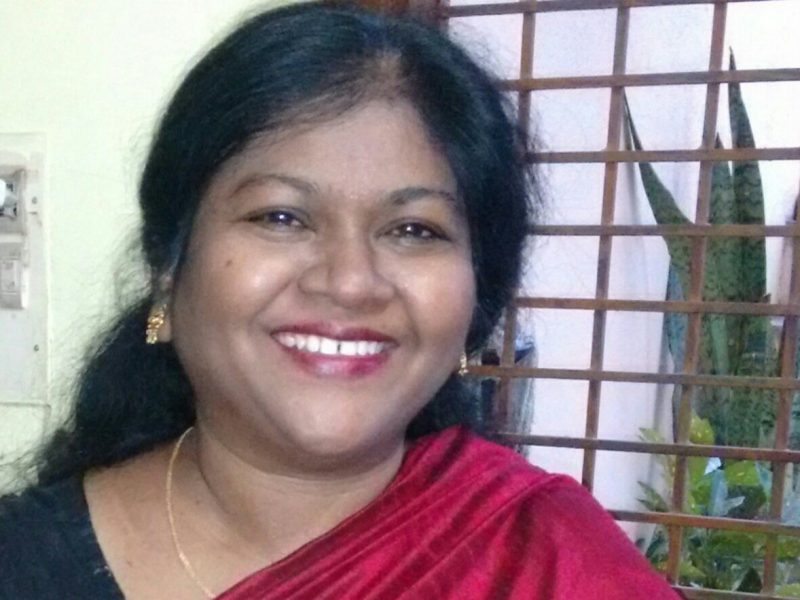
Cynthia Stephen
Cynthia Stephen has been actively involved in the development sector for over 25 years as an activist, writer, trainer and policy analyst on gender, poverty, development and social exclusion. She has been the State Programme Director, Mahila Samakhya Karnataka, and was also a member of the Ramesh Kumar Committee which worked on recent amendments to the Panchayat Raj Act.
Cynthia has done doctoral research in the area of women’s political participation, with special focus on women from marginalised communities. She has published extensively on the situation of Dalits in general and Dalit women in particular.
She contributed a chapter titled “Higher Education in India: Fresh Visions and Visionaries from Marginalised Groups the Need of the Hour” to a 2014 book, “Higher Education in India: New Perspectives.” She is the Founder Director of the Training Editorial and Development Services Trust and is presently engaged in setting up an institution for the all-round empowerment of women. Associated with a number of people’s movements for justice across the country, she has also been involved in the issue of Dalit student suicides.
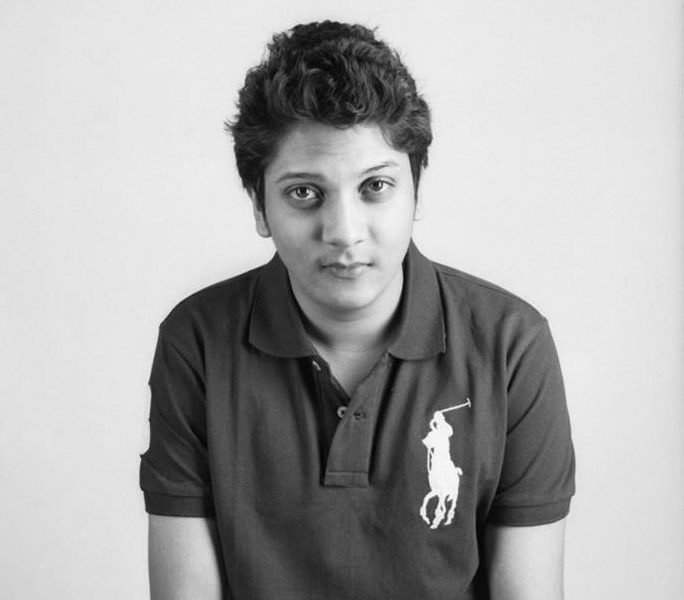
Vishal Kumaraswamy
Vishal Kumaraswamy is a Bengaluru, India based artist-curator working across text, film, sound, performance and computational arts. He employs experimental technologies to create media-based works addressing critical concerns around Caste, Race and Technology. He has an MA in Photography from Central Saint Martins, London and his works have been shown at The Venice Biennale’s Research Pavilion, CCS Bard College, Contemporary Calgary, The Royal College of Art, SITE Gallery Sheffield, HKW Berlin and the Rencontres d’Arles 2023. Vishal has upcoming exhibitions at Center Clark Montreal and PARI, Sydney in 2024 and his works are scheduled to appear in The Routledge Companion to Global Photographies.
Vishal has been in residence with the US Consulate General Mumbai, Contemporary Calgary in Alberta, SAVAC Toronto, Vital Capacities videoclub UK, Onassis AiR and The Singapore Art Museum. He is a recipient of the Australia Council for the Arts Transmitter Delhi X Darwin Grant, the Warehouse421 Artistic Research Grant and is a current 2022-2024 Research Associate at the CCA Derry~Londonderry.
Vishal’s independent curatorial practice is centered around developing anti-caste curatorial models that foreground a wide range of subaltern practices and he is the inaugural guest curator at Arts House, a City of Melbourne for 2023 & 2024. Vishal has previously presented projects with the Wrong Biennale & Sluice Biennial and is the founder of the artist collective; Now You Have Authority, a collaborative practice through which he has curated exhibitions, residencies, and delivered workshops at the Tate Modern’s Tate Exchange Program and Tanzfest Aarau.
