

- This event is over. However, time travel possible through our Audio & Video! See upcoming events
191. How Disasters Can Shape Marriage (with Shreyasee Das & Bansari Kamdar)
The Economics and Impact of Stressors on a Unique Indian Phenomenon
Speakers

Marriages in India are a universal phenomenon that continue to be characterized by rigid social and cultural norms. 90% of marriages in India are family-arranged. Individuals have a strong preference for caste homogamy, women tend to marry more educated men (educational hypergamy). Dowry payments are still quite common at the time of marriage. Given these sticky norms, how would an unexpected disaster alter these unique features of the Indian marriage market?
Disasters, natural (such as floods, earthquakes), industrial (such as a chemical leak) or a global pandemic (such as COVID-19), often come with little to no warning with large-scale economic and demographic shocks to households, both temporarily and permanently. Beyond the impact on economic livelihoods, studies have looked at fertility responses, changes to human capital formation and other welfare outcomes due to disasters. However, these events can also change social structures, including marriages.
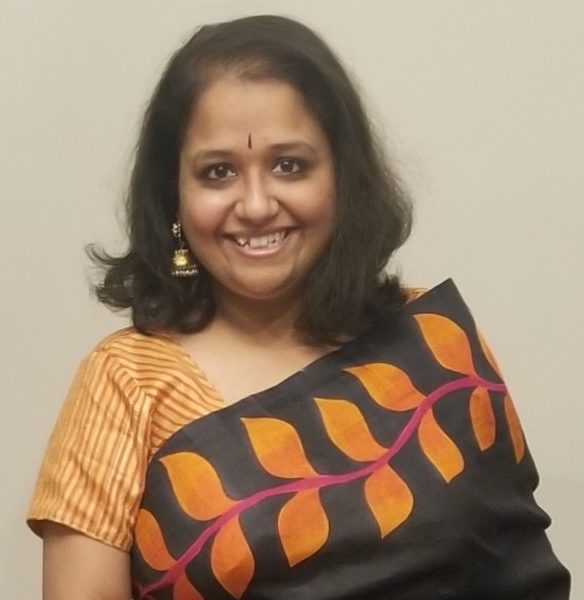
In this episode of BIC Talks, Instructional Assistant Professor at Temple University, Dr.Shreyasee Das talks about ‘How Disasters Can Shape Marriages’ that she conducted along with Shatanjaya Dasgupta and in this conversation with Finance and Markets Journalist Bansari Kamdar, explores relationships, their social and economics lives and the impact sudden and acute stressors like a natural disaster may have on them.
Subscribe to the BIC Talks Podcast on your favourite podcast app! BIC Talks is available everywhere, including iTunes, Spotify, Google Podcasts, Castbox, Overcast, and Stitcher.
Speakers
Shreyasee Das
Dr. Shreyasee Das is an Instructional Assistant Professor at Temple University, where she is also affiliated with the Global Studies and the Gender, Sexuality, and Women’s Studies program. Dr. Das completed her Ph.D. in Economics, her M.A. in Economics and her B.Sc. in Economics all from the University of Houston. Her research interests are in the fields of gender and development economics, with a regional focus on India. Some of her work examines marriage market outcomes in the event of natural and industrial disasters, and the impact of property rights on women’s empowerment. Other work has examined the role of water allocation schemes on agricultural productivity and health outcomes.
Bansari Kamdar
Bansari Kamdar is a finance and markets reporter based in India. She has reported for The Boston Globe, Diplomat, Reuters, AP, Huffington Post and many other domestic and international newspapers. Kamdar holds a Master’s degree in Applied Economics and was recently awarded the 2021 Arthur MacEwan Award for Excellence in Political Economy by the University of Massachusetts Boston. Along with reporting, she has also worked for Harvard University’s Center for International Development and the Global Development Policy Center at Boston University.
