
- This event is over. However, time travel possible through our Audio & Video! See upcoming events
Scat Matters
From Dung Beetles to Tigers: How Wild Poop Helps Protect Ecosystems
For All Ages
Speakers


It stinks. It’s supposed to.
Wild animal scat is one of nature’s most information-dense specimens. From a single sample, scientists can read ecology, behaviour, diet, population health, genetics, predator-prey relationships, and even the impact of climate on wild animals.
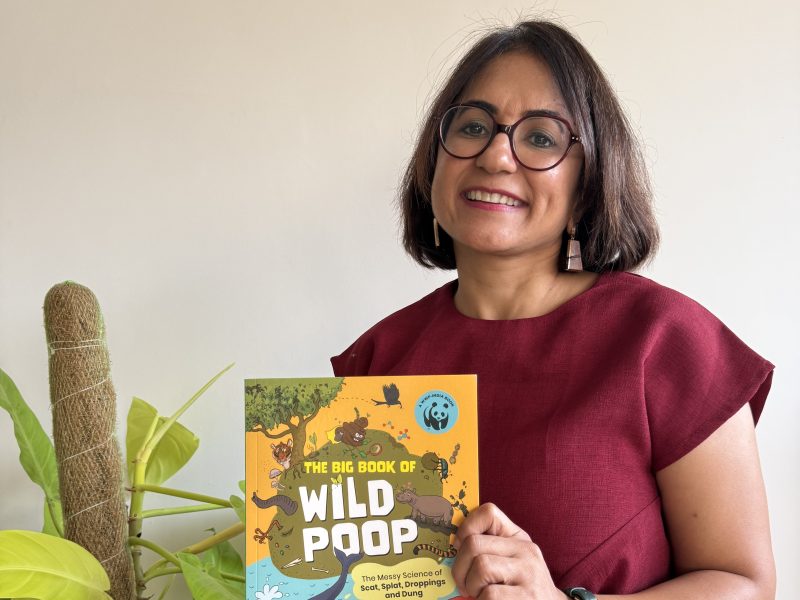
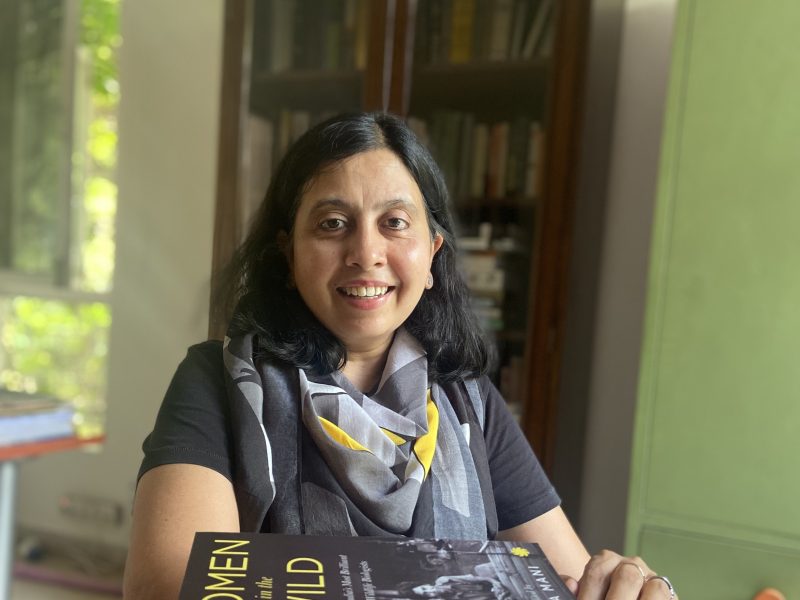
Based on The Big Book of Wild Poop, a fully illustrated, gloriously punny book published by WWF India and Juggernaut/Indian Pitta, author Shweta Taneja and editor Anita Mani joins scientists Uma Ramakrishnan and Seena Narayanan Karimbumkara in conversation. Together they unpack how wild poop is transforming conservation science: through DNA analysis, field observation, and non-invasive insights that researchers could not gather any other way.
For children and adults, if you are young enough to giggle and curious enough to wonder, you are welcome here. Bring your questions for the Q&A at the end.
The humble dropping, it turns out, contains the mysteries of the natural world.
Speakers
Shweta Taneja
Shweta Taneja writes science and fiction for kids and adults. Her bestselling works include contemporary stories of Indian scientists: They Made What? They Found What?; graphic novel Krishna: Defender of Dharma; and critically acclaimed fantasy fiction series Anantya Tantrist Mysteries.
She was a finalist in the prestigious French award Grand Prix de l’Imaginaire, a Charles Wallace Writing Fellow and has given talks at Worldcons in China and Ireland. Her work has been translated to Kannada, French, Romanian, Dutch and Chinese. When not writing, she wanders in forests, hikes on trails and eyes birds through binoculars.
Uma Ramakrishnan
Uma Ramakrishnan has been a molecular ecologist and conservation genetics professor at NCBS TIFR since 2005. Uma has worked on standardizing methods to work with non-invasive samples in wildlife and conservation, and pioneered the use of genomic data for endangered species. Her work has contributed to the understanding India’s biogeography, population connectivity and its landscape correlates, and in identifying isolated populations of tigers. She is also very interested in disease ecology, and is currently working on understanding potential zoonotic spillover in Northeast India. Uma is passionate about evidence-based approaches to conservation, mentoring, outreach and communication.
Seena Narayanan Karimbumkara
Seena Narayanan Karimbumkara is a Post-doctoral Research Associate at the Insect Biosystematics and Conservation Laboratory at ATREE, Bangalore. Her PhD focused on the biosystematics of Scarabaeinae dung beetles in the Shendurney region of the Southern Western Ghats. She has discovered ten species of dung beetles new to science. She has been working on restoration projects comparing the diversity of insects in the grasslands of grazing commons and also on the diversity of aquatic macro-invertebrates in lakes.
Anita Mani
Anita Mani lives, works and birds in Delhi, from where she runs Indian Pitta, her book imprint with Juggernaut Books. In addition to editing books about birds and natural history, Anita writes on technology and communications, a throwback to the time she ran the operations of a communications software company. Her work journey is similar to that of a migrating bird – she has oscillated from writing (first for the Hindu Business Line, and later Business Standard) to a corporate career and back to writing. For several years, she ran a news and current affairs publication for children called Child Friendly News. For now, she is content to watch, read and write about birds.
